Summary
Name:
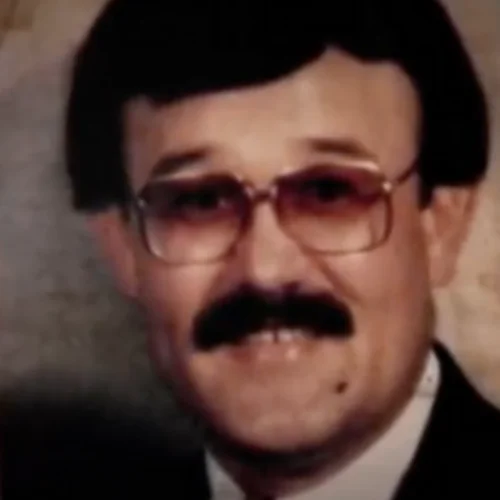
Rev. John David TerryYears Active:
1987Status:
DeceasedClass:
MurdererVictims:
1Method:
ShootingNationality:
USASummary: Murderer
Name:
Rev. John David TerryStatus:
DeceasedVictims:
1Method:
ShootingNationality:
USAYears Active:
1987Date Convicted:
September 22, 1988“I became overwhelmed by the sense that I had failed in life.”
— Rev. John David Terry
John David Terry was born in 1945. He grew up in a religious family and became a minister. Throughout his life, he worked hard in his church and aimed to help others. He became the Associate Bishop Overseer of the Emmanuel Churches of Christ and served as the pastor of the Emmanuel Church of Christ Oneness Pentecostal in Nashville, Tennessee.
In the early 1980s, Terry faced personal challenges. His mother passed away in 1983, which deeply affected him. He began to feel that he had failed in life and struggled with feelings of depression. After this loss, he reassessed his life and became overwhelmed by a sense of hopelessness. At one point, he thought about suicide but chose to look for other ways to escape his situation.
In 1984, Terry changed his career from being a part-time minister to working as a part-time aluminum siding salesman. However, this change did not improve his mental state. One day, while reading a magazine called Soldier of Fortune, he saw an ad about how to disappear and start anew. This idea excited him and fueled his desire to escape his life.
Terry began to develop a plan. He started stealing money from his church, which he believed would help him in his efforts to create a new identity. He continued this embezzlement for several years. By the time he was ready to put his plan into action in 1987, he had taken a significant amount of money from his church's funds.
Terry also tried to create a new identity by obtaining documents under the name of a deceased child. He found the obituary of a seven-year-old boy, Jerry Milom, who had died many years earlier. He managed to secure a copy of Milom's birth certificate and other identification documents through forgery.
In 1987, he found himself in a situation where he wanted to implement his plan. He had grown dissatisfied with his life and had hoped to be appointed as Bishop Overseer of the Emmanuel Churches, but that did not happen. This disappointment and his prior actions set him on a dangerous path.
To carry out his plan, Terry befriended a handyman named James Matheney, who worked in the church. He hired Matheney and helped him financially, gaining his trust. As their relationship grew, Terry sought to involve Matheney in his scheme.
On June 15, 1987, Rev. John David Terry shot James C. Matheny, a church handyman, in the back of the head with a .38 caliber pistol. After the murder, Terry dismembered Matheny's body by cutting off his head and forearm. He placed the body parts in a bag and later disposed of them in Lake Barkley, near Dover, Tennessee.
Terry then attempted to stage the scene to make it look as though he had died. He dressed Matheny in his own clothes and used gasoline to set the Emmanuel Church of Christ Oneness Pentecostal on fire. The fire caused significant damage to the church but did not completely destroy Matheny's body, allowing investigators to determine that the body was not that of Terry.
Two days after the murder, Terry turned himself in to the authorities. He had been planning to fake his own death and escape from his life, which included misappropriating over $30,000 in church funds. The investigation quickly led to his arrest.
Terry was tried and found guilty of first-degree murder and arson on September 26, 1988. The jury recommended the death penalty based on several aggravating circumstances. He was sentenced to die in the electric chair.
His conviction was initially overturned on appeal due to improper jury instructions, but at a resentencing hearing, a second jury also recommended the death penalty.
While in prison, Terry was described as a cooperative inmate who participated in religious activities. However, he struggled with feelings of remorse for his actions. In 2003, facing a new trial for his case, he committed suicide by hanging himself in a bathroom at Riverbend Maximum Security Institution in Nashville. He left behind a wife and three sons, as well as a victim who had a four-year-old son at the time of his death.
