d: 1779
Summary
Name:
Rev. James HackmanYears Active:
1779Status:
ExecutedClass:
MurdererVictims:
1Method:
ShootingDeath:
April 19, 1779Nationality:
United Kingdomd: 1779
Summary: Murderer
Name:
Rev. James HackmanStatus:
ExecutedVictims:
1Method:
ShootingNationality:
United KingdomDeath:
April 19, 1779Years Active:
1779Date Convicted:
April 16, 1779“I stand here this day the most wretched of human beings, and confess myself criminal in a high degree.”
— Rev. James Hackman
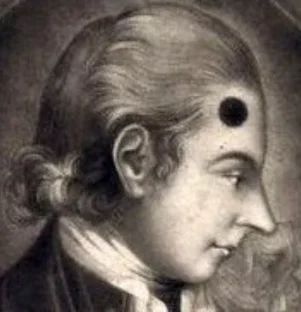
James Hackman was born in Gosport, Hampshire, England, and was baptized on December 13, 1752. He was the son of William Hackman and Mary Hackman. His father had served in the Royal Navy as a lieutenant. Available historical accounts state that Hackman was originally apprenticed to a mercer, a trade connected with textiles and fabrics, but this career did not become his permanent occupation. Some later accounts suggested he may have studied at St John’s College, Cambridge, but the uploaded source notes that no confirmed Cambridge record has been traced for him.
In 1772, Hackman entered military service after a commission was purchased for him as an ensign in the 68th Regiment of Foot. He was promoted to lieutenant in 1776. His military career later ended when he resigned his commission and turned toward the Church of England. He was ordained as a deacon on February 24, 1779, and as a priest on February 28, 1779. On March 1, 1779, he was appointed Rector of Wiveton in Norfolk. However, historical accounts indicate that he may never have actually visited the parish before his death.
Hackman’s connection to Martha Ray began while he was still associated with the army. Around 1775, he visited Hinchingbrooke, the home of John Montagu, 4th Earl of Sandwich. There, he met Martha Ray, a singer who had long been the mistress of Lord Sandwich. Ray had lived with Sandwich from a young age and had children with him. She was known for her musical ability and for her place in the social circle surrounding the Earl.
The nature of Hackman’s relationship with Martha Ray has been debated in historical accounts. Some sources suggest that he became deeply attached to her and may have believed marriage was possible. Other accounts state that whether they were lovers remains disputed. What is clear from the trial evidence and later commentary is that Hackman developed an intense attachment to Ray and became distressed when he believed her affection had been lost. His own letter to his brother-in-law Frederick Booth, later read in court, referred to the loss of Ray’s affection as something he could not bear.
By early 1779, Hackman had recently entered the clergy and held the title of Reverend. Despite this new position, he remained emotionally focused on Martha Ray. On April 7, 1779, only weeks after his ordination, he followed Ray to Covent Garden, where she attended a performance of Love in a Village. His actions that evening led to one of the most widely discussed London murder cases of the late eighteenth century. The case became well known not only because of the killing itself, but also because Ray was connected to Lord Sandwich, a powerful political figure and First Lord of the Admiralty.
On April 7, 1779, Martha Ray went to Covent Garden Theatre in London to attend a performance of Isaac Bickerstaffe’s comic opera Love in a Village. She was accompanied by Caterina Galli, an Italian singer and friend. Hackman also went to the theatre that evening. According to historical accounts, he saw Ray with William Hanger, Lord Coleraine, and believed she had become attached to another man. This belief appears to have intensified his jealousy, although the true nature of Ray’s relationship with Hanger has not been firmly established.
After seeing Ray at the theatre, Hackman left and obtained two pistols. He then returned to the area and waited near the theatre. After the performance ended, Ray came out into the Covent Garden piazza and was being helped toward her carriage. John McNamara, who knew Ray slightly, testified that he offered to help her reach the carriage because she appeared to be having difficulty moving through the crowd. As Ray held McNamara’s arm, Hackman approached.
Witness Mary Anderson, a fruit seller standing near the carriage, testified that a man dressed in black followed the group. She said he came up behind Ray, took hold of her gown, pulled out two pistols, and fired one at Ray and the other at himself. Ray was struck in the head and collapsed immediately. Surgeon Dennis O’Bryan later examined her body at the Shakspeare Tavern and found that the wound was fatal. The trial evidence stated that the bullet entered the front or crown area of her head and exited below the left ear.
After shooting Ray, Hackman attempted suicide with the second pistol, but the wound was not fatal. He then beat himself on the head with the pistols. Witnesses said he asked others to kill him. He was quickly restrained and arrested. A constable named Richard Blandy searched Hackman and found two letters in his pocket. One was addressed to his brother-in-law, Frederick Booth. The other was connected to Martha Ray. These letters became important evidence at his trial.
Hackman was committed to Tothill Fields Bridewell. He was then tried at the Old Bailey on April 16, 1779, only nine days after the murder. He was indicted as “James Hackman, Clerk” for the wilful murder of Martha Ray. Although he had reportedly considered pleading guilty, he entered a not guilty plea so the prosecution would have to prove the case in court.
During the trial, the prosecution relied on eyewitness testimony and medical evidence. John McNamara described helping Ray to her carriage and feeling the effect of the shot as she collapsed. Mary Anderson identified Hackman as the man who fired the pistols. Richard Blandy testified about Hackman’s arrest and the letters found in his possession. James Mahon, an apothecary, described seeing Hackman on the ground after the shooting and removing a pistol from him. Surgeon Dennis O’Bryan testified that Ray’s head wound was mortal and that she was already dead when he examined her.
Hackman admitted that he killed Ray, but he claimed that he had originally intended only to kill himself. His defense argued that the killing was not premeditated and that he had acted during a temporary fit of insanity. The letter to Frederick Booth, however, was used against him. In that letter, Hackman wrote that he expected to be dead when the letter was received and stated that the loss of Ray’s affection had driven him to madness. The judge, Mr. Justice Blackstone, rejected the defense argument that the evidence showed insanity. He told the jury that murder did not require a long period of planning and that Hackman’s letter showed a degree of deliberation inconsistent with the defense claim.
The jury found Hackman guilty of murder. He was sentenced to death by hanging. The Old Bailey case is indexed as a murder trial from April 1779, and historical summaries consistently record that Hackman was tried on April 16, 1779, convicted, and sentenced to death.
Hackman was executed at Tyburn on April 19, 1779. He was taken to the gallows in a mourning coach and was accompanied by clergy. After the hanging, his body was taken to Surgeons’ Hall for public dissection, as was required for many convicted murderers under the Murder Act 1752.
The murder of Martha Ray became a major public scandal in Georgian London. It drew attention because of Ray’s relationship with Lord Sandwich, Hackman’s status as a clergyman, and the public nature of the killing outside a crowded theatre. Pamphlets, poems, trial accounts, and later fictionalized works discussed the case. One of the most influential works was Love and Madness, a later epistolary novel that imagined correspondence between Hackman and Ray. Modern historians have treated that work with caution because it shaped public perception of the case but was not a reliable factual record of their relationship.
