d: 1907
Summary
Name:
Rev. Herbert Hiram HaydenYears Active:
1878Status:
DeceasedClass:
MurdererVictims:
1Method:
Poisoning / Throat cutting / BludgeoningDeath:
May 13, 1907Nationality:
USAd: 1907
Summary: Murderer
Name:
Rev. Herbert Hiram HaydenStatus:
DeceasedVictims:
1Method:
Poisoning / Throat cutting / BludgeoningNationality:
USADeath:
May 13, 1907Years Active:
1878“I have perfect confidence.”
— Rev. Herbert Hiram Hayden
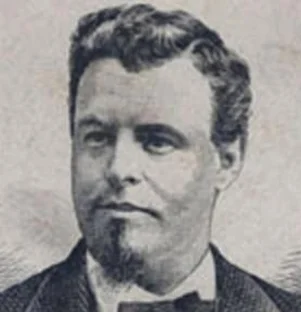
Herbert Hiram Hayden was born in 1850 in the United States. He later became known as Rev. Herbert H. Hayden, a Methodist minister in the Rockland section of Madison, Connecticut. By 1878, he was married to Rosa C. Hayden and had children. He served as a minister while also working and living in a rural community where church life and local reputation carried strong social importance.
Hayden’s public identity before the case was that of a young clergyman, husband, and father. He preached in the Madison area and was connected to the Methodist church. He also had a home and farm life in Rockland.
Mary E. Stannard had worked for the Hayden family as a servant. She came from a poor family and had previously given birth to a child outside marriage. In the social setting of 1870s Connecticut, that background affected how some people viewed her, although several accounts describe her as hardworking and vulnerable.
During 1878, rumours developed that Hayden and Mary Stannard had become sexually involved. According to testimony and later accounts, Mary believed that she was pregnant and told others that Hayden was responsible. She reportedly wanted him to help arrange medicine that would end the pregnancy. Later medical examination showed that Mary was not pregnant and that her symptoms may have been caused by an ovarian condition.
The accusation against Hayden centered on motive. Prosecutors argued that he believed Mary was pregnant and feared exposure, scandal, and loss of his position as a minister. They also argued that he bought arsenic on the same day Mary died and used it as part of a plan to kill her.
On September 3, 1878, Mary E. Stannard left her home in Rockland, Madison, Connecticut. It was her twenty-second birthday. She was later found dead near a large rock in a wooded or rural area between local farms. Her body had a serious wound to the head, her throat had been cut, and later examinations found arsenic in her body.
Suspicion quickly focused on Rev. Herbert H. Hayden. He had known Mary because she had worked for his household, and local gossip connected the two through an alleged sexual relationship. Mary had reportedly told others that Hayden had made her pregnant and that she expected him to help her obtain medicine to end the pregnancy.
On the day Mary died, Hayden traveled to Middletown, Connecticut. He bought an ounce of arsenic at Tyler’s Drug Store, saying he needed it to kill rats. Prosecutors later argued that the poison was not bought for rats but for Mary Stannard. Hayden maintained that he bought the arsenic for ordinary household or farm use.
After Mary’s body was found, an early examination showed that she had been struck on the head and that her throat had been cut. Hayden was first arrested in September 1878, but the early proceedings did not result in a final prosecution at that time. Later chemical testing changed the case. Further examination showed that Mary’s body contained arsenic in large quantities. That evidence led to renewed proceedings against Hayden.
The prosecution’s theory was that Hayden arranged to meet Mary at a secluded place and gave her arsenic mixed in water, presenting it as medicine. When the poison took effect and Mary suffered, the theory continued, he struck her and cut her throat to complete the killing or make the death appear to be suicide.
Hayden denied murdering Mary Stannard. He said he had been working in his woodlot and had no part in her death. His defence attacked the circumstantial evidence and suggested alternative explanations or other possible suspects.
The case became widely known as one of the major American murder trials of the late nineteenth century. It drew national attention because Hayden was a minister, the alleged motive involved pregnancy and scandal, and the prosecution used unusually detailed forensic evidence for the time.
The trial began in New Haven on October 7, 1879. It lasted for months and became known as “The Great Hayden Trial.” Scientific testimony played a major role. Experts testified about arsenic found in Mary’s body and compared it with arsenic Hayden had purchased. Prosecutors argued that microscopic examination showed the arsenic in Mary’s stomach matched the poison bought from the Middletown drugstore and differed from arsenic later produced from Hayden’s barn.
The defence worked to weaken the scientific evidence. Hayden’s lawyers challenged the certainty of the expert testimony and argued that the arsenic evidence was not enough to prove guilt beyond a reasonable doubt. They also emphasized that Mary had not actually been pregnant, which removed one major motive the prosecution had presented.
Hayden’s wife, Rosa, testified in his defence. Her testimony was emotional and reportedly had a strong effect on the jury. Hayden himself also maintained his innocence.
In January 1880, the jury deliberated for about eighty-two hours but could not reach a unanimous verdict. Eleven jurors reportedly leaned toward acquittal, while one juror refused to agree. The result was a hung jury. Because the state did not proceed with another long and expensive trial, Hayden was released and was never retried.
After the case, Hayden moved away from the public attention surrounding Rockland and Madison. He lived in New Haven and worked outside the ministry, including as a carpenter and shop worker. He died on May 13, 1907.
The murder of Mary E. Stannard remains historically unresolved in legal terms. Herbert Hiram Hayden was accused and tried, but he was never convicted. No other person was convicted for the crime.
