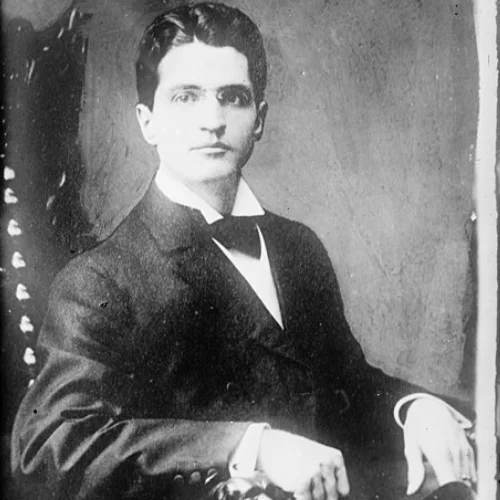
1876 - 1912
Summary
Name:
Rev. Clarence Virgil Thompson RichesonNickname:
Reverend RichesonYears Active:
1911Birth:
February 15, 1876Status:
ExecutedClass:
MurdererVictims:
1Method:
PoisoningDeath:
May 21, 1912Nationality:
USA1876 - 1912
Summary: Murderer
Name:
Rev. Clarence Virgil Thompson RichesonNickname:
Reverend RichesonStatus:
ExecutedVictims:
1Method:
PoisoningNationality:
USABirth:
February 15, 1876Death:
May 21, 1912Years Active:
1911Date Convicted:
January 9, 1912“I am guilty and deserve the penalty that the law will impose.”
— Rev. Clarence Virgil Thompson Richeson
Clarence Virgil Thompson Richeson was born on February 15, 1876, in Amherst, Virginia. He was the son of a tobacco farmer and his first wife. Clarence had a difficult family background, with a history of mental health issues. Many relatives suffered from mental illnesses, including an uncle who was committed to a mental hospital and died there.
When he was a child, Clarence experienced several head injuries. At the age of three, he fell down the front steps, leaving a noticeable bump on his head. Other accidents included being struck in the head by his brother and falling while riding a horse. These injuries affected his health for the rest of his life.
At the age of 13, Clarence left home to live in Lynchburg, Virginia. He worked various jobs and showed ambition to become a clergyman. He prepared for college at Amherst Academy in Virginia. From 1892 to 1895, he worked for his cousin while continuing his studies at a different academy in Carrollton, Missouri. During this time, he joined a local Baptist church.
Clarence had a troubled teenage and young adult life. He had many health issues, which some doctors believed might be linked to his mental state. He often felt unwell and had episodes where he lost consciousness or acted irrationally. In 1899, he enrolled in William Jewell College in Missouri.
While in college, Clarence sought medical help for severe anxieties about his sexuality. He even requested a doctor to perform a castration, believing he could not control himself around women. Eventually, he underwent surgery for a medical issue, which improved his mental well-being temporarily.
After his college years, Clarence became a minister. He served in various churches and encountered several problems, including being expelled from college for cheating. He was also known to have engaged with multiple women at the same time, which led to failed engagements.
In 1906, he entered Newton Theological Seminary in Massachusetts. He graduated in 1909 and took on a pastoral role in Hyannis, Massachusetts, where he met Avis Linnell. By December 1908, he was engaged to her, but their relationship faced many ups and downs.
On October 14, 1911, Reverend Clarence Virgil Thompson Richeson was involved in the death of Avis Willard Linnell. Avis was a 19-year-old girl who was found dead at the YWCA in Boston, Massachusetts. Initially, her death was reported as a suicide, but the incident drew significant media attention. Edwin Grozier, the owner of the Boston Post, assigned reporters to investigate what was seen as an unusual circumstance surrounding her death.
The investigation led journalists to uncover that Reverend Richeson had purchased cyanide shortly before Avis's death. Ten days after her body was discovered, police arrested Richeson. The trial revealed details about their relationship, including an engagement that was broken off just before her death.
A grand jury indicted Richeson on multiple counts related to poisoning. He was charged with giving Avis the cyanide, which he had suggested was a medical preparation. He initially pleaded "Not Guilty" but later changed his plea to "Guilty" for first-degree murder on January 5, 1912.
Reverend Richeson was sentenced to death. His execution was scheduled for May 21, 1912. The event attracted a large crowd of onlookers and stirred up public interest across New England. When the day arrived, Richeson was executed in the electric chair at 12:17 A.M. His execution marked him as a noteworthy case in Massachusetts history, as he was one of the few executed without undergoing a trial.
After his execution, many discussions arose about mental health and the pressures faced by individuals in society.
