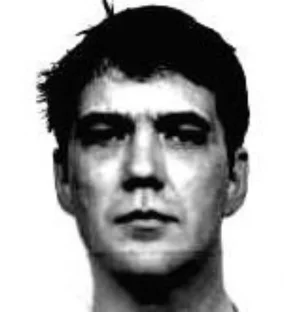
1953 - 2002
Summary
Name:
Randall Wayne Hafdahl Sr.Nickname:
Jack Douglas Cone / Robert MooreYears Active:
1985Birth:
June 17, 1953Status:
ExecutedClass:
MurdererVictims:
1Method:
ShootingDeath:
January 31, 2002Nationality:
USA1953 - 2002
Summary: Murderer
Name:
Randall Wayne Hafdahl Sr.Nickname:
Jack Douglas Cone / Robert MooreStatus:
ExecutedVictims:
1Method:
ShootingNationality:
USABirth:
June 17, 1953Death:
January 31, 2002Years Active:
1985Date Convicted:
April 4, 1986“The road goes on forever, and the party never ends.”
— Randall Wayne Hafdahl Sr.
Randall Wayne Hafdahl Sr. was born on June 17, 1953, in the United States. Most reliable records about Hafdahl focus on his adult criminal history, the 1985 murder of Amarillo Police Sergeant James Delbert Mitchell Jr., and the long appeals process that followed his conviction.
Before the killing, Hafdahl had a documented criminal history in Texas. Records cited by the Texas Attorney General state that he was arrested in 1970 in Houston, Texas, on misdemeanor theft and shoplifting charges. In 1975, in Tarrant County, Texas, he received a 10-year probated sentence for delivery of LSD. By the time of the 1985 murder, Hafdahl was a convicted felon and had stopped reporting to his probation officer, a fact later raised during the murder case as part of the State’s theory that he wanted to avoid arrest.
In August 1980, Hafdahl was arrested in Richardson, Texas, on charges including unlawful carrying of a weapon and felony theft. According to trial evidence summarized by the Texas Attorney General, police had been investigating suspected burglary-related activity connected to his residence. During a traffic stop, officers said Hafdahl attempted to hide a .38-caliber firearm under a seat. A later search reportedly uncovered stolen property and narcotics. The weapon charge was later dismissed because Hafdahl could not be found.
Hafdahl was also arrested in connection with an aggravated kidnapping allegation, but official summaries state that he was never indicted or convicted on that charge. The allegation became controversial during later appellate litigation because the defense argued that evidence related to the unadjudicated kidnapping accusation was unfairly prejudicial. The Fifth Circuit later reviewed those claims and affirmed the denial of federal habeas relief.
Trial evidence also connected Hafdahl to a Colorado methamphetamine operation known as the “Bates Farm.” State witnesses described him as an enforcer and as someone who carried weapons. These claims were presented during the punishment phase of his trial as evidence of future dangerousness, which was required under Texas death penalty procedures at the time. Hafdahl’s defense countered with witnesses who said they had not personally known him to be violent, although at least one relative acknowledged limited contact with him in the years before the murder.
By November 1985, Hafdahl was traveling across Texas with two companions, Shawn David Terry and Daniel Louis Helgren. Records state that he had been using aliases, including Robert Moore and Jack Douglas Cone, and had dyed his hair. Prosecutors argued that these facts supported the theory that Hafdahl was trying to avoid law enforcement attention when he encountered Sergeant Mitchell.
On November 11, 1985, shortly after 4:00 p.m., Randall Wayne Hafdahl was driving in Amarillo, Texas, with Shawn David Terry and Daniel Louis Helgren as passengers. According to the official Texas Attorney General summary and later court records, Hafdahl was driving recklessly after consuming alcohol and hallucinogenic mushrooms earlier that day. His car left the highway, crossed a frontage road, crashed through a wooden fence, and came to rest in the backyard of a private residence.
Sergeant James Delbert Mitchell Jr., an Amarillo police officer, had just finished work and was driving home. Although off duty, he was still wearing his police uniform and a windbreaker marked with “Amarillo City Police” and a badge insignia. Mitchell saw the crash and stopped to investigate and provide assistance.
After the crash, Hafdahl tried unsuccessfully to restart the vehicle. He then took a loaded 9 mm semi-automatic pistol, concealed it under a jacket, and attempted to leave the yard. Mitchell entered through the damaged fence, drew his revolver, and pursued Hafdahl. Witnesses testified that Mitchell identified himself as a police officer and ordered Hafdahl to stop. Hafdahl reached a gate that he could not open. When Mitchell was within close range, Hafdahl turned and fired four shots. Mitchell was struck by all four bullets and did not return fire. Two of the wounds, including injuries to the heart and lung, were fatal.
Hafdahl later admitted that he intentionally fired the shots, but he denied knowing that Mitchell was a police officer. He claimed he believed Mitchell was an angry motorist and said the rapid crash, his intoxication, and the presence of a gun caused him to react in fear. The prosecution rejected that account. Multiple witnesses testified that Mitchell was visibly identifiable as a police officer, and at least one witness said Mitchell shouted words to the effect of “stop, police.” Hafdahl’s two passengers also testified that they recognized Mitchell as a police officer.
The State argued that Hafdahl killed Mitchell to avoid arrest. Prosecutors presented evidence that Hafdahl was a convicted felon, had stopped reporting to his probation officer, had used aliases, and believed he could be facing additional law enforcement scrutiny. The defense maintained that the shooting was not premeditated and that Hafdahl did not recognize Mitchell as an officer until after the shots were fired.
Hafdahl was indicted on November 29, 1985, in the 181st District Court of Randall County, Texas, for capital murder. The charge was based on the killing of a peace officer acting in the lawful discharge of his duties. A jury found Hafdahl guilty of capital murder on April 4, 1986. On April 5, 1986, after a separate punishment hearing, the court sentenced him to death.
Hafdahl appealed his conviction and sentence. On June 13, 1990, the Texas Court of Criminal Appeals affirmed both. Rehearing was denied on December 17, 1990, and the United States Supreme Court denied certiorari on May 28, 1991. Hafdahl later filed state and federal habeas petitions. His appeals raised issues including the admission of evidence connected to the unindicted kidnapping allegation and the testimony of forensic pathologist Dr. Ralph Erdmann, who later pleaded guilty in unrelated cases involving perjury and tampering with government records. The Fifth Circuit reviewed Hafdahl’s federal claims and affirmed the denial of relief in 2001.
Hafdahl was executed by lethal injection at the Huntsville Unit in Texas on January 31, 2002. The Texas Department of Criminal Justice lists his execution date and preserves his last statement. He was pronounced dead at 6:48 p.m.
