b: 1978
Summary
Name:
Rakhmat AkilovYears Active:
2017Birth:
February 14, 1978Status:
ImprisonedClass:
Mass MurdererVictims:
5Method:
Vehicle rammingNationality:
Uzbekistanb: 1978
Summary: Mass Murderer
Name:
Rakhmat AkilovStatus:
ImprisonedVictims:
5Method:
Vehicle rammingNationality:
UzbekistanBirth:
February 14, 1978Years Active:
2017Date Convicted:
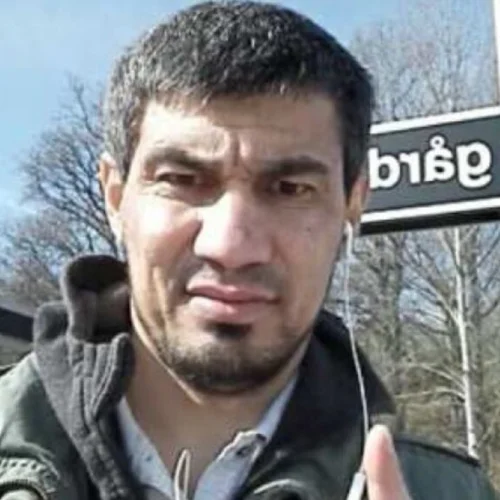
June 7, 2018Rakhmat Akilov was born on 14 February 1978. He comes from a village outside Samarkand in what is now Uzbekistan. He held Uzbek citizenship.
His family described themselves as a typical Soviet family. His older brother, Olim Akilov, said they did not welcome the collapse of the Soviet Union. The brother also said neither Rakhmat nor his children were religious when they lived in Uzbekistan. According to the brother, Rakhmat did not attend mosque in Russia or Uzbekistan and did not show increased religiosity.
In 2009 Rakhmat moved to Russia to work. He worked at a cement factory outside Moscow. His older brother worked at the same factory. He continued there until 2013, when he lost his job.
From Tashkent he applied for a visa to Poland. He then traveled to Warsaw and to Gdańsk, and took a ferry from Poland to Sweden. He arrived in Sweden on 10 October 2014 and applied for asylum with the Swedish Migration Agency. The agency registered his application under a different name, although his true identity was known. Under the Dublin Regulation his case should have been handled in Poland.
In his asylum claim he said he needed refuge from the Uzbek security services and said they had tortured him and accused him of terrorism and treason. The Swedish Migration Board found no evidence supporting those claims. In late 2016 the board ordered him to leave Sweden within four weeks. He did not leave and did not appear when called, so the case was referred to the police. He then went into hiding.
While living in Sweden he stayed at various addresses in Stockholm suburbs. People who knew him described him as a hard worker. He was described as a "normal Muslim" who visited the mosque on Fridays. Others said he drank alcohol on weekends and used cannabis. Shortly before he stopped working there, he was fired from a construction job for drug use and for sleeping while at work on dangerous construction sites that included asbestos.
On 7 April 2017, a vehicle-ramming terrorist attack took place in central Stockholm, Sweden. A truck was hijacked and driven into crowds along Drottninggatan. The truck crashed into the Åhléns City department store. Five people were killed and 14 others were seriously injured.
The attack began at about 14:53 local time. The truck had been making a delivery on Adolf Fredriks kyrkogata when it was hijacked. The delivery driver tried to stop the hijacker by standing in front of the truck but had to jump out of the way. The hijacker then drove the truck at high speed into the pedestrian street and went about 500 meters down Drottninggatan, hitting pedestrians along the way. Witnesses said the driver zigzagged and appeared to attempt to target children. The truck ended up slamming into the department store and caught fire. Firefighters quickly doused the flames. The hijacker jumped out and fled the scene.
A homemade bomb or suspicious object was found in the truck after it was abandoned. Police said the device had not detonated. Authorities said the attacker had been burned by the device.
The perpetrator was Rakhmat Akilov, a 39-year-old citizen of Uzbekistan. He was apprehended several hours after the attack in Märsta, north of Stockholm. Akilov had sworn allegiance to the Islamic State in a self-recorded video the day before the attack, and Uzbek authorities alleged he had joined the group. Swedish police said he had expressed sympathy for extremist organizations, including IS.
Police locked down the Parliament House and the metro system and evacuated Stockholm Central Station. Train traffic to and from Stockholm was put on hold for the day. Border controls were tightened, and travelers were advised to carry passports. The Swedish Prime Minister said the attack appeared to be terrorism. Thousands of people gathered in Stockholm to honor the victims. Flowers and candles were left at the site of the attack and on Drottninggatan.
International reactions included the Eiffel Tower lights being switched off that evening. Several governments and international organizations issued statements of sympathy. Europol described the attack as driven by jihadist ideology.
Swedish police carried out a large investigation. They held about 700 interrogations and made about 300 seizures during the preliminary investigation. Several people were briefly detained in connection with the attack, but many were released when suspicions weakened.
Akilov was remanded in custody and later indicted for terrorist crimes. A court-ordered psychological evaluation found he did not suffer from a mental disorder at the time of the attack. On 7 June 2018, he was found guilty of terrorist crimes, including five murders, and of many counts of attempted murder and endangering others. He was sentenced to life in prison and, if released, to deportation to Uzbekistan and lifetime expulsion from Sweden. He was imprisoned in Kumla Prison and was assaulted by a fellow inmate in August 2018.
Five people died as a result of the attack. They included Chris Bevington, a 41-year-old British Spotify executive; a 31-year-old Belgian psychologist; a 69-year-old Swedish woman; an 11-year-old Swedish girl, Ebba Åkerlund; and a 69-year-old Swedish politician from the Green Party, Marie Kide, who died in hospital three weeks later. The Stockholm County Council said that 15 people were being treated in hospitals on the day of the attack, nine with serious injuries.
