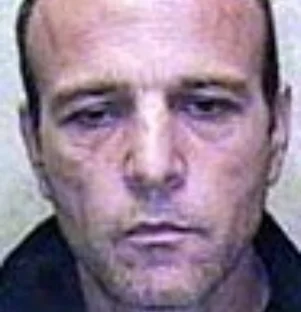
Summary
Name:
Phillip HeggartyYears Active:
2003Status:
ImprisonedClass:
MurdererVictims:
1Method:
BludgeoningNationality:
United KingdomSummary: Murderer
Name:
Phillip HeggartyStatus:
ImprisonedVictims:
1Method:
BludgeoningNationality:
United KingdomYears Active:
2003Date Convicted:
July 23, 2004“He was like the brother I never had.”
— Phillip Heggarty
Phillip Peter Heggarty was born in 1956 in the United Kingdom. By 2003, he was living in Cardiff, Wales, and was described in reports as a salesman. Heggarty had a serious criminal history before the murder of Derek Bennett. During sentencing, the court heard that his previous convictions included attempted murder and several violent robberies. Reports stated that some of those earlier robberies involved elderly victims.
Derek Bennett was Heggarty’s close friend. At trial, Heggarty described Bennett as being like the brother he never had. The two men had spent time drinking together and had attended a party before returning to Heggarty’s flat in Clare Road, Grangetown.
The prosecution argued that the friendship did not stop Heggarty from killing Bennett for money. Bennett was known to have been carrying up to £3,000 in cash and illegal drugs worth about £10,000. After Bennett’s death, Heggarty was found to have paid off £1,500 in debts on the same day as the murder. Drugs were also found at his girlfriend’s home.
Heggarty denied murder, but forensic evidence connected him to the killing. Derek Bennett’s blood was found inside Heggarty’s flat and on clothing Heggarty had worn on the night of the attack. Heggarty’s fingerprints were also found in blood on a cellar wall inside the flat.
On April 12, 2003, Phillip Peter Heggarty killed his best friend, Derek Bennett, in Cardiff, Wales. Before the murder, the two men had been drinking and socialising together. They later returned to Heggarty’s flat on Clare Road in Grangetown.
The prosecution argued that Bennett was attacked while lying on or near Heggarty’s settee. He may have been asleep, dozing, or turned away from his attacker when the assault began. Heggarty struck him repeatedly around the head with a blunt object believed to have been a hammer. The murder weapon was never recovered.
The attack was extremely violent. The sentencing judge later said Bennett had been bludgeoned to death and that his skull had been shattered into 23 pieces. The court heard that Bennett took about one and a half hours to die.
After the killing, Heggarty tried to hide the crime. He wrapped Bennett’s body in a rug and placed it in the back of Bennett’s stolen Renault Laguna. The car was then taken to the car park of the Earl Haig British Legion Club in Whitchurch, Cardiff, and set on fire.
Firefighters discovered Bennett’s remains in the rear of the burning vehicle two days after the murder. His body was so badly burned that he had to be identified through dental records.
Investigators later found important forensic evidence at Heggarty’s flat. Bennett’s blood was discovered inside the flat and on clothing Heggarty had worn on the night of the murder. Heggarty’s fingerprints were also found in blood on a wall in the cellar. Forensic testing suggested that the fatal weapon had been a hammer-type object, although it was never found.
The prosecution argued that the motive was robbery. Bennett had been carrying a large amount of cash and drugs. After the murder, Heggarty paid off £1,500 in debts, and drugs were found at his girlfriend’s home.
Heggarty denied killing Bennett. He told the jury that Bennett was like a brother to him and claimed it was unbelievable to suggest that he had murdered his friend. The jury rejected his defence.
On July 23, 2004, at Swansea Crown Court, Phillip Peter Heggarty was convicted of murdering Derek Bennett. Mr Justice Roderick Evans sentenced him to life imprisonment. The judge described him as a dangerous man, a resourceful and manipulative liar, and said the killing was brutal and very violent.
The judge ruled that a normal minimum term was not enough and imposed a whole-life order. This meant Heggarty was not to be considered for release on parole.
In 2014, Heggarty challenged the whole-life order at the Court of Appeal. His lawyers argued that the original sentencing judge had made a mistake by ordering that he should never be released. The Court of Appeal rejected the argument and upheld the whole-life order.
