d: 1920
Summary
Name:
Petrie KimbroughNickname:
Will LockettYears Active:
1912 - 1920Status:
ExecutedClass:
Serial KillerVictims:
4Method:
Strangulation / Beating / BludgeoningDeath:
March 11, 1920Nationality:
USAd: 1920
Summary: Serial Killer
Name:
Petrie KimbroughNickname:
Will LockettStatus:
ExecutedVictims:
4Method:
Strangulation / Beating / BludgeoningNationality:
USADeath:
March 11, 1920Years Active:
1912 - 1920Date Convicted:
February 9, 1920“I know I do not deserve mercy, but I am sorry I committed the crime and I would give anything if the little girl could be brought back to life.”
— Petrie Kimbrough
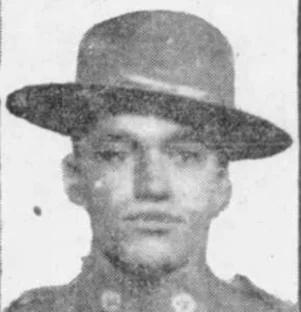
Petrie Kimbrough, better known by the alias Will Lockett, was born in May 1888 in Pembroke, Kentucky. As an adult, he traveled under the name Will Lockett, which became the name most closely linked to his criminal case.
According to his death-row confession, Kimbrough’s known violent history began in 1905, when he attempted to rape a woman in Christian County, Kentucky. He later admitted to killing three adult women in different states before the murder that led to his arrest, conviction, and execution.
In 1912, he attacked and killed Clara Miller Rogers, a 25-year-old woman, near railroad tracks in Carmi, Illinois. In 1917, he attacked Eliza Morman, a 25-year-old Black woman, in Evansville, Indiana. He later served in the army at Camp Zachary Taylor in Louisville, Kentucky. While connected to the camp, he killed Sallie Anderson Kraft, a 55-year-old woman.
Lockett became widely known for the murder of 10-year-old Geneva Hardman in Kentucky. He pleaded guilty to killing her and was sentenced to death. Before his execution, he admitted to the earlier murders. He was executed by electrocution in Kentucky on March 11, 1920.
Will Lockett’s known murder history comes mostly from the confession he gave shortly before his execution. In that confession, he said he had killed three adult women before the murder of Geneva Hardman. Some details about the earlier victims remain unclear because those cases were not fully investigated after his execution.
In 1912 or 1913, Lockett said he killed a woman near railroad tracks in Carmi, Illinois. Some sources identify her as Clara Miller Rogers, age 25, while another source lists her as Mrs. George Rogers, age 40. Lockett said the woman was sexually assaulted and strangled.
In 1917, Lockett confessed to another killing in Evansville, Indiana. The victim was later identified as Eliza Morman, also spelled Eliza Moorman, a 25-year-old Black woman. Accounts state that she was attacked, choked, and beaten.
In February 1919, Lockett said he killed another woman while he was connected to Camp Zachary Taylor near Louisville, Kentucky. Later research linked this confession to Sallie Anderson Kraft, a 55-year-old woman whose body had been found near the camp. Because Lockett gave limited details, this killing is considered strongly connected to him but not as fully documented as the Geneva Hardman case.
The crime that led to Lockett’s arrest happened on February 4, 1920, near South Elkhorn in Fayette County, Kentucky. Geneva Hardman, a 10-year-old schoolgirl, left home for school at about 7:30 a.m. Soon after, farmer Speed Collins found her school satchel and hood near a fence by a cornfield. He took the items to the schoolhouse, where Geneva’s teacher, Mrs. Anna Young, recognized them.
When Geneva did not arrive at school or return home, a search began. Collins and other men returned to the area where the satchel had been found. They saw tracks in the mud and signs that a body had been dragged into the field. About 100 feet from the road, they found Geneva’s body partly covered with fodder. A large rock, blood, her umbrella, and one of her hair ribbons were found nearby.
Police and local searchers began looking for the killer that same day. A witness, James Woolfolk, said he had seen and spoken with Will Lockett near the area around the time of the murder. Bloodhounds followed a trail toward Nicholasville, and another witness reported seeing a man walking along the road with mud on his legs.
Lockett was captured later that afternoon, around 4:30 p.m., near Dixontown in Jessamine County. When stopped, he first gave the name Will Hamilton. He was wearing a dirty army uniform and carrying new overalls that were reportedly stained with blood and mud.
After his arrest, Lockett was questioned at Lexington police headquarters. He admitted that he had met Geneva and taken her into the field. He said he tried to assault her but failed. He also admitted that he killed her with a rock and covered her body with fodder.
News of the murder caused public anger, and a white mob formed outside the jail. Officials moved Lockett for his safety because they feared he would be lynched. Governor Edwin P. Morrow ordered extra protection, and Lockett was guarded by state authorities.
Lockett was indicted for murder on February 5, 1920. His trial was held on February 9, 1920, in Lexington. He pleaded guilty. His lawyers asked the jury to spare his life and sentence him to life in prison, but the jury chose the death penalty.
During the trial, a mob tried to storm the courthouse to reach Lockett. Kentucky National Guard troops and police fired on the crowd after warning shots failed to stop them. Several people were killed, and many others were wounded. Federal troops were later brought into Lexington to control the situation and prevent further violence.
After the trial, Lockett was taken under heavy guard to the state prison at Eddyville, Kentucky. On March 8, 1920, three days before his execution, he confessed to the earlier killings in Illinois, Indiana, and Kentucky. He also said his real name was Petrie Kimbrough.
Will Lockett was executed by electrocution at Kentucky State Penitentiary on March 11, 1920. He was executed only for the murder of Geneva Hardman, but he is generally listed as responsible for four murders because of his final confession.
