d: 1929
Summary
Name:
Peter KudzinowskiYears Active:
1924 - 1928Status:
ExecutedClass:
Serial KillerVictims:
3Method:
Stabbing / Throat-cuttingDeath:
December 21, 1929Nationality:
Polandd: 1929
Summary: Serial Killer
Name:
Peter KudzinowskiStatus:
ExecutedVictims:
3Method:
Stabbing / Throat-cuttingNationality:
PolandDeath:
December 21, 1929Years Active:
1924 - 1928Date Convicted:
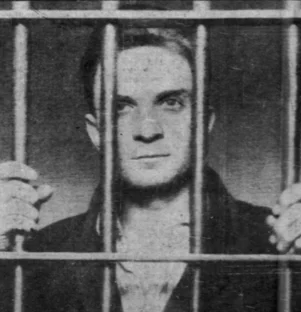
January 11, 1929Peter Kudzinowski was born in Poland On August 13, 1903 and later immigrated to the United States. After arriving in the United States, Kudzinowski worked a series of manual labor jobs. Records and newspaper reports described him as a railroad section hand and coal miner. He spent time in Pennsylvania and New Jersey, where he moved between temporary jobs and lodging. At least one of his relatives, a brother named Julian, lived near Scranton, Pennsylvania.
Authorities later described him as a drifter who frequently traveled between communities in the northeastern United States while working seasonal labor jobs. By the late 1920s, Kudzinowski had become the subject of multiple investigations involving missing children. At the time, law-enforcement agencies had limited communication systems and forensic capabilities compared with modern standards. As a result, connections between crimes committed in different states often went unnoticed until a suspect was apprehended.
His eventual arrest revealed that he had committed multiple murders over several years. Investigators later linked him to crimes in Pennsylvania and New Jersey, making him one of the more notorious child killers operating in the northeastern United States during the 1920s.
The earliest murder attributed to Peter Kudzinowski was the killing of Harry Quinn near Scranton, Pennsylvania, in 1924. Details concerning Quinn's death are less complete than those available for Kudzinowski's later crimes. However, after his arrest, Kudzinowski admitted responsibility for the killing, and authorities accepted the confession as genuine.
His most infamous crime involved seven-year-old Joseph Storella of New York City. On November 17, 1928, Kudzinowski encountered Joseph on First Avenue in Manhattan. After gaining the child's trust, he took him to a movie theater before traveling with him across the Hudson River into New Jersey. They arrived in the Secaucus meadows near Jersey City, where Kudzinowski attempted to isolate the boy.
When Joseph resisted and attempted to escape, Kudzinowski assaulted him. Fearing that the child's screams would attract attention from passing motorists, he cut the boy's throat. He then covered the body with Joseph's overcoat and left the scene. The disappearance generated significant publicity in New York and New Jersey, prompting a large-scale search.
While investigating the Storella case, authorities discovered evidence linking Kudzinowski to the disappearance of five-year-old Julia Mlodzianowski. Julia vanished on August 19, 1928, during a school picnic at Lake Hopatcong, New Jersey. During interrogation, Kudzinowski confessed to luring the child away from the picnic area before murdering her. He later guided investigators through the events of the crime and identified locations connected to the murder. Newspaper reports stated that he disposed of her body after transporting it away from the area, although recovery efforts were unsuccessful.
His confessions also led investigators to revisit several other unsolved child disappearances. Kudzinowski became a suspect in the murders of Billy Gaffney and Irving Pickelny, two children who disappeared in the New York area during the 1920s. However, no charges were filed against him in those cases. The murder of Billy Gaffney was later associated with confessed serial killer Albert Fish.
Kudzinowski was ultimately located and arrested in Detroit, Michigan, in December 1928. Following his arrest, he confessed to multiple murders and was returned to New Jersey to face prosecution. The confession generated extensive national media coverage and quickly became one of the most widely reported criminal cases in the region.
His trial for the murder of Joseph Storella was held in Jersey City. The prosecution presented his confession along with supporting evidence gathered during the investigation. On January 11, 1929, after approximately one hour of deliberation, the jury returned a verdict of guilty of first-degree murder without a recommendation for mercy.
The conviction carried a mandatory death sentence. Appeals and post-conviction efforts failed to overturn the verdict. Peter Kudzinowski remained on death row at New Jersey State Prison throughout 1929.
On December 21, 1929, Peter Kudzinowski was executed in the electric chair at New Jersey State Prison in Trenton, New Jersey. He was approximately 26 years old. His execution ended one of the most publicized child-murder cases in the northeastern United States during the late 1920s.
