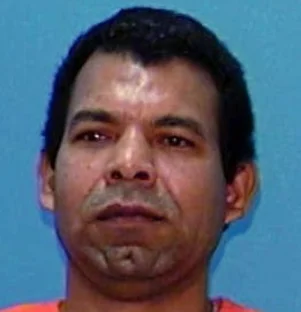
b: 1963
Summary
Name:
Pedro Hernandez-AlbertoYears Active:
1999Birth:
January 15, 1963Status:
ImprisonedClass:
MurdererVictims:
2Method:
ShootingNationality:
Mexicob: 1963
Summary: Murderer
Name:
Pedro Hernandez-AlbertoStatus:
ImprisonedVictims:
2Method:
ShootingNationality:
MexicoBirth:
January 15, 1963Years Active:
1999Date Convicted:
August 24, 2001Pedro Hernandez-Alberto was born on January 15, 1963. Court records identify him as a citizen of Mexico who was legally residing in Florida at the time of the murders. He lived in Hillsborough County, Florida, and was married to Maria Gonzalez. The couple married in 1996 after a relationship that had lasted several years. Maria had three children from previous relationships, an adult son named Salvatore Gonzalez, an adult daughter named Isela Gonzalez, and an 11-year-old daughter named Donna Berezovsky. Hernandez-Alberto and Maria also had one child together, Gabriella, who was still an infant when the murders occurred.
Maria Gonzalez owned the family home in Apollo Beach, Florida, and also owned and operated the Apollo Beach Family Restaurant. The home and restaurant had been hers before the marriage. According to the Florida Supreme Court, Hernandez-Alberto repeatedly argued with Maria about ownership of both properties and wanted his name placed on the title to the home and business. That dispute was central to the events that led to the killings on January 3, 1999.
The trial court found that he had suffered a brain injury, lost his mother at an early age, experienced beatings from his father when his father drank, and was mistreated by a neighbor who cared for him after his father abandoned him. The court also found that he had lived in extreme poverty as a child, had once trained and worked as an auxiliary police officer in Mexico City, had been capable of loving and respectful relationships in his youth, voluntarily confessed after arrest, and had borderline intelligence.
Mental health and competency issues became part of the case early. In May 1999, the trial court found Hernandez-Alberto incompetent to proceed and committed him for treatment. Later evaluations led to findings that he was competent, and the case moved forward. During trial, the defense argued that he suffered from mental illness and possible brain damage, including alleged injury from a vehicle accident that occurred before the homicides.
Hernandez-Alberto’s relationship with his attorneys was difficult throughout the proceedings. The Florida Supreme Court noted that he was uncooperative with lawyers, investigators, and doctors appointed to evaluate him. He also made repeated courtroom outbursts and was removed from court on some occasions. At the start of trial, he discharged his attorneys and represented himself for part of the case, with standby counsel available. The trial court later observed that he behaved appropriately while representing himself, asked relevant questions, and attempted to make points before the jury.
On the morning of January 3, 1999, Pedro Hernandez-Alberto and Maria Gonzalez continued an argument about ownership of Maria’s Apollo Beach home and the Apollo Beach Family Restaurant. Hernandez-Alberto wanted his name placed on the title to both properties, but Maria refused. After the argument, Maria left the home and went to work at the restaurant.
After Maria left, Hernandez-Alberto placed their infant daughter, Gabriella, in a back bedroom. He then confronted his 11-year-old stepdaughter, Donna Berezovsky, in the family room. According to the Florida Supreme Court, he told Donna to pick up a toy. When she refused, he struck her near the right ear and knocked her to the floor. He then removed a gun from his fanny pack and shot her in the back while she was lying face down. Donna died from the gunshot wound.
The medical evidence supported the account that Donna had been shot while face down. The autopsy showed that the bullet entered her back and traveled through major internal structures, including the spinal cord, aorta, lung, chest, and arm. A contusion on her face was also consistent with being struck before the shooting.
After killing Donna, Hernandez-Alberto drove to the Apollo Beach Family Restaurant, where Maria and Isela Gonzalez were working. He entered through the back area of the restaurant and went directly to the restroom, where he stayed for about eight to ten minutes. When he came out, he approached Isela from behind and shot her twice in the back. After Isela fell to the floor, he shot her a third time in the head or neck area.
The medical testimony showed that Isela suffered three gunshot wounds. One shot entered her lower back and passed through her hip and intestines. Another entered higher on her back and damaged several organs before exiting her body. The third shot struck her neck area, injuring the spine and major blood vessels.
After the restaurant shooting, Hernandez-Alberto left with the gun, got into his car, and fled toward Mexico. He was arrested in Brookshire, Texas, near Houston. When Texas law enforcement interviewed him, he confessed to shooting and killing Donna and Isela. At the time of his arrest, police found a gun in his possession that was later identified as the murder weapon. A fanny pack was also recovered.
Hernandez-Alberto was indicted in Hillsborough County on January 13, 1999, on two counts of first-degree murder: one for Donna Berezovsky and one for Isela Gonzalez. His competency was questioned before trial. He was found incompetent in May 1999, but later hearings in November 1999, August 2001, and November 2001 resulted in findings that he was competent to proceed.
His trial took place in August 2001. On August 24, 2001, the jury found Hernandez-Alberto guilty of two counts of first-degree premeditated murder. On November 29, 2001, the same jury recommended death for both murders by a vote of 10 to 2. On May 28, 2002, the trial court followed the jury’s recommendation and sentenced him to death for each murder.
The trial court found separate aggravating circumstances for each killing. For Donna’s murder, the court found that she was under 12 years old and that Hernandez-Alberto stood in a position of familial or custodial authority over her. For Isela’s murder, the court found that the killing was cold, calculated, and premeditated. The trial court also considered mitigation, including no significant prior criminal history, brain injury, poverty, childhood abuse, a voluntary confession, and borderline intelligence.
Hernandez-Alberto filed a direct appeal with the Florida Supreme Court. He raised issues including competency, self-representation, denial of a continuance, denial of a PET scan, the sufficiency of the evidence of premeditation, proportionality of the death penalty, and the constitutionality of Florida’s death penalty statute. On September 23, 2004, the Florida Supreme Court affirmed both convictions and both death sentences.
Postconviction litigation continued for years. In 2013, the Florida Supreme Court affirmed the dismissal of his postconviction motion and denied his petition for habeas corpus. The court again reviewed the factual background of the murders, the Brookshire arrest, and the competency-related litigation.
In 2016, the United States Court of Appeals for the Eleventh Circuit ruled that Hernandez-Alberto’s federal habeas petition had been timely filed and remanded the case for further proceedings. The decision focused on the timing of his postconviction petition and competency-related proceedings, not on a finding of factual innocence.
After the United States Supreme Court and Florida courts changed death penalty requirements through the Hurst line of cases, Hernandez-Alberto’s death sentences were vacated because the jury recommendations had not been unanimous. The Death Penalty Information Center lists his death sentences as vacated by the trial court on May 9, 2017, and records that he was resentenced on August 31, 2018, to two concurrent life sentences.
