d: 1923
Summary
Name:
Paul V. HadleyNickname:
Mopy / William S. Estaver / J. O. KendrickYears Active:
1916 - 1921Status:
ExecutedClass:
MurdererVictims:
2Method:
ShootingDeath:
April 13, 1923Nationality:
USAd: 1923
Summary: Murderer
Name:
Paul V. HadleyNickname:
Mopy / William S. Estaver / J. O. KendrickStatus:
ExecutedVictims:
2Method:
ShootingNationality:
USADeath:
April 13, 1923Years Active:
1916 - 1921“I am in it just as much as she is; just as much to blame as she.”
— Paul V. Hadley
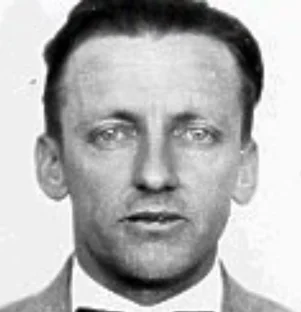
Paul V. Hadley was born in 1887. By 1916, he was living in Beaumont, Texas, with his wife, Ida Hadley. He was wanted in Jefferson County, Texas, for assault with intent to kill and had fled the state using the alias J. O. Kendrick.
Hadley was arrested in Kansas City, Missouri, on March 20, 1916. Sheriff W. J. “Jacob” Giles of Jefferson County, Texas, traveled to Kansas City with requisition papers to return Hadley to Texas. Ida Hadley asked to accompany her husband on the train back, and Sheriff Giles allowed her to do so after she paid for her own ticket.
Sheriff Giles knew the Hadleys and appears to have trusted them. During the trip, Hadley was eventually allowed to ride without handcuffs while sitting with his wife. This decision became fatal. Evidence later showed that Ida Hadley had brought a pistol and that the couple had discussed using it to help Paul escape custody.
On March 24, 1916, Sheriff W. J. Giles was transporting Paul V. Hadley by train from Kansas City back toward Texas. Ida Hadley was also traveling with them. After the train left Muskogee, Oklahoma, Ida went to the women’s toilet area, returned with a pistol, and shot Sheriff Giles in the back of the head. Giles never regained consciousness and died shortly after he was removed from the train at Checotah.
Immediately after the shooting, Paul Hadley took the sheriff’s gun and helped control the passengers. He ordered the train auditor to stop the train and threatened to kill him if he refused. Paul and Ida then left the train at Checotah and fled on foot. They were captured the following day by law officers near Hi Early Mountain.
Paul and Ida Hadley were charged with the murder of Sheriff Giles. Ida was found not guilty by reason of insanity. Paul was found guilty of murder and sentenced to life imprisonment at hard labor. His conviction was later affirmed by the Oklahoma Court of Criminal Appeals in 1918. The court found that the evidence supported the conclusion that Paul and Ida acted together in a plan to help Paul escape from custody.
Hadley later escaped from prison in 1921. After his escape, he appeared in Arizona under the alias William S. Estaver. On November 15, 1921, he accepted a ride from Peter Johnson and Anna C. Johnson, an elderly couple traveling by automobile. According to the prosecution evidence, Hadley sat in the rear seat and later shot both victims. Peter Johnson was seriously wounded but survived. Anna Johnson was shot several times and died.
Hadley claimed that the Johnsons had been attacked by unknown people from the roadside, but the prosecution rejected this version. When he was arrested, authorities found him with a .32-caliber Mauser pistol and cartridges. The case became historically important because of the use of early forensic ballistics evidence. A. J. Eddy conducted tests on the pistol and bullets, comparing markings on test-fired bullets with the fatal bullets. His testimony helped connect Hadley’s weapon to the shooting.
Hadley was tried twice in Arizona. The first jury failed to reach a verdict. He was retried in May 1922 and convicted of murdering Anna C. Johnson. He was sentenced to death. His appeal reached the Arizona Supreme Court, which affirmed the conviction on February 6, 1923. The decision became an important early ruling recognizing ballistics comparison evidence as admissible in court.
Paul V. Hadley was executed by hanging at the Arizona State Prison in Florence on April 13, 1923. His execution ended a criminal history that included the murder of a Texas sheriff during an escape attempt and the later killing of Anna C. Johnson after his prison escape.
