Summary
Name:
Paul LeahyYears Active:
2002Status:
ImprisonedClass:
MurdererVictims:
1Method:
StabbingNationality:
USASummary: Murderer
Name:
Paul LeahyStatus:
ImprisonedVictims:
1Method:
StabbingNationality:
USAYears Active:
2002Date Convicted:
September 24, 2003“I lost it. I lost it.”
— Paul Leahy
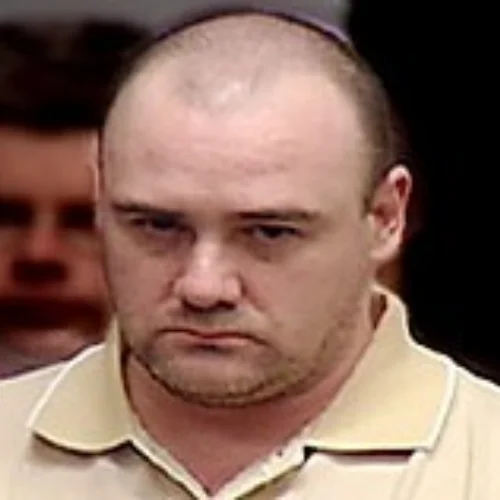
Paul J. Leahy was born in 1961 and lived in Massachusetts. Leahy was later convicted of aggravated rape after attacking a 21-year-old woman at knifepoint. The woman worked at a pizza restaurant. During the attack, Leahy tried to strangle her, but a customer entered the business and the victim escaped. Leahy received an 8-to-15-year prison sentence and served about 13 years.
After his release, Leahy continued to get into legal trouble. He was later charged with lewd and lascivious behavior and accosting a person of the opposite sex after an incident involving an underage girl. At the time, he was also on probation for drunk driving. Because of a probation violation, he was sent back to jail for six months.
Before Alexandra Zapp was killed, Plymouth County prosecutors tried to have Leahy civilly committed as a sexually dangerous person. Their first petition was filed in October 2001, but a judge dismissed it because it did not include the required mental-health opinion. Prosecutors filed another petition with a psychologist’s report, which said Leahy was at high risk of committing another offense if released.
The request was still denied. At the time, Leahy was not serving a sentence for a qualifying sexual-assault offense under the law. He was being held for accosting or annoying a person of the opposite sex and for a drunk-driving-related sentence. Because of that legal issue, prosecutors could not keep him committed under the statute then in place.
By July 2002, Leahy was working as a cook at a Burger King inside a Route 24 rest area in Bridgewater, Massachusetts. The restaurant and restrooms were open overnight. Leahy was working the 10:00 p.m. to 6:00 a.m. shift on the night Alexandra Zapp stopped there.
Alexandra Nicole Zapp, also known as Ally, was born on August 24, 1971, in Portland, Oregon. She later studied at the University of Oregon and became active in the sailing community. She worked with U.S. Sailing, volunteered for charity, and lived in Newport, Rhode Island. At the time of her death, she had plans connected to sailing and the America’s Cup organization.
On July 17, 2002, Alexandra Zapp attended a charity cruise in Boston. After the event, she spent time with a friend and later started driving home to Newport, Rhode Island. Around midnight, she stopped at a Route 24 rest area in Bridgewater, Massachusetts. The rest area had a Burger King and public restrooms. Reports say she bought food, then went back to her car to rest before continuing her trip.
Paul Leahy was working the overnight shift at the Burger King. His shift ran from 10:00 p.m. to 6:00 a.m. The rest area stayed open all night. Shortly after 4:00 a.m. on July 18, 2002, Zapp went inside to use the women’s restroom.
Leahy later told police that he saw Zapp enter the building and thought about robbing her. He took out a knife and went toward the women’s restroom. When Zapp opened the door to leave, she saw him with the knife and screamed. Leahy forced her back into the restroom, tried to cover her mouth, and attacked her.
Zapp fought back and tried to escape. Leahy admitted that she reached the door more than once, but he dragged her back inside. During the struggle, Zapp tried to reason with him. She said they could tell people he had saved her from another attacker if he let her go. Leahy refused because he did not think anyone would believe that story. When she tried again to get away, he pulled her back and stabbed her again.
Massachusetts State Police Lieutenant Stephen O’Reilly was in the men’s restroom nearby. He heard muffled screams and loud thuds coming from the women’s restroom. When he checked the area, he saw blood near the door. He entered with his gun drawn and found Zapp badly wounded. Leahy was near the sink, washing blood from his hands and arms. When O’Reilly asked what happened, Leahy said, “I lost it. I lost it.”
Alexandra Zapp was already dead when she was found. The official court decision said she had been stabbed and slashed 26 times. Five of her wounds were serious enough to be fatal. Some media reports listed 27 knife wounds, but the court record gives 26 as the official number.
Police found a bloody knife in Leahy’s back pocket. They also found Zapp’s wallet and car key connected to him at the scene. Leahy was arrested at the rest area the same day. He was later taken to the Middleborough State Police barracks, where he gave a statement after being read his rights.
Leahy was charged with first-degree murder, kidnapping, armed robbery, and armed assault with intent to rob. Prosecutors said the evidence showed that he attacked Zapp deliberately. They used Lt. O’Reilly’s testimony, the crime scene evidence, and Leahy’s own statement to support their case.
Leahy’s defense did not deny that he stabbed Zapp. His lawyer, Frank Spillane, argued that the killing was not planned. The defense said Leahy had only been thinking about robbing Zapp and that the attack happened after she saw the knife and screamed. The defense focused on trying to avoid a first-degree murder conviction.
On September 24, 2003, a Plymouth County jury found Paul Leahy guilty of first-degree murder. He was also convicted of kidnapping, armed robbery, and armed assault with intent to rob. Judge Richard Chin sentenced him to life in prison without parole.
Leahy later appealed his conviction. He challenged his confession, jury selection, and the judge’s response to a jury question during deliberations. On December 9, 2005, the Massachusetts Supreme Judicial Court rejected his appeal and upheld the convictions.
Zapp’s murder brought attention to Massachusetts sex-offender laws and civil-commitment rules. Her family later supported legal changes because prosecutors had tried and failed to have Leahy civilly committed before the murder. Paul J. Leahy remains a convicted murderer serving life in prison without parole.
