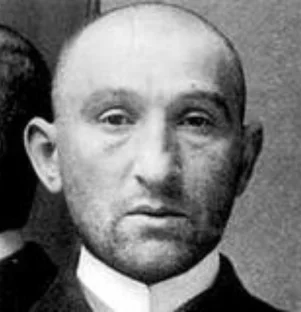
b: 1872
Summary
Name:
Oscar LeschzinerNickname:
SlaterYears Active:
1908Birth:
January 08, 1872Status:
DeceasedClass:
MurdererVictims:
1Method:
BludgeoningNationality:
Germanyb: 1872
Summary: Murderer
Name:
Oscar LeschzinerNickname:
SlaterStatus:
DeceasedVictims:
1Method:
BludgeoningNationality:
GermanyBirth:
January 08, 1872Years Active:
1908Oscar Leschziner, later known as Oscar Slater, was born on January 8, 1872, in Oppeln, Upper Silesia, Germany. He came from a Jewish family. In the early 1890s, Oscar moved to London. He wanted to avoid military service in Germany. In London, he worked as a bookmaker and used different names, one of which was Slater. Over time, he settled on this name for official purposes.
Oscar had some run-ins with the law during his early years. In 1896, he was prosecuted for malicious wounding but was acquitted. The following year, in 1897, he faced another charge for assault, which also did not result in a conviction. In 1899, Oscar moved to Edinburgh, and just two years later, he relocated to Glasgow.
In Glasgow, Oscar claimed various professions. He said he was a gymnastics instructor, a dentist, and a dealer in precious stones. However, police records indicated that he was involved in less reputable activities. He was known as a pimp and gangster who associated with thieves and receivers of stolen goods.
Oscar's life took a dramatic turn in December 1908 when an elderly woman named Marion Gilchrist was murdered in Glasgow. The media and the public clamored for justice. Slater's name came up due to his past and circumstances surrounding this case. However, much of Oscar's life before this incident revolved around moving from one place to another and dealing in shady activities.
On December 21, 1908, Marion Gilchrist, an 83-year-old woman, was found murdered in her Glasgow home. She had been brutally bludgeoned to death, and her apartment was ransacked. Only a diamond brooch was taken, despite the fact that she had much more jewelry hidden away. Marion's maid, Helen Lambie, had left the apartment for a short time to buy a newspaper. When she returned, she discovered the gruesome scene, and her cries for help brought a neighbor, Arthur Adams, to the apartment.
Police quickly became involved, facing public outcry for justice. They quickly zeroed in on Oscar Slater, a local man who had a questionable reputation. He had recently pawned a diamond brooch and left for New York shortly after the murder, raising suspicions. When he was arrested in the U.S., investigators found a brooch in his pocket. Witnesses, including Helen, identified him as the man they saw leaving the building.
Despite having an alibi and the fact that the brooch he pawned did not match the one stolen from Marion, Slater was tried in 1909. He was convicted of her murder based on circumstantial evidence and sentenced to death. Following public pressure and a petition, his sentence was commuted to life imprisonment just days before his scheduled execution.
Over time, several people questioned the legitimacy of Slater's conviction. Sir Arthur Conan Doyle, the author of Sherlock Holmes, became involved, publishing a book that detailed flaws in the prosecution's case. Many believed Slater had been wrongfully convicted. New evidence and claims from other witnesses continued to surface but did not immediately change his situation.
In 1927, a book detailing the case reignited public interest and led to renewed calls for justice for Slater. On November 8 of that year, the Secretary of State for Scotland announced that Slater would be released after serving over 18 years in prison. Although he was free, he maintained that he was not guilty of the crime.
Finally, in 1928, Slater's conviction was overturned, and he was awarded £6,000 in compensation. His case remains a significant example of a miscarriage of justice. Slater died in 1948, having spent part of his life in the shadow of the wrongful conviction. The people responsible for Marion Gilchrist's murder were never brought to justice, and various theories about the actual killer persist.
