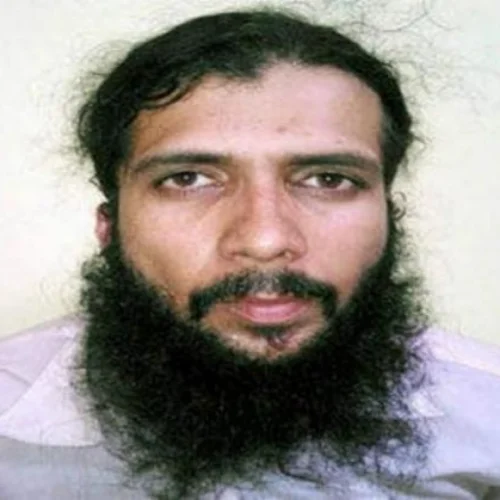
Summary
Name:
Murtaza Hafiz YasinYears Active:
2022Status:
DeceasedClass:
Mass MurdererVictims:
31Method:
Shooting / BombingNationality:
PakistanSummary: Mass Murderer
Name:
Murtaza Hafiz YasinStatus:
DeceasedVictims:
31Method:
Shooting / BombingNationality:
PakistanYears Active:
2022Murtaza Hafiz Yasin was reported in news and investigation records under several similar names, including Hafiz Yaseen. At the time of the reports, he was described as being between 20 and 25 years old.
Investigators later reported that he was from the Kashmir/Jammu region. Some official accounts linked his name with the groups Lashkar-e-Taiba and Jaish-e-Mohammed. A periodical published in Pakistan carried pictures of the men in its obituary columns, and that publication was cited by investigators when establishing their identities.
On 24 September 2002, two men named Murtaza Hafiz Yasin and Ashraf Ali Mohammad Farooq were identified as participants in the attack on the Swaminarayan Akshardham complex in Gandhinagar, Gujarat. The National Security Guard intervened the next day and the two men were killed during the operation. The temple complex was closed briefly and then reopened on 7 October 2002 with increased security.
Investigators found letters in Urdu that linked the attackers to a group called Tehrik-e-Kasas. Early reports also suggested links with Lashkar-e-Taiba and Jaish-e-Mohammed. The identities of the attackers were disputed at times, and officials reported conflicting information during the early months of the probe.
Police arrested several people in connection with the case over the following years. A POTA court tried six accused persons. In July 2006, the court sentenced Adam Suleman Ajmeri, Shan Miya (alias Chand Khan), and Mufti Abdul Qayyum Mansuri to death. Mohammed Salim Shaikh received life imprisonment. Altaf Hussain and Abdullahmiya Kadri received shorter prison terms.
The convictions were appealed. The Gujarat High Court affirmed many parts of the trial court’s verdicts at different stages. On 16 May 2014, the Supreme Court of India acquitted all six persons who had been convicted earlier. The Supreme Court criticized the quality of the investigation and said the prosecution had failed to prove the guilt of the accused.
After the incident, leaders and organizations appealed for calm and peace. The government and local authorities increased security at the complex and nearby areas. The case went through multiple phases of investigation, arrest, trial, and appeal before reaching the Supreme Court judgment.
