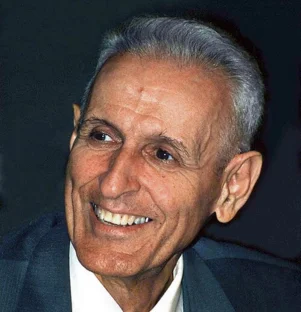
1928 - 2011
Summary
Name:
Murad Jacob KevorkianNickname:
Dr. DeathYears Active:
1990 - 1998Birth:
May 26, 1928Status:
DeceasedClass:
MurdererVictims:
1Method:
PoisoningDeath:
June 03, 2011Nationality:
USA1928 - 2011
Summary: Murderer
Name:
Murad Jacob KevorkianNickname:
Dr. DeathStatus:
DeceasedVictims:
1Method:
PoisoningNationality:
USABirth:
May 26, 1928Death:
June 03, 2011Years Active:
1990 - 1998Date Convicted:
March 26, 1999“Dying is not a crime.”
— Murad Jacob Kevorkian
Jack Kevorkian was born Murad Jacob Kevorkian on May 26, 1928, in Pontiac, Michigan. His parents were Armenian immigrants who had survived the violence and displacement connected to the Armenian genocide. His father, Levon, came to the United States in 1912 and worked in an automobile foundry. His mother, Satenig, fled the genocide and later settled in Pontiac, where she married Levon.
Kevorkian grew up in a family that valued education and Armenian heritage. As a child, he attended Orthodox church with his parents, but he began questioning religion at a young age. By the time he was 12, he had stopped attending church.
He was a very intelligent student and learned several languages on his own, including German, Russian, Greek, and Japanese. He graduated from Pontiac Central High School with honors in 1945, when he was 17 years old. He later studied medicine at the University of Michigan and graduated from its medical school in 1952.
Kevorkian trained in anatomical and clinical pathology. Early in his career, he became interested in death, dying, and medical ethics. These interests later shaped his controversial work involving assisted suicide and euthanasia.
Kevorkian’s first widely known assisted death occurred on June 4, 1990, when Janet Adkins, a 54-year-old woman with Alzheimer’s disease, died using his suicide device inside his van in Michigan. A murder charge in that case was later dismissed. This began a long public and legal battle over physician-assisted suicide, medical ethics, patient autonomy, and criminal liability.
Through the 1990s, Kevorkian was repeatedly investigated and prosecuted for assisting deaths. He was tried several times, but before the Thomas Youk case, he was not convicted. His public profile grew as he openly challenged laws against assisted suicide and argued that helping suffering patients die should not be treated as a crime. His critics argued that he was violating medical ethics, exploiting vulnerable people, and ignoring the law.
The case that led to his conviction involved Thomas Youk, a 52-year-old man with amyotrophic lateral sclerosis, also known as ALS or Lou Gehrig’s disease. On September 17, 1998, Kevorkian administered a lethal injection to Youk. This was different from many earlier cases because Kevorkian himself directly injected the drugs, rather than setting up a device that the patient activated.
Kevorkian recorded Youk’s death and gave the tape to 60 Minutes, which aired it on November 22, 1998. During the broadcast period, Kevorkian challenged authorities to prosecute him. Michigan prosecutors then charged him in connection with Youk’s death.
Kevorkian chose to represent himself at trial. On March 26, 1999, a Michigan jury convicted him of second-degree murder and delivery of a controlled substance. On April 13, 1999, he was sentenced to 10 to 25 years in prison. The sentencing judge stated that the case was not about the public debate over euthanasia, but about Kevorkian taking the law into his own hands.
Kevorkian served about eight years in prison and was released on parole on June 1, 2007. As a condition of parole, he was not allowed to help anyone die or provide care for disabled or elderly people. After his release, he said he would not directly assist any more deaths and would instead campaign for changes in the law.
After prison, Kevorkian gave lectures, interviews, and continued speaking publicly about assisted suicide and end-of-life rights. In 2008, he also ran unsuccessfully as an independent candidate for Congress in Michigan. He died on June 3, 2011, at William Beaumont Hospital in Royal Oak, Michigan.
