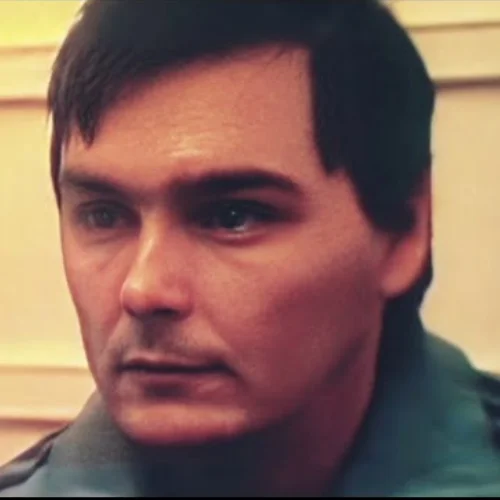
b: 1956
Summary
Name:
Mile MatićYears Active:
1986Birth:
January 14, 1956Status:
DeceasedClass:
Mass MurdererVictims:
9Method:
ShootingNationality:
Yugoslaviab: 1956
Summary: Mass Murderer
Name:
Mile MatićStatus:
DeceasedVictims:
9Method:
ShootingNationality:
YugoslaviaBirth:
January 14, 1956Years Active:
1986“I know. I intended to continue.”
— Mile Matić
Mile Matić was born on 14 January 1956 in Derventa, SR Bosnia and Herzegovina, Yugoslavia. His father was an alcoholic. When Mile was three years old, his mother left the family. He later lived in Doboj.
His IQ was 162 and he was described as persistent in everything he did. He worked as a prison guard at the "Novi život" prison in Zenica. He practiced karate and quickly earned a black belt. He worked as a coach in the karate section but was fired for stealing money from membership fees.
He had many girlfriends and was an amateur photographer. He photographed naked girls and filmed erotic scenes in which he acted. He also threatened to send photos to newspapers to blackmail some girls. Acquaintances said he was calm, kind, and a little narcissistic. He enjoyed crime novels and liked Mercedes cars. He wanted young and beautiful girls.
In March 1985, Matić met Smiljana Vasiljević. She was a third-grade high school student and her boyfriend was in the army. They saw each other for a time, but she ended the relationship at the end of the school year. He did not accept the breakup. He watched her more often, waited near the school, and tried to arrange a marriage with her parents. He threatened the girl, her parents, and her boyfriend. He once told her friends, "She will not live to see the eighth of March."
Matić often quarreled about his sister's husband. He received dozens of complaints at work about threats and his behavior, but many people did not take them seriously. After two months of treatment at Zenica Psychiatric Hospital, he was released on 16 January 1985. He was discharged as a cured patient with a diagnosis of paranoid schizophrenia. He was forbidden to have contact with any weapons and was advised to report monthly to the Disability Commission. A psychologist from the Sarajevo Institute of Public Health gave a similar opinion after a routine examination of prison guards from Zenica. Matić stole those records and hid them. He also had thoughts about how to get rid of people who "haunt him and who bother him."
On 26 February 1986 in Doboj, Mile Matić murdered nine people and wounded three others.
On the morning of February 26, Matić met his sister's husband in his parents' apartment. They quarreled and fought. Matić hit him in the head with an iron, wrapped him in a sheet and blanket, and shot him five times with a service pistol.
Matić then got into a taxi and killed the taxi driver near the Vranduk tunnel with four shots to the head. He threw the driver’s body into the Bosna River. He removed the taxi signs from the car and went to Zenica to work at the prison. He was seen in the cafeteria with a colleague. They agreed to go to a nearby village, and Matić shot that colleague in the head near the village of Jeline. He left the body in the car and hitchhiked to Zenica.
At about 9 PM, Matić changed his clothes and took an M62 submachine gun, a pistol, and 300 bullets in a large bag from the prison. He introduced himself as a municipal official, got into a taxi, and put the heavy bag in the trunk. The driver began to suspect him and later tried to inform the police. Near Žepče, two police officers stopped the cab. When the taxi driver opened the trunk, Matić opened fire from two pistols. He killed one police officer, wounded the other, and wounded the taxi driver. Matić fled and hid in a barn.
A policeman found Matić and the barn owner and took them to the police station. In front of the station, Matić pulled out a pistol, dropped it, then took another and aimed it at a policeman. The officers fled inside and raised the alarm. Matić ran to a nearby church, put on a security guard's coat, left his bag in the barn, and fled to Doboj.
At about 10 PM, Matić arrived at the Doboj Railway Station. He asked a taxi driver to take him to the village of Poljice, then to Koprivna Donja. He walked to the hamlet of Velika Rijeka and went to the house of Smiljana Vasiljević. He climbed the roof, went down to the attic and pantry, and moved through three bedrooms while firing his gun. He killed 18-year-old Smiljana, her grandfather, grandmother, and mother. Her 19-year-old brother tried to escape; Matić knocked out his teeth with the pistol handle, struck him, and shot him in the head. Matić waited for the father but the father was away. Around 5 AM, Matić killed the family's dog. He then set fire to the house, barn, and garage.
After leaving Velika Rijeka, Matić went to the village of Zarječe. He asked to sleep at a house and was offered a meal and a bed. News of the killings reached Zarječe. His hosts tied him with a dog chain. When asked if he knew what he had been doing, he replied, "I know I intended to continue." After his arrest, he was found with a list of 20 names of people he wanted to kill.
Experts diagnosed Matić with paranoid schizophrenia. He was sentenced to compulsory treatment and sent to the Belgrade District Prison Hospital. He hanged himself in August 1994.
