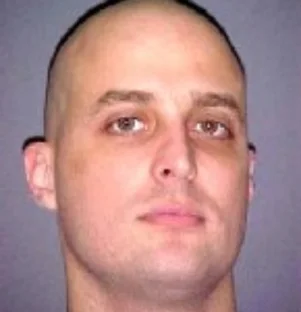
1972 - 2012
Summary
Name:
Michael Edward HooperYears Active:
1993Birth:
July 09, 1972Status:
ExecutedClass:
MurdererVictims:
3Method:
ShootingDeath:
August 14, 2012Nationality:
USA1972 - 2012
Summary: Murderer
Name:
Michael Edward HooperStatus:
ExecutedVictims:
3Method:
ShootingNationality:
USABirth:
July 09, 1972Death:
August 14, 2012Years Active:
1993"I just want to thank God for such an exuberant send-off. Also, my family for standing by me throughout all this. I appreciate them being there for me through the hardships... I ask that my spirit be released directly into the hands of Jesus. I'm ready to go. I love you all."
— Michael Edward Hooper
Michael Edward Hooper was born on July 9, 1972. He dated Cynthia Lynn Jarman for more than a year, until the summer of 1993. Their relationship was documented by police as physically violent, and Hooper had threatened to kill Cynthia on several occasions during their time together. After the relationship ended, Cynthia began dating one of Hooper's friends, Bill Stremlow, and eventually moved in with him, along with her two children from a prior relationship, Tonya Kay Jarman, 5, and Timmy Glen Jarman, 3.
On December 7, 1993, Cynthia Jarman drove Bill Stremlow to work and used his truck for the day. That afternoon, she picked up her daughter Tonya from school. Tonya’s teacher later saw Tonya get into Stremlow’s truck beside a white male who was not Stremlow. Cynthia did not return to pick Stremlow up from work that evening and was not seen alive again.
Later that night, Stremlow’s truck was found burning in a field in northwest Oklahoma City. Investigators determined that an accelerant, likely gasoline, had been used. When Stremlow later returned home, there were no signs of forced entry, but a dresser drawer had been disturbed, ten dollars was missing, and a Jim Beam bottle bearing Hooper’s fingerprints was found on the dresser.
Cynthia and her two children were reported missing on December 9, 1993. That same day, a rancher noticed damage to a gate leading into a field northwest of Oklahoma City. Inside the field, he found broken glass, tire tracks, a bloody sock, and a pool of blood. After hearing the missing-person report, he contacted police.
Police searched the field the next day and found shell casings, broken glass, tire tracks, a footprint, a child’s bloody sock, a pool of blood near a tree, and a grave covered with limbs, leaves, and other debris. The bodies of Cynthia Jarman, Tonya Jarman, and Timmy Jarman were buried together in the shallow grave. Each victim had been shot twice in the head.
Investigators arrested Hooper and searched his parents’ home. They recovered the 9mm pistol, two shovels with soil consistent with soil from the grave site, gas cans, and broken glass consistent with glass found in Tonya’s coat and near the field gate. Police also found a 9mm bullet in Hooper’s pocket. His shoe print was similar to a footprint at the scene, and DNA evidence showed blood on his shoes was consistent with Cynthia Jarman’s blood.
Ballistics evidence also linked the pistol to the crime. The appellate record states that shell casings from the scene matched casings fired from Hooper’s weapon. His former wife testified that Hooper was familiar with the field where the bodies were found and had visited it with her several times before.
Hooper was tried in Canadian County District Court, case number CF-93-601. A jury convicted him of three counts of first-degree murder. The jury found aggravating circumstances, including that he knowingly created a great risk of death to more than one person and that he would probably commit future criminal acts of violence. For Tonya’s murder, the jury also found that the murder was committed to avoid or prevent arrest or prosecution. The court imposed death sentences on all three counts.
On October 21, 1997, the Oklahoma Court of Criminal Appeals affirmed Hooper’s convictions and death sentences. His post-conviction appeal was denied in 1998. Later, in federal habeas proceedings, the Tenth Circuit upheld relief from the death sentences because of ineffective assistance of counsel during the penalty phase, while leaving the murder convictions in place.
After the case returned to Canadian County for resentencing, Hooper sought to waive a jury resentencing and waive the presentation of mitigating evidence. The trial court ordered a competency evaluation and found him competent. Sentencing hearings were held on September 8 and September 30, 2004, and the court again imposed death sentences on all three counts. Formal sentencing was held on October 27, 2004.
The Oklahoma Court of Criminal Appeals affirmed the resentencing decision on August 18, 2006. In later federal proceedings, Hooper challenged issues related to his competency and depression, but the Tenth Circuit denied a certificate of appealability in 2011. In 2012, he also challenged Oklahoma’s lethal injection protocol, but the Tenth Circuit affirmed the denial of a preliminary injunction days before the scheduled execution.
Michael Edward Hooper was executed by lethal injection at the Oklahoma State Penitentiary in McAlester on August 14, 2012. He was pronounced dead at 6:14 p.m. He was 40 years old.
