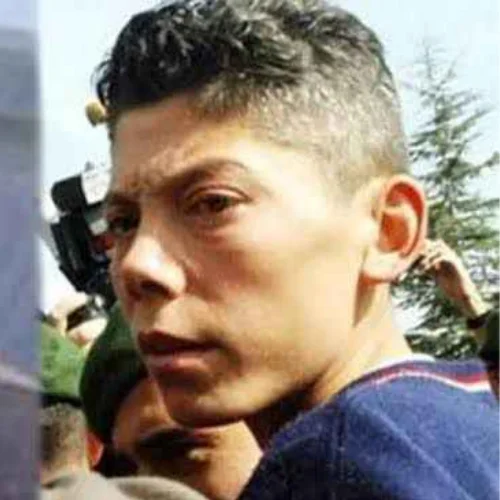
Summary
Name:
Mehmet KarahasanNickname:
Otoban Katilleri (The Highway Killers)Years Active:
2006Status:
ImprisonedClass:
Mass MurdererVictims:
7Method:
ShootingNationality:
TurkeySummary: Mass Murderer
Name:
Mehmet KarahasanNickname:
Otoban Katilleri (The Highway Killers)Status:
ImprisonedVictims:
7Method:
ShootingNationality:
TurkeyYears Active:
2006Mehmet Karahasan was born in 1982 in Akyazı, a town in Turkey’s Sakarya Province. Publicly available records provide limited information about his early family life, though court documents indicate that he grew up in a socially and economically modest environment. At the time of his first arrest, Karahasan was still a high school student.
At approximately 14 years of age, Karahasan committed a homicide that would mark the beginning of his violent criminal history. He killed the son of a wealthy family, later stating that he believed the victim had been sexually abusing his sister. The killing resulted in Karahasan being sentenced to imprisonment as a juvenile offender. He served approximately four years in custody before being released around the year 2000.
Following his release, Karahasan did not resume his formal education. Instead, he worked a series of irregular and low-paying jobs, moving frequently and failing to establish long-term stability. During this period, he developed a substance abuse problem, which later became a defining factor in his adult criminal behavior.
On 20 October 2006, Mehmet Karahasan and his accomplice rented a vehicle and began a rapid, cross-country crime spree across Turkey. Armed with a shotgun, they targeted isolated roadside businesses and lone employees, primarily along major highways. The attacks involved robbery followed by fatal shootings.
Their first victim was Hüseyin Çalışkan, a 20-year-old clerk working at a candy store along the Bursa–Yalova Highway. He was shot and killed at approximately 10:30 p.m. on 20 October 2006. Approximately five hours later, in the early morning hours of 21 October, the pair murdered Fatih Kılıç, a 21-year-old store employee near the İzmit highway.
The killings continued on 22 October 2006. That day, Karahasan participated in the shooting death of Mehmet Çakır, a gas station attendant in Hendek. Shortly afterward, they killed Özkan Köse, a kiosk owner in Mersin. Later the same day, they hijacked a vehicle along the Pozantı–Çamalan Highway. The driver, Bekir Ciritçi, aged 40, was later shot and killed.
In the early hours of 23 October 2006, the spree concluded in Ankara’s Gölbaşı district. At approximately 1:20 a.m., two additional victims were murdered: Enver Aycık, a gas station attendant, and Necati Yücel, a store employee.
From the first killing to their capture, Karahasan and his accomplice traveled approximately 1,944 kilometers in just over 52 hours, killing seven people and injuring two others. Surveillance footage from a gas station in Ankara played a key role in identifying both men. They were arrested later on 23 October 2006, bringing the spree to an end.
Because the murders occurred across six different jurisdictions, Mehmet Karahasan was prosecuted in multiple courts rather than a single consolidated trial. The legal proceedings took place between 2007 and 2011, with separate trials held for the killings committed in each region.
In 2011, Karahasan was convicted of all seven murders. He received five consecutive life sentences, along with an additional 55 years and 6 months of imprisonment for related offenses. The sentences were imposed consecutively, ensuring that he would remain incarcerated for life.
A third defendant, Celal Okumuş, who had been charged in connection with the case, was acquitted after the court determined there was insufficient evidence to prove his involvement.
Following the convictions, the family of victim Bekir Ciritçi filed a civil lawsuit against the Adana Police Department, alleging negligence that they claimed contributed to his death. The court dismissed the case, and no compensation was awarded. Mehmet Karahasan remains imprisoned in Turkey, serving multiple consecutive life sentences.
