b: 1957
Summary
Name:
Maxwell Alton HoffmanNickname:
Mad MaxYears Active:
1987Birth:
June 11, 1957Status:
ImprisonedClass:
MurdererVictims:
1Method:
Stabbing / Throat slashingNationality:
USAb: 1957
Summary: Murderer
Name:
Maxwell Alton HoffmanNickname:
Mad MaxStatus:
ImprisonedVictims:
1Method:
Stabbing / Throat slashingNationality:
USABirth:
June 11, 1957Years Active:
1987Date Convicted:
June 13, 1989"It is a very hard and difficult thing to live with the depth of guilt I feel... I won't have to live the rest of my life out, incarcerated, and plagued daily, year after year, by the thought and knowledge of what I've done, and all the pain I've caused."
— Maxwell Alton Hoffman
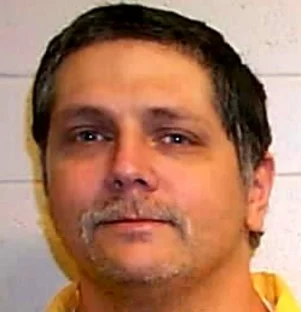
Maxwell Alton Hoffman, known as "Mad Max," was born on June 11, 1957. Records developed during his later appeals indicated that Hoffman had been borderline intellectually disabled throughout his life. He was associated with Richard Holmes, a Nampa-area drug dealer, and became entangled in Holmes's operation in the Nampa, Idaho (Canyon County) area during the mid-1980s.
On September 10, 1987, Denise Williams, 28, acting as a confidential informant for Nampa police narcotics officers, made a controlled drug purchase from Richard Holmes, resulting in his arrest. During the arrest, it became apparent to Holmes that Williams had been working with police. Holmes was released on bail and made it known that he intended to retaliate; witnesses later testified he stated he would make Williams "bleed to death like an animal."
Two associates, Sam Longstreet Jr. and James Slawson, arranged to lure Williams to a remote area of Owyhee County known as the Boy Scout Camp under the pretense of a meeting, where Hoffman and another man, Ronald Wages, were waiting. Holmes left the scene, telling the men, "You know what to do." Williams was kicked and verbally abused, told she was "dead meat," and then driven around rural Owyhee County through the night by Hoffman and Wages. At first light, Hoffman took her from the vehicle, struck her head against the car door, and led her into a ravine, where he slashed her throat. According to trial testimony, her death was slow, and she reportedly begged Wages to finish killing her before he stabbed her to complete the act. The two men then attempted to bury her body under a pile of rocks in the ravine.
Williams's disappearance triggered a police investigation. Longstreet and Slawson eventually cooperated with authorities in exchange for a reduced sentence on kidnapping charges. Holmes and Wages were subsequently indicted on conspiracy charges; in an effort to negotiate a plea agreement, Holmes led police to Williams's body, which was discovered in 1988, nearly a year after her disappearance. Wages then confessed to the killing and became a cooperating witness, providing a full account of the murder in exchange for a reduced sentence; he was ultimately convicted and received a life sentence. Holmes was charged with aiding and abetting first-degree murder, but before he could be tried, he was stabbed to death during a prison riot in September 1988 by a fellow inmate.
Hoffman went to a preliminary hearing on September 14, 1988, with Wages testifying as the state's principal witness against him. Hoffman was convicted of first-degree murder and sentenced to death on June 13, 1989. The Idaho Supreme Court affirmed his conviction and sentence on January 29, 1993.
Later that year, with an execution date set, U.S. Supreme Court Justice Sandra Day O'Connor granted Hoffman a stay of execution just two days before he was scheduled to die by lethal injection, allowing his case to proceed through the federal court system.
In 1997, Hoffman filed a petition asking to waive his remaining appeals, expressing a wish to be executed rather than continue living on death row, which he said had caused him physical and psychological hardship. A court-ordered psychological evaluation found that while Hoffman suffered from depression, he was competent to understand his legal situation, and a judge ruled his decision was not irrational. Hoffman ultimately did not follow through with ending his appeals.
Hoffman's federal habeas corpus petition argued, among other claims, that his trial attorneys had been constitutionally ineffective both in advising him to reject an early plea offer of a life sentence (based on a mistaken legal prediction that Idaho's death penalty statute would soon be struck down) and in failing to investigate and present available mental health mitigation evidence at his sentencing. A federal district court agreed that his sentencing counsel had been ineffective and ordered Idaho to resentence him. This ruling led to further appeals, including the U.S. Supreme Court case Arave v. Hoffman, 552 U.S. 117 (2008), in which Hoffman ultimately abandoned his separate claim regarding plea-bargaining counsel in order to proceed directly to the ordered resentencing.
Facing resentencing, Idaho prosecutors withdrew their intent to seek the death penalty again, citing the risk that Hoffman would be found intellectually disabled under the standard set by the U.S. Supreme Court's 2002 ruling barring execution of intellectually disabled defendants. In October 2008, a Third District Court judge in Owyhee County sentenced Hoffman to a fixed term of life imprisonment without the possibility of parole, ending his time on death row after nearly two decades.
