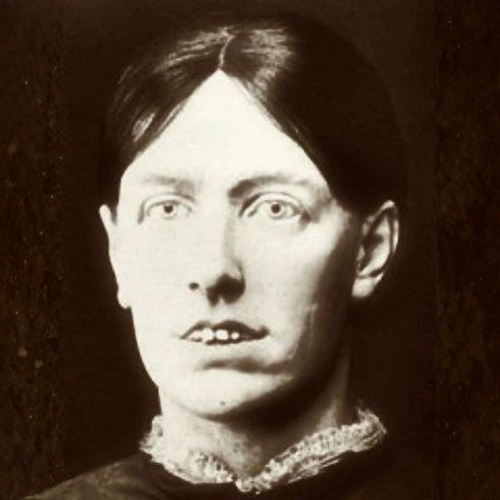
1866 - 1890
Summary
Name:
Mary PearceyYears Active:
1890Birth:
March 26, 1866Status:
ExecutedClass:
MurdererVictims:
2Method:
Bludgeoning / Stabbing / StrangulationDeath:
December 23, 1890Nationality:
United Kingdom1866 - 1890
Summary: Murderer
Name:
Mary PearceyStatus:
ExecutedVictims:
2Method:
Bludgeoning / Stabbing / StrangulationNationality:
United KingdomBirth:
March 26, 1866Death:
December 23, 1890Years Active:
1890"My sentence is a just one, but a good deal of the evidence against me was false."
— Mary Pearcey
Mary Pearcey was born Mary Eleanor Wheeler on 26 March 1866 in England. Her early life remains poorly documented, and much of what has been written about her background was shaped by sensationalist Victorian-era journalism. One persistent claim—that her father was Thomas Wheeler, a man hanged for murder—has since been discredited. Modern historical research has found no evidence linking Pearcey to that individual, and contemporary newspaper reports that made the claim later issued retractions.
As a young woman, Mary Wheeler entered into a relationship with a carpenter named John Charles Pearcey, from whom she later adopted the surname by which she became known. Their relationship ended due to her infidelity, after which she became involved with Frank Hogg, a furniture remover. Hogg maintained multiple romantic relationships simultaneously, including one with Phoebe Styles.
When Styles became pregnant, Pearcey urged Hogg to marry her, a decision that would later prove central to the events leading to Pearcey’s execution. After marriage, Styles became known as Phoebe Hogg, and she gave birth to a daughter, also named Phoebe, who was commonly called “Tiggy.” The Hoggs lived in Kentish Town, North London, while Pearcey remained nearby and maintained a volatile emotional attachment to Hogg.
By all accounts, Pearcey lived on the margins of respectability in late Victorian society. She was described by contemporaries as intense, emotionally unstable, and deeply resentful of Phoebe Hogg’s marriage to the man she still considered her own. These tensions simmered in the months leading up to October 1890, when the dispute would end in violence.
On 24 October 1890, Phoebe Hogg and her eighteen‑month‑old daughter, Tiggy, visited Mary Pearcey at her home after Pearcey invited them over. At approximately 4:00 p.m., neighbours reported hearing screams and sounds of a violent struggle coming from Pearcey’s residence. No immediate intervention occurred.
Later that evening, the body of an adult woman was discovered on a rubbish heap in Hampstead. Her skull had been brutally crushed, and her throat had been so severely cut that her head was nearly severed. Initially, newspapers speculated that the victim was an unidentified sex worker, reflecting the era’s prejudices. Shortly afterward, a black baby perambulator was found roughly a mile away, its interior soaked with blood.
The following day, the body of a young child was discovered in Finchley. The child had been smothered. The victims were soon identified as Phoebe Hogg and her daughter, Tiggy. Witnesses reported seeing Mary Pearcey pushing a baby carriage through the streets of North London after dark on the evening of the murders.
Police searched Pearcey’s home and uncovered extensive forensic evidence: blood spatter on the walls and ceiling, bloodstained clothing, clumps of hair, and murder weapons including a fireplace poker and a carving knife, both matted with blood and hair. When questioned, Pearcey claimed she had been attempting to kill mice in her home, an explanation widely regarded as implausible. According to senior police official Sir Melville Macnaghten, she later repeated the phrase “Killing mice, killing mice, killing mice,” in a disturbing and erratic manner.
Mary Pearcey was arrested and charged with the murders. Throughout her trial, she maintained her innocence, insisting that the evidence against her had been misinterpreted or falsified. Despite her protests, the jury found her guilty of murder. The verdict drew enormous public attention, and the case became one of the most sensational criminal trials of the Victorian era.
She was sentenced to death and executed by hanging on 23 December 1890 at Newgate Prison. The execution was carried out by James Berry, who later described Pearcey as calm and composed, remarking that she was “the most composed person in the whole execution party.” Her execution was reported to be swift and without complication.
In the aftermath of her death, Pearcey became a macabre cultural figure. Madame Tussauds acquired her likeness, the murder pram, and items from her kitchen for display in the Chamber of Horrors, drawing tens of thousands of visitors. The noose used in her execution remains preserved in the Crime Museum at New Scotland Yard.
Mary Pearcey’s case later became loosely associated with the Jack the Ripper murders due to the extreme violence involved and the proximity of her crime to the Whitechapel area. She was one of the few women ever suggested as a Ripper suspect. Sir Arthur Conan Doyle publicly speculated that a woman could have committed the Ripper murders by posing as a midwife, allowing her to move freely while bloodstained.
In 1939, writer William Stewart explicitly named Pearcey as a possible suspect, though his argument relied entirely on circumstantial reasoning. No physical evidence, eyewitness testimony, or confirmed forensic link connects Pearcey to the Ripper crimes. Modern historians overwhelmingly regard the theory as speculative rather than credible.
The renewed interest in female suspects resurfaced in 2006 when DNA testing of saliva from stamps on letters attributed to Jack the Ripper suggested a female contributor. While this reignited discussion of Pearcey, the authenticity of the letters themselves remains disputed, and the results do not constitute evidence of her involvement.
