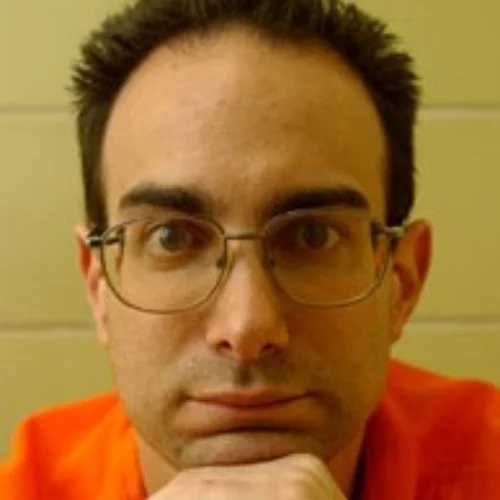
b: 1971
Summary
Name:
Martin TankleffNickname:
MartyYears Active:
1998Birth:
August 29, 1971Status:
ReleasedClass:
MurdererVictims:
2Method:
Stabbing / BludgeoningNationality:
USAb: 1971
Summary: Murderer
Name:
Martin TankleffNickname:
MartyStatus:
ReleasedVictims:
2Method:
Stabbing / BludgeoningNationality:
USABirth:
August 29, 1971Years Active:
1998Martin "Marty" Tankleff was born on August 29, 1971, in Long Island, New York. He grew up in a wealthy family. His father, Seymour Tankleff, owned a bagel shop, while his mother, Arlene Tankleff, was a homemaker. Marty was the only child in the family. He attended local schools and seemed to have a normal childhood.
In 1988, when Marty was 17 years old, he was set to begin his senior year of high school. However, his life changed drastically on September 7, 1988. This was the day he discovered his parents, Seymour and Arlene, attacked in their home. Marty woke up early that morning and found his mother dead and his father badly injured. He called for help immediately and tried to help his father until the police arrived.
Marty's life continued to spiral after this tragic event. The police investigation focused on him, and he became a suspect. He always maintained his innocence and claimed that he was pressured into confessing during intense police questioning. Despite his claims and a lack of physical evidence against him, he was convicted at the age of 19.
After enduring years in prison, new evidence came forth that could prove his innocence. Many years later, in 2007, his conviction was set aside, and he was released from prison. Although his early life seemed typical, the tragic events of his teenage years led to a complicated and controversial journey through the legal system.
On September 7, 1988, Martin "Marty" Tankleff, a 17-year-old boy, discovered his parents, Seymour and Arlene Tankleff, brutally attacked in their home in Suffolk County, New York. His mother was already dead, and his father was unconscious but alive. Marty called the police and tried to help his father until help arrived.
Police arrived, and Marty immediately mentioned a possible suspect. This suspect was Jerry Steuerman, a business partner of his father's who owed him a large amount of money. He also had a history of threatening the Tankleff family. Despite this information, the police focused their investigation on Marty. They began to interrogate him intensively, believing he was involved in the crime.
During the lengthy interrogation, a detective falsely told Marty that his father had regained consciousness and named him as the attacker. This lie led Marty to doubt his own memory. Under pressure, he confessed to the murders, but he quickly recanted, stating that the confession was coerced. Nonetheless, this confession played a significant role in his conviction.
In 1990, Marty was found guilty and sentenced to two terms of 25 years to life in prison. Over the years, Marty maintained his innocence and worked with a team of supporters to gather new evidence that pointed toward the actual killers. This included evidence linking Jerry Steuerman and his connections to other criminals who may have been involved in the murders.
In 2006, after a long fight for justice, new evidence prompted a motion for a new trial. However, the presiding judge denied the motion to vacate Marty's conviction. He continued to appeal this decision.
On December 21, 2007, the New York State Appellate Division reviewed the case. They vacated Marty’s conviction and ordered a new trial due to the uncovered evidence that suggested he was wrongfully convicted. By December 27, 2007, Marty Tankleff was released from prison after spending nearly 20 years behind bars.
In the days following his release, the District Attorney dropped all charges against him. Subsequently, an official inquiry into the handling of the case by Suffolk County law enforcement began due to widespread concerns of misconduct throughout the investigation. Eventually, in 2014, Marty reached a settlement with the state for $3.375 million for his wrongful conviction. He continues to challenge the investigation's outcome as he works towards exposing the issues surrounding his case and the actions of the law enforcement involved.
