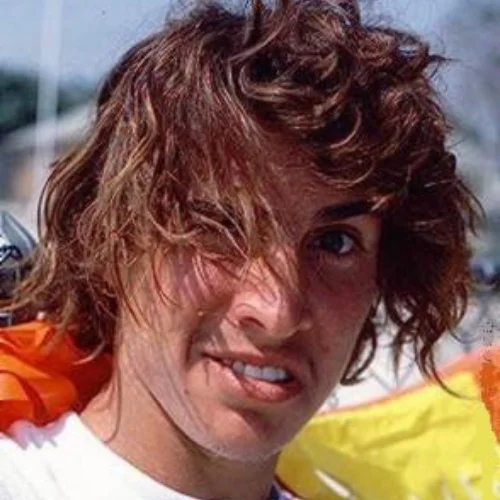
b: 1966
Summary
Name:
Mark Anthony RogowskiNickname:
GatorYears Active:
1991Birth:
August 10, 1966Status:
ImprisonedClass:
MurdererVictims:
1Method:
Bludgeoning / Suffocation / StrangulationNationality:
USAb: 1966
Summary: Murderer
Name:
Mark Anthony RogowskiNickname:
GatorStatus:
ImprisonedVictims:
1Method:
Bludgeoning / Suffocation / StrangulationNationality:
USABirth:
August 10, 1966Years Active:
1991“I hate what I did.”
— Mark Anthony Rogowski
Mark Anthony Rogowski, also known as "Gator," was born in 1966 in Brooklyn, New York. At the age of three, after his parents divorced, he moved with his mother and older brother to Escondido, California. Growing up without a father, his brother played an important role in his life, inspiring him to become active in sports. Gator discovered skateboarding at the young age of seven and quickly developed a passion for it.
By the age of 14, Rogowski was already skating professionally, competing in events throughout California. He became known for his aggressive style and impressive aerial tricks. His talent caught the attention of sponsors, and he received endorsement deals from various companies, including Vision Street Wear. Gator achieved fame in the skateboarding community and earned over $100,000 a year by the time he was 17.
In the late 1980s, Rogowski became a prominent figure in the skateboarding world. He was part of a group of top skaters, including Tony Hawk. Gator was admired for his flashy personality and good looks, and he starred in many skateboarding videos and advertisements. He even appeared in Tom Petty's "Free Fallin'" music video. As skateboarding gained popularity, Gator became a cultural icon.
However, as the 1990s approached, the style of skating he excelled in began to fade. Street skating emerged as the new trend, and Gator struggled to adapt. His once-thriving career began to decline. During this time, he faced personal challenges, including growing issues with alcohol and drugs. Seeking a change in his life, he converted to a strict form of Christianity, even changing his name to "Gator" Mark Anthony.
Gator's life took a downward turn, marked by conflicts in his relationships, including a tumultuous romance with a girl named Brandi McClain. Gator's jealousy and obsessive behavior led to a series of problems in their relationship. Brandi eventually left him, which deeply affected him.
In the years that followed, Gator's mental health worsened. He grappled with feelings of anger and jealousy that spiraled out of control. He also struggled with feelings of isolation as he distanced himself from friends and fellow skaters.
On March 21, 1991, Mark Anthony Rogowski, known as "Gator," murdered Jessica Bergsten, a 21-year-old woman. Earlier in the day, Jessica had reached out to him, seeking a tour of San Diego as she was moving to California. They spent the day together, but soon after, Jessica went missing.
According to Rogowski, while Jessica was putting on her shoes behind a couch, he attacked her with a metal theft device known as The Club, striking her multiple times until she became semi-unconscious. He then dragged her to his bedroom and proceeded to assault her for several hours. Afterward, fearing that she might attract the attention of neighbors, he placed her in a surfboard bag and suffocated her.
Rogowski then took her body and buried it in a shallow grave in the desert, about two hours from where he lived. Following the murder, he attempted to dispose of any evidence, including cleaning the bloodstains from his home.
Jessica's body was discovered weeks later, but it took time for the authorities to identify her due to the advanced state of decomposition. Stricken by guilt, Rogowski eventually confessed the crime to a friend who encouraged him to report it to the police. He did so voluntarily, waiving his legal rights.
When the police investigated, they found evidence, including bloodstains in his home, lending credence to his confession. Rogowski was diagnosed as severely manic-depressive while in prison. He later pled guilty to first-degree murder and received a sentence of 31 years in the California penal system. He became eligible for parole in 2010.
