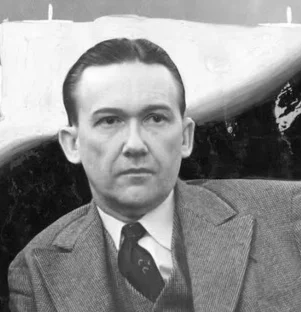
1894 - 1942
Summary
Name:
Major Raymond LisenbaNickname:
Rattlesnake Killer / Robert Sherwood JamesYears Active:
1932 - 1935Birth:
March 06, 1894Status:
ExecutedClass:
MurdererVictims:
3Method:
Rattlesnake poisoning / DrowningDeath:
May 01, 1942Nationality:
USA1894 - 1942
Summary: Murderer
Name:
Major Raymond LisenbaNickname:
Rattlesnake Killer / Robert Sherwood JamesStatus:
ExecutedVictims:
3Method:
Rattlesnake poisoning / DrowningNationality:
USABirth:
March 06, 1894Death:
May 01, 1942Years Active:
1932 - 1935Date Convicted:
July 24, 1936"I can take it. Let's just say that Rattlesnake Bob James is not afraid to die."
— Major Raymond Lisenba
Major Raymond Lisenba, later known as Robert S. James, was born in 1894 in Hale County, Alabama. He was the fourth child of Julius C. Lisenba and Mary Emma Parmentier. His father worked as a sharecropper, and Lisenba left school at a young age to work in the fields. He later learned barbering with help from his brother-in-law.
As a young man, Lisenba worked in farming and later in coal mining. He married his first wife, Maud Duncan, in Birmingham, Alabama, on October 8, 1914. He later served as a private in the U.S. Marine Corps during World War I. After the war, his marriage ended in divorce.
Lisenba later moved between several states, including Kansas and California. During this period, he began using the name Robert S. James. He remarried, but his later marriages also ended quickly. Records from this period show a pattern of unstable relationships, frequent moves, and changing identities.
In the early 1930s, Lisenba moved to California with his young niece, Lois Wright. He later became connected to several life insurance policies taken out on people close to him. These policies became important because more than one person connected to him later died under suspicious circumstances.
One of those people was his wife, Winona Wallace. Lisenba married her in 1932 and took out insurance policies soon after. During a trip near Pikes Peak in Colorado, their car went off the road. Lisenba was not seriously hurt, but Winona suffered head injuries. She survived the crash but later died in a bathtub while recovering. Her death was first treated as an accidental drowning, and Lisenba collected insurance money.
Lisenba was also connected to the death of his nephew, Cornelius Wright. He had taken out an insurance policy on Wright before the young man died in a car crash. Wright’s death was also treated as suspicious later, but Lisenba was not convicted for it.
By the mid-1930s, Lisenba was living in Southern California and working as a barber. He married Mary Emma Busch, a manicurist. Soon after the marriage, he took out life insurance on her. Her death in 1935 became the case that led to his arrest, conviction, and execution.
Mary Emma Busch James was married to Major Raymond Lisenba, who was then using the name Robert S. James. She worked as a manicurist, and he worked as a barber in the Los Angeles County area. In 1935, Lisenba took out life insurance on Mary. Lisenba then involved Charles H. Hope in a plan to kill Mary and collect the insurance money. Hope helped obtain rattlesnakes that were meant to make Mary’s death look like an accident.
On August 4 and August 5, 1935, Lisenba carried out the plan. Mary was tied down and blindfolded. Her mouth and eyes were covered. Lisenba had made the situation appear to her as if she was going to undergo a medical procedure related to her pregnancy. Lisenba and Hope placed Mary’s foot into a box containing rattlesnakes. The snakes bit her, but the venom did not kill her quickly. When the snakebite failed to cause her death, Lisenba changed the plan.
Mary was later drowned in a bathtub. Afterward, her body was placed near or in a fish pond so the death would appear accidental. At first, the death was not treated as murder. The case began to unravel months later. Lisenba was arrested on April 19, 1936, during a separate investigation involving allegations connected to his niece. During the investigation, authorities took a closer look at Mary’s death and Lisenba’s background.
Investigators learned about his earlier marriages, the suspicious death of Winona Wallace James, and the insurance policies connected to people close to him. Charles Hope eventually gave details about the plan involving the rattlesnakes and Mary’s drowning. Lisenba and Hope were charged with Mary’s murder. Hope pleaded guilty and received a life sentence. Lisenba went to trial for first-degree murder. The trial drew major public attention because of the rattlesnake evidence and the strange method used in the killing.
On July 24, 1936, Lisenba was found guilty of first-degree murder and sentenced to death. His lawyers appealed the conviction, arguing that parts of the trial and investigation were unfair. The case reached the United States Supreme Court as Lisenba v. California. The Supreme Court upheld the conviction and death sentence.
Major Raymond Lisenba was executed by hanging at San Quentin State Prison on May 1, 1942. He was about 48 years old. His execution became historically important because he was the last person executed by hanging in California. Later executions in the state were carried out by other methods.
