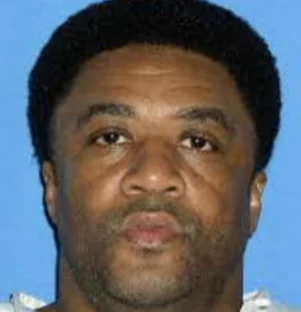
1963 - 2007
Summary
Name:
Lonnie Earl JohnsonYears Active:
1990Birth:
March 09, 1963Status:
ExecutedClass:
MurdererVictims:
2Method:
ShootingDeath:
July 24, 2007Nationality:
USA1963 - 2007
Summary: Murderer
Name:
Lonnie Earl JohnsonStatus:
ExecutedVictims:
2Method:
ShootingNationality:
USABirth:
March 09, 1963Death:
July 24, 2007Years Active:
1990Date Convicted:
November 14, 1994“Father, take me home. I’m gone, baby. I’m ready to go.”
— Lonnie Earl Johnson
Lonnie Earl Johnson was born on March 9, 1963, in Harris County, Texas. Official prison information states that he completed 11 years of education and worked in construction. He was approximately 5 feet 9 inches tall and weighed about 219 pounds when recorded by the Texas prison system.
Few independently verified details have been published about Johnson’s childhood, parents, or home life. Accounts written by Johnson and his supporters described him as having grown up in a working family in Houston and having participated in sports. However, these personal accounts were not independently established in the court decisions reviewed for this profile. Official Texas records do not confirm that he graduated from high school or attended college; they list his formal education as 11 years.
Johnson had no previous state prison record when he was received on death row. However, that did not mean he had no prior contact with the criminal justice system. Evidence presented during the punishment phase of his trial showed that he had received one year of probation for a misdemeanor assault involving a female relative.
Prosecutors also introduced testimony concerning earlier violent behavior. One former girlfriend testified that Johnson struck her after she spoke to another man and later hit her with a brick. Another woman said he struck her in the face and took her vehicle. These incidents were presented during sentencing to support the prosecution’s claim that he could remain dangerous in the future. They were not separate murder convictions.
Johnson reportedly had two children. While imprisoned, he corresponded with supporters, wrote poetry, studied legal materials, made craft items, and continued to argue that the deaths of Fulk and McCaffrey resulted from self-defense rather than robbery. Because many descriptions of Johnson’s personal life came from advocacy material or his own writings, those details should be distinguished from findings made by courts or official agencies.
In the early morning hours of August 15, 1990, 16-year-old Gunar Nelson "Sean" Fulk and his 17-year-old friend, Leroy McCaffrey Jr., stopped at a convenience store in Tomball, Texas. While there, they encountered Lonnie Earl Johnson, who asked the teenagers for a ride. A store employee later recalled seeing the three leave together in Fulk's pickup truck, with Johnson seated between the two boys.
A few hours later, motorists discovered the bodies of Fulk and McCaffrey beside a rural road about four miles from the convenience store. Fulk had been shot multiple times. McCaffrey's body was found approximately 350 feet away near a fence, suggesting that he had tried to flee before he was fatally shot. Investigators determined that after the shootings, Johnson stole Fulk's pickup truck and drove to Austin to visit his girlfriend. According to her later statements to police, Johnson admitted that he had shot two teenagers. He later abandoned the truck in San Marcos and traded the murder weapon for cocaine.
Police soon identified Johnson as a suspect. On August 29, 1990, investigators interviewed his girlfriend, who provided oral and written statements linking him to the killings. During the early hours of August 30, Austin police arrested Johnson as he entered his girlfriend's vehicle. He later gave a written statement admitting that he had shot both teenagers but insisted that he acted in self-defense.
Johnson claimed that after accepting a ride from the boys, they threatened him, used racial slurs, and attacked him with a gun and a knife. He said he managed to gain control of the firearm during the struggle and shot them because he feared for his life. Prosecutors rejected this version of events. They argued that Johnson had used a false story to obtain the ride, forced the teenagers out of the truck at gunpoint, killed them during a robbery, and chased McCaffrey when he attempted to escape.
Johnson was indicted for capital murder on December 13, 1990. Before trial, his attorneys sought to suppress the written statement he had given after his arrest, arguing that it resulted from an unlawful warrantless arrest. Although the trial court initially agreed, appellate courts later ruled that the statement was admissible.
Johnson's trial took place in Harris County in 1994. Prosecutors presented evidence showing that he was the last person seen with the victims, possessed the stolen truck after the murders, admitted to the shootings, and disposed of both the vehicle and the weapon afterward. The defense maintained that Johnson had acted in self-defense and denied that the killings were part of a robbery.
On November 14, 1994, a jury found Johnson guilty of capital murder. During the punishment phase, prosecutors introduced evidence of previous violent behavior, including assaults involving former girlfriends and incidents while Johnson was being held in the Harris County Jail awaiting trial. The jury concluded that Johnson posed a continuing danger to society and that the mitigating evidence did not justify a life sentence. On November 17, 1994, he was sentenced to death.
Over the following years, Johnson pursued numerous appeals in state and federal courts. One claim involved testimony from a punishment-phase witness who later recanted parts of his statements and alleged that he had testified to gain favorable treatment from prosecutors. The courts ultimately ruled that there was no evidence of an undisclosed agreement and found that the testimony was not significant enough to affect the outcome of the case. Johnson also continued to argue that prosecutors had withheld evidence supporting his self-defense claim, including information related to the firearm and forensic testing. However, the courts declined to overturn his conviction or halt his execution.
Until the end of his life, Johnson maintained that he had acted in self-defense. The victims' families rejected those claims and continued to remember Sean Fulk and Leroy McCaffrey as innocent teenagers whose lives had been cut short.
On July 24, 2007, Lonnie Earl Johnson was executed by lethal injection in Huntsville, Texas. He was 44 years old. Six relatives of the victims, including both mothers, witnessed the execution. In his final statement, Johnson spoke to a friend who was present on his behalf, saying, "It's been a joy and a blessing. Give everybody my regards. I love you, and I'll see you in eternity. Father, take me home. I'm gone, baby. I'm ready to go." He was pronounced dead later that evening, becoming the 398th person executed in Texas since the state resumed capital punishment.
