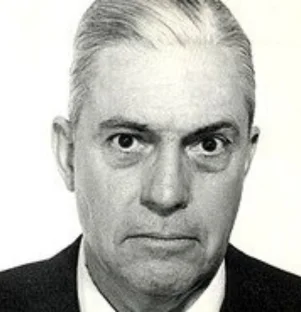
d: 1987
Summary
Name:
Leonard Ewing ScottNickname:
Ewing ScottYears Active:
1955Status:
DeceasedClass:
MurdererVictims:
1Method:
BludgeoningDeath:
August 17, 1987Nationality:
USAd: 1987
Summary: Murderer
Name:
Leonard Ewing ScottNickname:
Ewing ScottStatus:
DeceasedVictims:
1Method:
BludgeoningNationality:
USADeath:
August 17, 1987Years Active:
1955Date Convicted:
December 21, 1957“If there is anyone who has any idea where she is or knows anything about her, I would like them to communicate with my attorney.”
— Leonard Ewing Scott
Robert Leonard Ewing Scott was born in 1897. He lived through a time when many changes were happening in the world, and his early life unfolded in a way that set the stage for his later years.
Scott's childhood and youth are not well-documented, but it is known that he grew up and became involved in various professions. During a part of his life, he worked as an investment broker. He also dabbled in writing, producing a brief handbook titled "How to Fascinate Men." However, this work did not bring him financial success, as he failed to pay the printer's bill, leading to legal difficulties.
In the 1930s, Scott was married to a wealthy woman. Their marriage ended in divorce. After this, he worked as a clerk in a paint store but continued to present himself as an investment broker. He later married Evelyn Throsby Mumper in 1949. Evelyn was a wealthy woman, having inherited money from her previous marriages.
The couple married in Mexico and returned to live in an affluent area of Los Angeles known as Bel Air. They shared a substantial amount of wealth, which was managed by Scott. Early in their marriage, he took control of Evelyn's finances, convincing her to liquidate investments and keep cash deposits, claiming it was for safety reasons.
As the years passed, there were signs that Scott's behavior was concerning. There were reports of physical intimidation towards Evelyn. Friends and staff also noted Scott claimed she was often ill. This raised suspicion among those close to the couple, especially as Scott began to give conflicting accounts about her whereabouts.
In May 1955, Evelyn vanished, leading to an investigation that would reveal troubling evidence. Despite Scott's explanations to friends and authorities, the absence of Evelyn led to increased scrutiny of Scott and his actions.
By March 1956, Evelyn’s brother reported her missing, prompting a police investigation. During the search, detectives found personal items belonging to Evelyn, which raised further doubts about Scott's claims. This investigation led to charges of forgery against Scott, as well as suspicions regarding his involvement in her disappearance.
On May 16, 1955, Leonard Ewing Scott reported that his wife, Evelyn Scott, had disappeared from their home in Bel Air, California. He claimed that he went to the store and, when he returned, she was gone without any explanation. Scott did not report her missing to the police at that time and told friends she was in a sanitarium for treatment.
As time passed, Scott’s story changed, and concern grew about Evelyn's whereabouts. In March 1956, her brother, Raymond Throsby, reported her disappearance to the police, initiating an investigation. In the days that followed, detectives searched the couple's property and found Evelyn's dentures and eyeglasses buried in back of the house, near an incinerator. This discovery raised suspicions that something foul had occurred.
Investigators found more items linked to Evelyn in the area, including a cigarette holder and snaps from women’s clothing. Scott was arrested for forgery and theft after he forged Evelyn's signature to gain access to her bank accounts. He was later indicted on charges of murder as well.
Scott attempted to flee to Canada but was arrested in 1957 after trying to re-enter the U.S. He faced a trial where there was no body or murder weapon. However, the case was significant as it became one of the first in U.S. history to result in a murder conviction based solely on circumstantial evidence. Despite Scott’s defense claiming his innocence, he was found guilty of first-degree murder and sentenced to life in prison in 1959.
During his time in prison, Scott maintained he had not killed his wife. However, he ultimately confessed to Diane Wagner in 1984, admitting he struck her with a rubber mallet and buried her in the desert near Las Vegas. He passed away on August 17, 1987, at the age of 91, without any known survivors, and his body went unclaimed at the morgue.
