b: 1980
Summary
Name:
Leo Gordon Little IIINickname:
Li’l CrazyYears Active:
1998Birth:
July 14, 1980Status:
ImprisonedClass:
MurdererVictims:
1Method:
ShootingNationality:
USAb: 1980
Summary: Murderer
Name:
Leo Gordon Little IIINickname:
Li’l CrazyStatus:
ImprisonedVictims:
1Method:
ShootingNationality:
USABirth:
July 14, 1980Years Active:
1998Date Convicted:
February 25, 1999"I’ve reconciled with my god and now I’d like to reconcile with the people that I’ve hurt the most. I think that would be a beautiful thing."
— Leo Gordon Little III
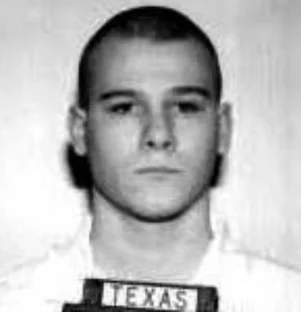
Leo Gordon Little III was born on July 14, 1980, in Texas. He grew up in San Antonio and was 17 years old when he committed the murder of Antonio Christopher Chavez. Little had a troubled childhood. His father left when he was young, and he struggled with anger, depression, and isolation as a teenager. He was placed in special education classes while attending Sul Ross Middle School.
As a teenager, Little had serious behavior problems at home. He damaged walls, had violent outbursts, and had conflicts with family members. He also began using drugs, including marijuana, cocaine, heroin, acid, and inhalants such as gasoline, spray paint, lighter fluid, and other chemicals.
Little later tried to join the military, but his drug use prevented him from moving forward. After that, he became more involved in gang culture. He used the nickname “Li’l Crazy,” identified with Crip imagery, and wrote violent rap lyrics.
Before killing Antonio Chavez, Little had already committed another serious crime. About a week earlier, he entered Malachi Wurpts’ apartment, held him at gunpoint, forced him to withdraw money from ATMs, stole his car, and left him stranded in a rural area. Wurpts survived.
By January 1998, Little was still legally a juvenile, but he was already involved in robbery, drugs, weapons, and violence. His known murder case centers on the kidnapping, robbery, and shooting of Antonio Christopher Chavez in Bexar County, Texas.
On January 25, 1998, Leo Gordon Little III and his co-defendant, Jose Zavala, were in San Antonio, Texas. They stopped at Maggie’s Restaurant on San Pedro Avenue. While there, Little noticed Antonio Christopher Chavez, a 22-year-old ministerial servant for a Jehovah’s Witnesses congregation.
Chavez had gone to the restaurant after spending time with members of his congregation. Little saw him return to his car, place something inside, and go back into the restaurant. Little then hid in the back seat of Chavez’s vehicle.
When Chavez later returned to his car and drove away, Little came out from the back seat with a .25-caliber automatic pistol. He forced Chavez to follow his instructions. During the crime, Chavez was taken from the restaurant area and forced to drive to different locations.
Little and Zavala used Chavez during the robbery. Chavez was made to use his credit card to buy gas. He was then taken to a rural area southeast of San Antonio, near Old Sutherland Springs Road.
At the roadside location, Little forced Chavez out of the vehicle. Chavez was made to kneel with his back turned. Little then shot him in the back of the head with the .25-caliber pistol.
Chavez was dragged away from the road after he was shot. He suffered scratches and abrasions from being moved across the ground. He did not die immediately and remained alive for a period of time after the shooting. His body was later found, and the case became a capital murder investigation.
Little and Zavala took Chavez’s car after the shooting. Little later stripped items from the vehicle and used money connected to Chavez. Evidence at trial included Little’s confession, testimony from people connected to him after the crime, and video footage showing Little with Chavez at a convenience store.
A Bexar County grand jury indicted Little for capital murder on April 16, 1998. He was charged with intentionally killing Chavez during the course of kidnapping and robbery. On February 25, 1999, a jury found him guilty of capital murder.
During the punishment phase, the jury found that Little was a future danger and that the mitigating evidence was not enough to call for a life sentence. On March 3, 1999, the trial court sentenced him to death. He was received by the Texas Department of Criminal Justice on April 28, 1999.
Little’s death sentence later changed because he was 17 years old when the crime occurred. In 2005, the U.S. Supreme Court ruled in Roper v. Simmons that executing people for crimes committed before age 18 violated the Eighth Amendment. After that ruling, Little’s death sentence was vacated and replaced with life imprisonment.
