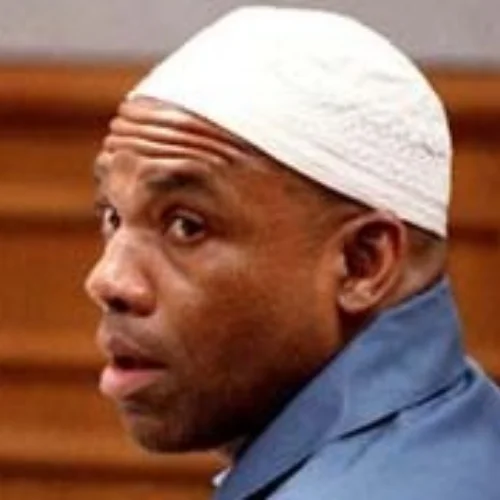
1950 - 1998
Summary
Name:
Leo Alexander JonesYears Active:
1981Birth:
April 13, 1950Status:
ExecutedClass:
MurdererVictims:
1Method:
ShootingDeath:
March 24, 1998Nationality:
USA1950 - 1998
Summary: Murderer
Name:
Leo Alexander JonesStatus:
ExecutedVictims:
1Method:
ShootingNationality:
USABirth:
April 13, 1950Death:
March 24, 1998Years Active:
1981“I bear witness that there is no God but Allah and Muhammad is his messenger.”
— Leo Alexander Jones
Leo Alexander Jones was born on April 13, 1950. Before the murder of Jacksonville police officer Thomas J. Szafranski, Jones lived in Jacksonville, Florida. Reports later described him as a drug dealer who had prior arrests and convictions, including a conviction connected to shooting a teenager when he was 15 years old.
By May 1981, Jones was living in an apartment near 6th Street and Davis Street in Jacksonville. His cousin, Bobby Hammonds, was also present at the apartment on the night Officer Szafranski was killed. The apartment building later became central to the investigation because police believed the shots had come from that area. Court records also noted that officers were familiar with the building and associated it with drug activity and criminal activity in the neighborhood.
On May 23, 1981, shortly after 1:00 a.m., Jacksonville police officer Thomas J. Szafranski, age 28, was sitting in his patrol car near the intersection of 6th Street and Davis Street in Jacksonville, Florida. A bullet fired from a high-powered rifle struck the patrol car and hit Szafranski in the head. He died from the gunshot wound.
Police quickly responded to the scene. Officers were told that the shots may have come from a nearby two-story apartment building. Officers entered the building and eventually found Leo Alexander Jones and his cousin, Bobby Hammonds, inside an upstairs apartment. Several rifles were found in the apartment, including a .30-30 rifle. Court records state that one rifle contained Jones’ fingerprints, and another report noted that one of the rifles had a spent shell casing consistent with the bullet used in the shooting.
Jones and Hammonds were taken into custody for questioning. Police said Jones confessed after receiving Miranda warnings. According to the prosecution, Jones admitted involvement and exonerated Hammonds. Jones later denied the confession was voluntary and claimed police beat him and forced him to confess. Hammonds also later claimed officers threatened and beat him, although police denied coercion and said any force used occurred because Jones and Hammonds resisted arrest.
At trial, the state relied heavily on Jones’ alleged confession. Hammonds also testified that he saw Jones leave the apartment with a rifle and return after gunshots were heard. However, Hammonds had previously given a sworn statement saying he did not see Jones with a gun that night, which was used to impeach him. Ballistics evidence was not conclusive because the condition of the bullet prevented a reliable comparison. A hand-swab test also failed to establish that Jones had recently fired a gun.
Prosecutors argued that Jones killed Officer Szafranski out of revenge against police. They presented evidence that Jones had allegedly made statements about being tired of police harassment and wanting to kill an officer. Jones denied killing Szafranski and maintained that he was in bed when the shooting happened.
Jones was convicted of First-Degree Murder and sentenced to death. The Florida Supreme Court affirmed his conviction and sentence in earlier appeals. Over the years, however, his case became controversial because later evidence raised questions about the confession, witness testimony, and whether another man, Glenn Schofield, may have been involved.
During post-conviction proceedings, Jones’ lawyers presented witnesses who claimed Schofield had confessed to killing Officer Szafranski or had been seen near the scene with a rifle. Other evidence also questioned whether Jones’ confession had been coerced. A retired police officer later said another officer had bragged about beating Jones after the arrest. Some witnesses and later reporting also raised concerns about the conduct and credibility of officers involved in the case.
Despite these claims, courts repeatedly denied Jones relief. On March 17, 1998, the Florida Supreme Court denied his final post-conviction appeal. Two justices dissented and expressed concern that the new evidence raised serious doubts about Jones’ guilt, but the majority allowed the conviction and death sentence to stand.
Jones was executed by electrocution in Florida’s electric chair on March 24, 1998, at age 47. He was pronounced dead at 7:11 a.m. His execution came one day after Florida resumed executions following controversy over the state’s electric chair.
