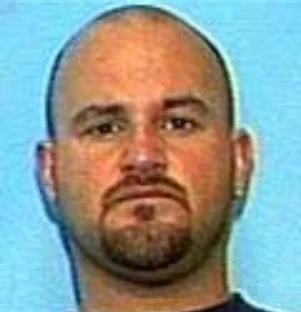
1969 - 2015
Summary
Name:
Lawrence Michael HensleyNickname:
Mike HensleyYears Active:
1999 - 2012Birth:
January 14, 1969Status:
DeceasedClass:
Serial KillerVictims:
5Method:
Shooting / Stabbing / StrangulationDeath:
June 21, 2015Nationality:
USA1969 - 2015
Summary: Serial Killer
Name:
Lawrence Michael HensleyNickname:
Mike HensleyStatus:
DeceasedVictims:
5Method:
Shooting / Stabbing / StrangulationNationality:
USABirth:
January 14, 1969Death:
June 21, 2015Years Active:
1999 - 2012Date Convicted:
March 8, 2000“I’m sorry for taking your daughters’ lives, so sorry for doing what I did.”
— Lawrence Michael Hensley
Lawrence Michael Hensley was born on April 14, 1969. He was known as “Mike” Hensley in some reports and lived in Sidney, Ohio, a small city in Shelby County. Before the 1999 murders, Hensley had lived quietly enough that some neighbors described him as private and churchgoing. He was married at the time of the killings to a woman named Julie Hensley, who was with him during part of the sequence of events on July 8, 1999.
He had previously been married to Jennifer Brautigam, with the couple marrying in 1989 and divorcing in 1991. Their divorce records reportedly showed they had a son born in 1990. Reports also stated that restrictions were later placed on Hensley’s visitation with the child after allegations of sexual abuse were raised. These details were reported in archived coverage and should be treated as reported background, not as separate criminal convictions unless additional court records are obtained.
Before the killings, Hensley had also been convicted of misdemeanor offenses. Sidney Municipal Court records cited in archived reporting showed a theft conviction and two public indecency convictions connected to exposing himself, one to a store clerk and another to a motorist in 1995 and 1997. Prosecutors later said Hensley had exposed himself to one or more of the girls killed in 1999. His defense attorney described him as having a sexual addiction to exposing himself.
Hensley’s religious and occult-related background became part of public discussion after the murders. The Rev. Ben Davis of the First Church of God confirmed that Hensley’s involvement in satanic worship and the occult had come up during counseling. Later Associated Press reporting also stated that Hensley’s former attorney said Hensley had studied Satanism, practiced rituals, and had sexual compulsions. These details were presented as statements from people who knew or represented Hensley, not as a confirmed legal motive.
Hensley had contact with a church community before the murders. Brett Wildermuth, who later became one of the victims, was described as a Bible study teacher or lay minister at Hensley’s church. Reports stated that Wildermuth was one of the church members who had taken an interest in helping Hensley move away from his occult involvement. Hensley later killed Wildermuth shortly after the first shootings at his own home.
The exact motive for the July 8, 1999 killings was never clearly established. Police did not give one confirmed motive. Prosecutors later said they believed Hensley may have been involved in activities with some of the girls that could have led to criminal charges, and that he was concerned about the consequences if that information became known.
On July 8, 1999, police in Sidney, Ohio, responded to Hensley’s Queen Street home after a 911 call. When officers arrived, they found a 22-year-old woman outside the residence, bleeding from gunshot wounds. She had escaped from the house by breaking out through a basement window and crawling away. She told officers that Lawrence Michael Hensley had shot her.
Inside the home, police found the bodies of 16-year-old Sherry/Sheri Kimbler and her 16-year-old cousin Tosha L. Barrett in a bedroom near the front of the house. Reports stated that both girls had been shot at close range with a shotgun. The two teenagers were connected to the local community, and archived reporting described them as students and workers. Kimbler had worked at Chilly Jilly’s, a local ice cream shop near the murder scene, while Barrett had recently started working at Odd Lots.
A third teenage victim, 14-year-old Amy Mikesell, was later found inside the house. Officers noticed what appeared to be a basement window covered by plywood. Behind it, they discovered a concealed crawl space, where Amy’s body was found. Reports stated that she had been stabbed. Her family had been searching for her while police were processing the scene, and her body was discovered hours after the older girls were found.
The surviving woman, later identified in reporting as Veronica Eagy, had been shot in the leg and shoulder but managed to escape. Her identification of Hensley as the gunman gave police the suspect’s name immediately. Officers sealed off the area, but Hensley had already fled.
After leaving his home, Hensley drove with his wife, Julie, to the home of Brett R. Wildermuth, a 37-year-old Bible study teacher connected to Hensley’s church. About 30 minutes after the killings at Hensley’s house, Wildermuth was found shot in the back at his own home several miles away. Julie Hensley remained at Wildermuth’s home after the shooting and cooperated with authorities.
Police said Hensley left the first crime scene with multiple long guns, handguns, and a large amount of ammunition. During the investigation of his house, officers found 24 Molotov cocktails lined up on a workbench in the basement. The devices were later detonated by a bomb squad at a fire training center.
After the killings, authorities launched a regional manhunt. Hensley was believed to be heavily armed, and police followed hundreds of tips. Reports stated that he used an ATM card in London, Kentucky, and that he had family in Harlan County, Kentucky. Law enforcement in Ohio and nearby states remained on alert until Hensley reappeared in Sidney several days later.
On July 13, 1999, a Sidney police officer spotted Hensley driving erratically in a purple Chevrolet Cavalier. The car’s plates had been changed from Ohio plates to Illinois plates. The officer followed the vehicle to a Speedway gas station but could not safely intervene before Hensley entered the station with a weapon.
Inside the gas station, Hensley took three people hostage: a female clerk and two male customers. A tactical response team, including negotiators and sharpshooters, surrounded the station. Negotiators contacted Hensley by phone and convinced him to surrender. He gave himself up at about 5:00 a.m., ending the standoff after roughly two hours. None of the hostages were injured.
Police were concerned that Hensley’s vehicle might contain explosives because of the Molotov cocktails found in his basement. A bomb dismantling team from Wright-Patterson Air Force Base was called, and the vehicle was moved away from gas tanks before being searched. No explosives were found in the car.
Hensley was also investigated in connection with another shooting that occurred before the gas-station standoff. A 47-year-old Shelby County man was shot while driving on Interstate 75. The victim survived and was hospitalized in serious condition. Around the same period, authorities received a report that Hensley had gone to the home of someone he knew from church, was not allowed inside, and fired a shot without injuring anyone.
Hensley was booked on four counts of aggravated murder. On March 8, 2000, he pleaded guilty to aggravated murder, attempted aggravated murder, and kidnapping. The plea agreement allowed him to avoid a possible death sentence. During the hearing, Hensley apologized to the victims’ families but did not give a reason for the killings. He was sentenced to life in prison without parole.
Years later, Hensley killed again while incarcerated. On September 20, 2012, fellow inmate Brad Hamlin, 24, was strangled at the Toledo Correctional Institution. Hensley was later charged with aggravated murder in Hamlin’s death. In July 2013, he pleaded guilty and received an additional life sentence for the prison killing.
On June 21, 2015, Hensley was found hanged in his cell at the Ohio State Penitentiary in Youngstown. He was 46 years old. A patrol report stated that a suicide note was found in the cell. Records later obtained by the Associated Press showed that Hensley had spoken with a prison chaplain five days earlier about whether refusing medical treatment for cancer would be considered suicide, and had told the chaplain he was not thinking of taking his life. Lawrence Michael Hensley died before serving the full term of either life sentence.
