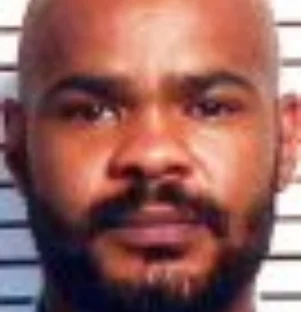
1962 - 2003
Summary
Name:
Larry Kenneth JacksonYears Active:
1985 - 1994Birth:
November 07, 1962Status:
ExecutedClass:
MurdererVictims:
2Method:
Shooting / Stabbing / SlashingDeath:
April 17, 2003Nationality:
USA1962 - 2003
Summary: Murderer
Name:
Larry Kenneth JacksonStatus:
ExecutedVictims:
2Method:
Shooting / Stabbing / SlashingNationality:
USABirth:
November 07, 1962Death:
April 17, 2003Years Active:
1985 - 1994“Take care of my mama. I want to ask for forgiveness from Martha Cade. I’m sorry for everything I brought upon her. I’m sorry for the pain, sorrow I brought on her and her family and kids. I’m sorry to all of you for the same thing. I guess I’m going to go now. Bye y’all.”
— Larry Kenneth Jackson
Larry Kenneth Jackson was born on November 7, 1962. He lived in Oklahoma and was involved in a relationship with Freda Laverne Washington, who was his common-law wife or former girlfriend. In 1985, Washington was shot and killed. Jackson was originally charged with first-degree murder in connection with her death, but the charge was later reduced through a plea agreement. In 1986, he was convicted of second-degree murder and received a 30-year prison sentence.
Jackson received an additional five-year sentence in connection with the shooting of Lynwood Smith, who survived. This prior violent felony later became important in the death penalty case involving Wendy Cade, because prosecutors used it as one of the aggravating circumstances during the penalty phase.
While incarcerated at Joseph Harp Correctional Center, Jackson participated in a prison work program. Through that program, he was assigned to work crews outside the prison. During his imprisonment, he also maintained a relationship with Wendy Cade, a 29-year-old woman from Oklahoma. Cade visited him while he was incarcerated, and records show that they continued communicating during his sentence.
Jackson reportedly believed that he and Cade would marry after his release. However, Cade was engaged to Victor Dizer and was trying to change or end her relationship with Jackson. Jackson and Cade had ongoing disagreements about their relationship before the killing.
Larry Kenneth Jackson’s first confirmed killing occurred in 1985, when Freda Laverne Washington was shot to death. Washington was described in available reports as Jackson’s common-law wife or former girlfriend. Jackson was initially charged with first-degree murder, but the charge was reduced to second-degree murder under a plea agreement. In 1986, he was convicted and sentenced to 30 years in prison.
While serving that sentence, Jackson became involved with Wendy Cade. Cade continued seeing him during his incarceration, but by 1994 she was engaged to Victor Dizer and was reportedly attempting to end or reduce her relationship with Jackson. Prosecutors later argued that this change in the relationship was part of the motive for the killing.
On September 6, 1994, Jackson was assigned to a prison work crew installing office furniture at the Jim Thorpe Building in Oklahoma City. As part of that work, he had access to a utility knife, also described as a box cutter, which was used to open boxes of furniture. Cade arrived at the building that morning, and she and Jackson left together in her Jeep Cherokee at about 10:00 a.m. After Jackson left the work detail, the Department of Corrections placed him on escape status.
Jackson and Cade first stopped at a convenience store, where Jackson bought beer and cigarettes. Cade went to a nearby liquor store and bought a bottle of alcohol. They also stopped at the home of Cade’s mother, Martha Gulley, where Cade dropped off her four-year-old daughter. Later, they bought food and went to a Motel 6 near N.E. 122nd Street and I-35 in Oklahoma City.
Inside the motel room, Jackson and Cade ate, had sex, and argued. Jackson later claimed that he had consumed alcohol and had little memory of the killing. He testified that he and Cade fought physically and that he “blimped out,” a term he used to describe blacking out from intoxication or anger. His defense later argued that intoxication should have allowed the jury to consider manslaughter rather than first-degree murder.
Cade was killed inside the motel room. Her body was discovered the next day, September 7, 1994. She had more than 30 stab and slash wounds. The fatal injury was a deep cut to her throat that severed both jugular veins. Investigators found heavy blood evidence in the bathroom, and the crime scene suggested that the attack occurred there before Cade’s body was moved near the bed. A utility knife wrapped in a washcloth was found between the mattress and box spring.
After the killing, Jackson left the motel in Cade’s Jeep. He later crashed it near the Turner Turnpike entrance ramp. A highway patrol trooper found the damaged vehicle later that day. Jackson later said he remembered waking up in a field and eventually getting a ride to an apartment complex where he believed his sister worked. He stayed at the apartment of Dorothy Leffette until police located him.
On September 7, 1994, Victor Dizer and Martha Gulley went looking for Cade near the area where her Jeep had been found. They noticed the nearby Motel 6 and learned that Cade had rented a room there. Police were notified and discovered Cade’s body inside the room.
Jackson was arrested later that day at Leffette’s apartment. In the room where he was found, police recovered Cade’s jewelry, her watch, and the keys to her Jeep. Jackson told police that if Cade was dead, he had done it, but he said he did not want to discuss the details and claimed he did not remember much of what happened in the motel room.
Jackson was charged in Oklahoma County with first-degree malice murder in the death of Wendy Cade. At trial, the prosecution argued that Jackson intentionally killed Cade after she attempted to change or end their relationship. The defense argued that Jackson was intoxicated and lacked the mental state required for first-degree murder. The jury rejected the manslaughter theory and found him guilty of first-degree murder in 1995.
During the penalty phase, the jury found two aggravating circumstances that the murder was especially heinous, atrocious, or cruel, and that Jackson had previously been convicted of a felony involving the use or threat of violence. He was sentenced to death.
Jackson appealed his conviction and sentence. In 1998, the Oklahoma Court of Criminal Appeals affirmed both. He later sought federal habeas relief, arguing in part that the trial court should have allowed jury instructions related to voluntary and involuntary intoxication. In 2002, the United States Court of Appeals for the Tenth Circuit affirmed the denial of habeas relief.
Before his execution, Jackson’s attorneys continued to argue that the jury should have been allowed to consider his intoxication defense more fully. The Oklahoma Pardon and Parole Board declined to recommend clemency. Jackson refused to attend his clemency hearing.
Larry Kenneth Jackson was executed by lethal injection at the Oklahoma State Penitentiary in McAlester, Oklahoma, on April 17, 2003. He was pronounced dead at 6:08 p.m. He was 40 years old.
