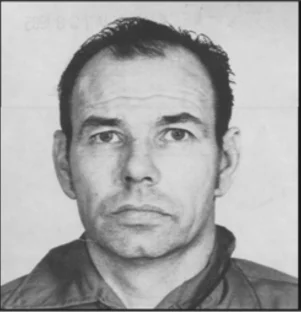
1944 - 1993
Summary
Name:
Larry Joe JohnsonYears Active:
1979Birth:
March 16, 1944Status:
ExecutedClass:
MurdererVictims:
1Method:
ShootingDeath:
May 08, 1993Nationality:
USA1944 - 1993
Summary: Murderer
Name:
Larry Joe JohnsonStatus:
ExecutedVictims:
1Method:
ShootingNationality:
USABirth:
March 16, 1944Death:
May 08, 1993Years Active:
1979Date Convicted:
November 17, 1979Larry Joe Johnson was born on March 16, 1944 in the United States. Public records indicate that he served in the military during the Vietnam War, working in a United States Navy construction unit (Seabees). Following his honorable discharge from active service, Johnson joined the Kentucky National Guard.
His post-military years became increasingly troubled. According to court records and later appeals, Johnson suffered an injury during a National Guard training exercise in 1974, when he was struck by a smoke grenade. Reports indicated that the incident caused brain damage and resulted in extended treatment in military psychiatric facilities. Veterans' organizations later argued that Johnson experienced symptoms consistent with what is now recognized as Post-Traumatic Stress Disorder (PTSD). However, courts repeatedly rejected claims that his military experiences legally mitigated his responsibility for the murder.
Before the homicide, Johnson had already accumulated a violent criminal history. Evidence introduced during sentencing established that he had previously been convicted of second-degree assault after shooting his wife with a firearm. He served part of a five-year sentence and remained on parole at the time of the murder of James Hadden. This prior conviction later became one of the aggravating factors supporting his death sentence.
Mental health evaluations conducted before sentencing produced conflicting conclusions. Two clinical psychologists testified that Johnson exhibited signs of emotional disturbance linked to his military experiences. One expert, Dr. Charles Figley, argued that Johnson's behavior stemmed from trauma associated with Vietnam service. Another psychologist suggested Johnson suffered from organic brain damage and borderline intellectual functioning. In contrast, two psychiatrists testified that Johnson understood right from wrong and was legally sane. Ultimately, the courts accepted the latter conclusions and determined that no mitigating mental condition outweighed the aggravating factors present in the case.
Johnson spent more than thirteen years on Florida's death row. During that period, he pursued numerous appeals in both state and federal courts, many centered on PTSD claims, jury issues, sentencing procedures, and constitutional arguments. Veterans' organizations publicly advocated on his behalf, arguing that his military experiences had permanently altered his psychological state. Despite these efforts, every appeal was ultimately denied.
On March 16, 1979, Larry Joe Johnson and his seventeen-year-old companion, Patty Burks, were traveling from Florida toward Kentucky with plans to continue to Minnesota, where Burks had relatives. Before beginning the trip, Johnson removed a sawed-off 12-gauge shotgun from a suitcase inside their vehicle. The pair stopped at a Shell service station in Lee, Madison County, Florida, just off Interstate 10.
According to Burks' testimony, Johnson instructed her to enter the station and purchase cigarettes. Inside, James Maxwell Hadden, a 67-year-old service station attendant, was the only employee present. Johnson followed Burks into the station carrying the shotgun and demanded money from Hadden.
Under Johnson's orders, Burks removed approximately $135 from the cash register. As she headed toward the exit, she looked back and saw Johnson fire a single shotgun blast into Hadden's head. Burks testified that Hadden had displayed no weapon and posed no immediate threat. Johnson later justified the killing by telling Burks that "dead witnesses don't talk."
Following the robbery and murder, Johnson and Burks fled Florida and returned to Kentucky. Once separated from Johnson, Burks contacted her mother and disclosed details of the crime. Law enforcement officers quickly responded, leading to Johnson's arrest the same day. Police recovered the same sawed-off shotgun used during the murder, along with ammunition and additional evidence linking him to the crime. Fingerprint evidence and firearms testimony further corroborated Burks' account.
Johnson was charged with first-degree murder and robbery with a firearm. His trial concluded on November 17, 1979, when a jury found him guilty on both counts. During the penalty phase, prosecutors emphasized Johnson's prior violent conviction and his parole status at the time of the killing. The defense introduced testimony regarding Vietnam-related psychological trauma and PTSD. The State countered with psychiatric experts who disputed those findings.
The jury recommended a sentence of death. On January 31, 1980, the trial judge formally sentenced Johnson to death for the murder and imposed a consecutive life sentence for the robbery. The court identified three aggravating circumstances: Johnson was under sentence of imprisonment while on parole, the murder occurred during the commission of a robbery for pecuniary gain, and the killing was committed to eliminate a witness and avoid arrest. The court found no mitigating circumstances sufficient to outweigh those factors.
Over the next thirteen years, Johnson challenged his conviction and sentence through multiple appeals and post-conviction proceedings. The Florida Supreme Court, the Eleventh Circuit Court of Appeals, and the United States Supreme Court repeatedly rejected his claims. His attorneys argued that his military experiences and PTSD should exempt him from execution, while veterans' groups urged clemency. Governor Lawton Chiles temporarily delayed one execution warrant to review those concerns but later concluded that the evidence did not justify commuting Johnson's sentence.
After four death warrants and numerous legal challenges, Larry Joe Johnson was executed by electrocution at Florida State Prison on May 8, 1993. He was pronounced dead at 10:07 p.m. At the time of his execution, he was 49 years old. He became the 31st person executed in Florida after the state reinstated capital punishment and the 201st execution nationwide following the resumption of the death penalty in the United States.
