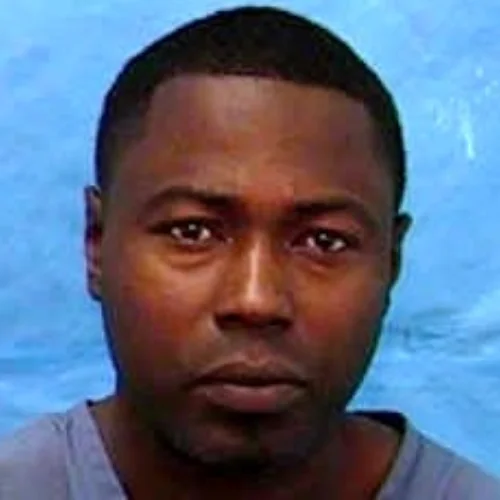
b: 1972
Summary
Name:
Keydrick Deon JordanYears Active:
1991 - 1992Birth:
March 14, 1972Status:
ImprisonedClass:
MurdererVictims:
2Method:
ShootingNationality:
USAb: 1972
Summary: Murderer
Name:
Keydrick Deon JordanStatus:
ImprisonedVictims:
2Method:
ShootingNationality:
USABirth:
March 14, 1972Years Active:
1991 - 1992Keydrick Deon Jordan was born on March 14, 1972. By the early 1990s, Jordan was living in the Orlando, Florida, area. Court records show that he was involved in two separate murder cases involving elderly female victims. The first case involved Thelma Reed, who was killed on November 15, 1991. The second involved Ann Mintner, who was killed on August 8, 1992, near Lake Davis in Orlando.
Jordan was charged with first-degree murder in both cases. The Reed case was resolved through a guilty plea, and he received a life sentence. The Mintner case proceeded to trial, where he was convicted of first-degree murder and attempted robbery. A jury recommended death by an 8-to-4 vote, and the trial judge originally imposed the death penalty.
Keydrick Deon Jordan’s known murder history involved two separate victims in Orange County, Florida. The first known killing occurred on November 15, 1991. The victim was Thelma Reed. The available source identifies the offense as involving rape, robbery, and murder, but the full court narrative for Reed’s killing is limited in the provided material. Jordan later pleaded guilty in the Reed case and was sentenced to life in prison. The Florida Fifth District Court of Appeal noted that Jordan accepted a plea in the Reed case, leaving the Ann Mintner case to proceed to trial.
The second killing occurred on August 8, 1992. Ann Mintner was walking near Lake Davis in Orlando with her friend Mary Rosensweig. Mintner realized she was carrying her change purse and returned to her car to put it away. Rosensweig continued walking. When she looked back, she saw a man near Mintner and heard him tell Mintner to hand over her key. As Mintner ran back toward Rosensweig, gunshots were fired. Mintner fell to the ground, and the final shot was fired while she was already down. Court records state that Mintner was shot six times and died from massive hemorrhaging in her chest and abdominal cavities. Four of the six bullets entered through her back.
Investigators recovered a bicycle at the crime scene. It contained 35 fingerprints belonging to Jordan and Sam Tory. Evidence showed that Jordan and Tory owned the bicycle. The night before the murder, Jordan and Tory had worked on the bicycle at the home of Vicki Meyers. Jordan spent the night there and left early the next morning, telling Meyers that he was going to “rob someone.”
After the murder, Tory later met with Jordan. According to court records, Jordan told Tory that he had “popped someone.” When Tory later saw his bicycle shown on television in connection with the investigation, he called Crime Line and reported Jordan. Tory received a $1,000 reward.
Jordan was taken to the Orlando Police Department in August 1992. He initially denied knowledge of the Mintner murder but later admitted involvement. He claimed Tory was also involved and said he had held the gun to Mintner’s head. Jordan said the gun fired accidentally when Mintner moved away. A firearms expert testified that the gun required a separate trigger pull for each shot fired.
Jordan was tried for first-degree murder and attempted armed robbery in the Mintner case. The jury convicted him on both counts and recommended a death sentence by an 8-to-4 vote. The trial judge imposed death after finding aggravating factors, including that the crime occurred while Jordan was under community control, that he had a prior violent felony conviction, that the murder occurred during a robbery, and that it was committed for financial gain. The robbery and pecuniary-gain aggravators were treated as a single aggravating factor.
On April 17, 1997, the Florida Supreme Court affirmed Jordan’s convictions for first-degree murder and attempted robbery but vacated the death sentence. The court found that improper and unfairly prejudicial expert testimony had been admitted during the penalty phase. The case was sent back for a new sentencing proceeding.
After resentencing, Jordan did not remain under a death sentence. The provided source states that he was sentenced to life in prison, with life sentences recorded on June 30, 1993, and July 12, 2001.
