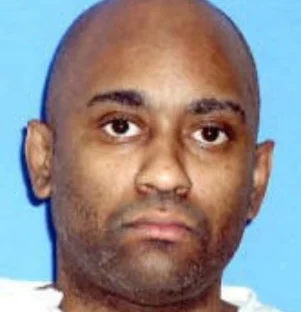
1968 - 2006
Summary
Name:
Kevin Christopher KincyYears Active:
1993Birth:
January 31, 1968Status:
ExecutedClass:
MurdererVictims:
1Method:
Shooting / StabbingDeath:
March 29, 2006Nationality:
USA1968 - 2006
Summary: Murderer
Name:
Kevin Christopher KincyStatus:
ExecutedVictims:
1Method:
Shooting / StabbingNationality:
USABirth:
January 31, 1968Death:
March 29, 2006Years Active:
1993Date Convicted:
November 2, 1995“I love my children. I love my family. That’s it.”
— Kevin Christopher Kincy
Kevin Christopher Kincy was born on January 31, 1968. He was raised in Houston, Texas, by his mother, Dorothy Robertson. His early life included a brief period of international travel, in a late-1990s prison pen-pal forum, Kincy shared that he and his sister had attended school in London around 1982. He later claimed that he deeply regretted ever returning to the United States and once aspired to work as a youth counselor.
However, his life quickly shifted into a pattern of severe criminal behavior starting in his late teens, July 1986 he was sentenced to 10 years for attempted murder but released on probation after just four months. On February 1987, He returned to prison on a six-year sentence for burglary of a motor vehicle. On December 1988, Hewas released on mandatory supervision. On October 1989, He began serving a 15-year sentence for delivery of a controlled substance (cocaine). By March 1993, the 25-year-old Kincy was out on parole and working as a pizza delivery driver in Houston.
On March 26, 1993, Kincy and his cousin, Charlotte Kincy, executed a premeditated plan to rob and kill Jerome Harville, an industrial hygienist at an Exxon refinery. Charlotte used her past romantic relationship with Harville to gain access to his home and distract him. Once inside, Kevin Kincy told Harville, "You got to go, Jerome," before shooting him in the head and stabbing him. Following a high-speed police pursuit through Texas and Louisiana, Kincy was captured in April 1993 and subsequently sentenced to death.
On March 26, 1993, co-workers of Jerome Samuel Harville became concerned when he failed to appear for work and could not be reached at home or by pager. Harville was 31 years old and worked as an industrial hygienist at an Exxon refinery. His co-workers went to his home in the Houston area and looked through a window after no one answered the door. They saw that the home appeared to be in disorder and contacted law enforcement.
A sheriff’s deputy entered the house through an unlatched front door and found Harville’s body in the bedroom. Harville had been fatally shot in the head with a .25-caliber gun and had also been stabbed several times. Investigators found two .25-caliber shell casings near the body. The home had been ransacked, and many items were missing, including Harville’s Honda Accord, pagers, stereo equipment, a television, a microwave oven, furniture, and a Ruger 9mm pistol.
A witness later testified that Kincy called after the murder and said he had “won” money, a 9mm gun, and a car at Harville’s house. The witness said Kincy laughed and described shooting Harville in the head and placing a pillow over his head. The same witness said Charlotte Kincy laughed and said she had stabbed Harville.
Police later recovered Harville’s stolen 9mm Ruger from a pawn shop. The weapon was traced to John Byrom, a friend of Kincy’s. Byrom testified that Kincy asked him to hold the weapon and said he had taken it from a house where he had killed a man. Instead of keeping the gun, Byrom pawned it. Police also recovered the murder weapon, a .25-caliber pistol.
When police searched Kincy’s apartment, they found a magazine for a .25-caliber pistol and white gloves with orange raised dots. Those gloves appeared to match dot-like impressions found on furniture at the murder scene. Investigators did not find suspect fingerprints at the scene, but they noted marks on furniture consistent with gloves that had rubber or plastic bumps.
On April 6, 1993, an FBI agent saw Kincy speeding in Harville’s stolen Honda Accord on Interstate 10 near the Louisiana border. Police pursued him in a high-speed chase that crossed into Louisiana. He was arrested after the chase ended.
Kincy was indicted for capital murder on July 26, 1993. A Harris County jury found him guilty, and on November 2, 1995, after a separate punishment phase, he was sentenced to death. The Texas Court of Criminal Appeals affirmed his conviction and death sentence in 1998. Later state and federal habeas challenges were denied.
During the punishment phase, prosecutors presented evidence of Kincy’s prior criminal record and prison disciplinary history. They also presented evidence that after the murder, he displayed Harville’s stolen 9mm Ruger in public and made threats with it. One witness testified that Kincy fired the weapon in a mall parking lot with people nearby. Kincy was executed by lethal injection in Texas on March 29, 2006.
