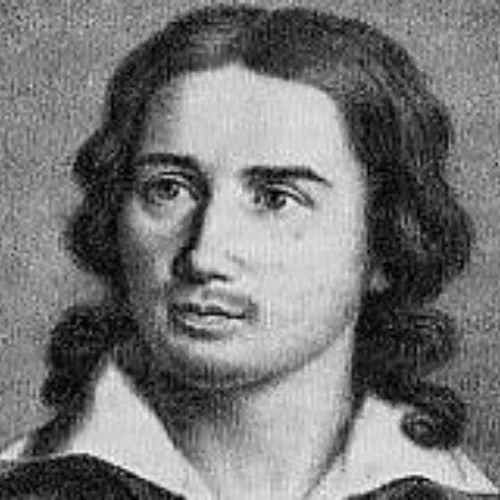
1795 - 1820
Summary
Name:
Karl Ludwig SandNickname:
HenryYears Active:
1819Birth:
October 05, 1795Status:
ExecutedClass:
MurdererVictims:
1Method:
StabbingDeath:
May 20, 1820Nationality:
Germany1795 - 1820
Summary: Murderer
Name:
Karl Ludwig SandNickname:
HenryStatus:
ExecutedVictims:
1Method:
StabbingNationality:
GermanyBirth:
October 05, 1795Death:
May 20, 1820Years Active:
1819Date Convicted:
May 5, 1820Karl Ludwig Sand was born on October 5, 1795, in Wunsiedel, which was in Prussia at the time. His parents were Godfrey Christopher Sand and Dorthea Jane Wilheltmina Schapf. He had four siblings: George, Fritz, Caroline, and Julia. Growing up in a liberal and Enlightened Protestant family, his upbringing played a significant role in shaping his beliefs.
In 1804, Sand started his education at the Lateinschule, a Latin school in Wunsiedel. By 1810, he moved to a grammar school (Gymnasium) in Hof, where he lived with the rector, Georg Heinrich Saalfrank. This experience was positive for Sand, as he was surrounded by supportive and encouraging figures. However, when the Hof Gymnasium closed due to Montgelas's Reforms, he followed his teacher to a new school in Regensburg. He completed his studies there in September 1814.
In November 1814, Sand enrolled at the University of Tübingen. He was eager to continue his education and was particularly interested in theology, as he hoped to become a pastor. In 1815, he volunteered to serve in the military under Major von Falkenhausen during the aftermath of the Napoleonic Wars. He took part in the Battle of Waterloo and later went to Paris, but he returned home disillusioned by the war and fell into a deep depression.
While attending the University of Erlangen in 1816, Sand, along with his friend Dittmar, formed a student association known as Burschenschaft Teutonia. They met at the nearby castle ruins, calling their meeting place Ruttli. Sand and Dittmar aimed to create a sense of camaraderie and promote their nationalist ideals, but their meeting house was destroyed by rival political groups just a year later. Dittmar's tragic drowning in 1817 further deepened Sand's emotional struggles.
In search of a more profound purpose, Sand continued his studies at the University of Jena, where he attended lectures by prominent professors and joined additional Burschenschaften. He became involved in nationalist movements, including the famous 1817 Wartburg festival, where anti-monarchical literature was burned, including one written by the playwright August von Kotzebue.
Throughout his early life, Sand wrestled with feelings of inadequacy, depression, and a growing passion for German nationalism. He admired authors like Lessing, Schiller, Herder, and Goethe while grappling with his internal conflicts. His diaries from this time reflect his desire for purpose and his commitment to what he believed to be the noble cause of German unity.
As he matured, Sand's ideals shifted from a desire to serve as a simple pastor to a more radical vision of a united German nation. These evolving beliefs set the stage for events that would dramatically alter his life and the lives of those around him.
Karl Ludwig Sand was a German university student who committed murder. On May 5, 1820, he was executed for killing the conservative dramatist August von Kotzebue in Mannheim the previous year.
Sand planned the murder as a political act against what he viewed as betrayal of his country. Writing in his diary, he referred to Kotzebue as a "traitor to the nation." On March 23, 1819, he visited Kotzebue's home in Mannheim. After being initially refused entry, Sand returned later in the day and confronted Kotzebue. He stabbed him multiple times before attempting to take his own life.
Following the murder, Sand was captured and taken to the hospital for his injuries. During his time in custody, he was viewed as a martyr by many nationalists. His actions led to increased government restrictions on free speech and political organization in Germany.
After a trial, Sand was sentenced to death. He was executed by beheading on May 20, 1820. His crime and execution had lasting impacts on German politics and nationalism, casting Sand in a controversial light within history.
