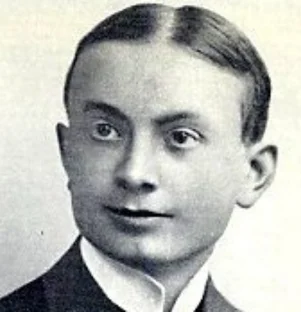
1881 - 1926
Summary
Name:
Karl HauNickname:
Robert Müller / StauYears Active:
1906Birth:
February 03, 1881Status:
DeceasedClass:
MurdererVictims:
1Method:
ShootingDeath:
February 05, 1926Nationality:
Germany1881 - 1926
Summary: Murderer
Name:
Karl HauNickname:
Robert Müller / StauStatus:
DeceasedVictims:
1Method:
ShootingNationality:
GermanyBirth:
February 03, 1881Death:
February 05, 1926Years Active:
1906Date Convicted:
July 22, 1907Karl Hau, also widely reported as Carl Hau, was born on February 3, 1881, in Großlittgen, near Wittlich, Germany. He was the son of a bank director and received a formal education before studying law at the universities of Freiburg and Berlin. As a young man, Hau was described in records as intelligent, ambitious, and socially confident. He later became known both for his legal career and for one of the most widely publicized murder trials in early twentieth-century Germany.
In 1901, Hau suffered a serious illness and traveled to Corsica to recover. While staying in Ajaccio, he met Josephine Molitor, a wealthy widow from Baden-Baden, and her daughters Lina and Olga Molitor. Hau became romantically involved with Lina, who was older than him. Their relationship caused concern within the Molitor family, partly because of the age difference and partly because Josephine Molitor did not approve of the match.
In June 1901, Hau and Lina left together for Switzerland. Some accounts state that they attempted suicide together after their relationship caused scandal. Lina survived, and Josephine Molitor eventually allowed the marriage to take place to avoid further family disgrace. Hau and Lina married in 1901 and later moved to Washington, D.C., in the United States.
In Washington, Hau continued his legal studies and began building a professional life. He completed his studies, worked as a lawyer, and was also reported to have held an assistant professor position connected to Roman law. He also served as secretary to the Turkish consul in Washington. During this period, Lina had access to money from her late father’s estate. Later reports stated that a large amount of her inheritance or dowry was placed under Hau’s control and eventually disappeared.
By 1906, Hau’s finances were troubled. He traveled to Europe with Lina and their young daughter. While Lina and the child stayed with the Molitor family, Hau traveled for business connected to proposed Turkish oil interests. The venture failed, and Hau returned to the Molitor household in Baden-Baden without money. He asked Josephine Molitor for financial help, but she refused.
The relationship between Hau and the Molitor family became strained. Hau was also suspected of having an improper attachment to Olga Molitor, Lina’s younger sister. During his later trial, his defense suggested that he had wanted to be alone with Olga and that this explained some of his actions on the day of the murder. Prosecutors argued instead that money and inheritance were the motive.
On November 6, 1906, Josephine Molitor was killed in Baden-Baden, Germany. Earlier that day, Hau traveled from London toward Baden-Baden while using a disguise. Reports state that he used items including a wig or false beard to conceal his identity. He later admitted that he had made a telephone call to the Molitor home that caused Josephine to leave the house.
The call claimed that Josephine Molitor needed to go to the post office. The maid who answered the telephone reportedly believed the voice sounded like Hau. Josephine left the villa with her younger daughter, Olga. As the two women walked through a dark street, a man approached and fired a shot at close range. Josephine was hit and died from a bullet wound.
Witnesses reported seeing a man flee from the area. Descriptions varied, but several reports mentioned that the suspect appeared to be disguised, including the use of a false beard. The shooting happened in public, but the darkness and disguise made immediate identification difficult.
Suspicion quickly turned toward Hau. Investigators learned that he had traveled to Baden-Baden on the day of the murder and then returned toward Frankfurt and London. Police also discovered evidence that he had obtained or used a false beard. A telegram connected to his movements and his instructions to Lina also became part of the case. One of the most damaging pieces of evidence was that Hau admitted making the call that brought Josephine Molitor out of her home, although he denied killing her.
Hau was arrested in London on November 9, 1906. He was later extradited to Germany in January 1907 and held in Karlsruhe before trial. After his arrest, some reports said he behaved irrationally, but he later recovered enough to face proceedings.
While Hau was awaiting trial, Lina began looking into the couple’s financial affairs. She reportedly found that the money she had brought into the marriage was gone. In June 1907, after visiting Hau in jail, Lina traveled to Switzerland and died by suicide in Lake Pfäffikon. Her death added to the public attention surrounding the case and influenced how the case was discussed in newspapers and among the public.
Hau’s trial began in Karlsruhe in July 1907. The evidence against him was largely circumstantial, but prosecutors argued that he had a financial motive, that he had disguised himself, that he had traveled secretly to Baden-Baden, and that he had admitted making the phone call that lured Josephine Molitor from her home. Hau’s defense denied that he committed the murder and suggested alternative explanations for his conduct.
On July 22, 1907, Hau was found guilty of murdering Josephine Molitor. The verdict caused major public unrest outside the courthouse in Karlsruhe. Large crowds gathered, and reports describe rioting and clashes that required military force to restore order.
Hau was sentenced to death. Under the law of the time, the sentence was to be carried out by beheading. He appealed the conviction, but the conviction was upheld. On December 1, 1907, Grand Duke Friedrich II commuted Hau’s death sentence to life imprisonment. Hau served his sentence at Bruchsal Prison.
After several unsuccessful efforts to obtain release, Hau was released early on August 27, 1924. His release came with strict conditions. He was not allowed to use his criminal case or imprisonment for sensational publications, films, or other public exploitation. After leaving prison, however, Hau wrote and published works about his trial and imprisonment. These publications became commercially successful but violated the conditions of his release.
In 1925, the authorities revoked the suspension of his sentence and issued a warrant for his return to custody. Hau fled and eventually traveled to Italy, where he lived under false names. In Tivoli, near Rome, he was found unconscious and later died. His body was identified through fingerprints.
Karl Hau died in 1926 while a fugitive from German authorities. His case remains known for the murder of Josephine Molitor, the public reaction to his trial, the later suicide of his wife Lina, and the long debate over whether the circumstantial evidence against him was enough to support the conviction.
