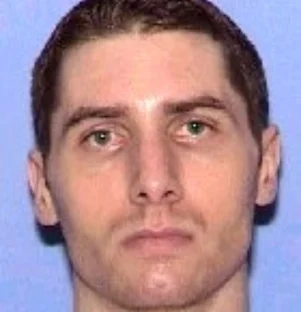
1981 - 2019
Summary
Name:
Justen Grant HallYears Active:
2002Birth:
June 16, 1981Status:
ExecutedClass:
MurdererVictims:
2Method:
Shooting / StrangulationDeath:
November 06, 2019Nationality:
USA1981 - 2019
Summary: Murderer
Name:
Justen Grant HallStatus:
ExecutedVictims:
2Method:
Shooting / StrangulationNationality:
USABirth:
June 16, 1981Death:
November 06, 2019Years Active:
2002"To the Billhartz family, I am sorry. I wish I could think of something to say that would give you comfort. I think about Melanie, and what I did to her. I think about it every day. I'm sorry. I'm sorry for what I did. I hope you can find peace.To my family, thank you for your support. I love you guys.To the guys on the row, keep your heads up.I'm ready."
— Justen Grant Hall
Justen Grant Hall was born on June 16, 1981, in El Paso County, Texas. Publicly available records list him as a white male who had completed the ninth grade and had worked as a laborer before entering death row. Before the capital murder case, Hall had a prior Texas prison record for burglary of a habitation from El Paso County.
By 2002, Hall was connected to the El Paso drug scene. Court records later described the location involved in Melanie Billhartz’s murder as a drug house. He was also identified in later reporting as a member of the Aryan Circle, a white supremacist prison gang.
Hall first became linked to a homicide after the April 2002 killing of Arlene Diaz, also known as Hector Diaz. Diaz was a transgender woman who was active in El Paso’s LGBTQ community. Police classified Diaz’s killing as a hate crime after Hall was accused of shooting her in the back.
At the time of Melanie Billhartz’s murder in October 2002, Hall was out on bond in connection with the Diaz murder case.
On April 10, 2002, Arlene “Hector” Diaz was found shot to death near Anapra Road in El Paso County, Texas. Diaz had attended a transgender support group before going out with friends. A witness later reported seeing Diaz and Hall together, apparently arguing, shortly before the shooting. Police charged Hall with Diaz’s murder and classified the case as a hate crime. The Diaz case remained important during later proceedings because it showed Hall’s history of violence, although his death sentence was imposed for the separate murder of Melanie Billhartz.
On October 28, 2002, Melanie Billhartz went to a drug house in El Paso. She became involved in a dispute with Ted Murgatroyd, one of Hall’s acquaintances. Billhartz wanted to call police and report the incident. Prosecutors argued that Hall killed her to prevent her from contacting law enforcement and exposing the drug house.
According to trial evidence, Hall left with Billhartz and returned several hours later in her truck with her body inside. He told others that he had killed her. He then ordered Murgatroyd to help dispose of her body. Hall drove to New Mexico and dumped Billhartz’s body there. Her fingers had been cut off in an attempt to prevent identification or forensic evidence.
Medical examiners found an electrical cord wrapped tightly around Billhartz’s neck. She also had multiple injuries, including fractured nasal bones, jaw fractures, a fractured rib, and injuries to her hand. Hall later confessed to El Paso detectives that he had killed her.
Hall was arrested on November 23, 2002, after a deputy in Hale County, Texas, checked the license plate of Billhartz’s truck during a roadside encounter. The check showed that the truck’s owner had been reported missing. Authorities soon learned that Billhartz’s body had been found and that the truck’s occupants were suspects.
Hall was convicted of capital murder in February 2005. On May 11, 2005, he was formally received by the Texas Department of Criminal Justice under a death sentence. The Texas Court of Criminal Appeals affirmed his conviction and sentence in 2007.
Hall later gave up parts of his appeal process and repeatedly indicated that he wanted to be executed. On November 6, 2019, he was executed by lethal injection at the Huntsville Unit in Texas. His last statement included an apology to the families of his victims and ended with the words, “I’m ready.”
