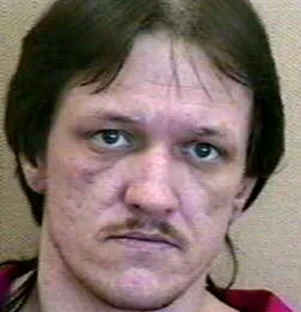
1964 - 2003
Summary
Name:
Joseph Timothy KeelNickname:
Timmy KeelYears Active:
1986 - 1990Birth:
July 06, 1964Status:
ExecutedClass:
MurdererVictims:
2Method:
Shooting / BludgeoningDeath:
November 07, 2003Nationality:
USA1964 - 2003
Summary: Murderer
Name:
Joseph Timothy KeelNickname:
Timmy KeelStatus:
ExecutedVictims:
2Method:
Shooting / BludgeoningNationality:
USABirth:
July 06, 1964Death:
November 07, 2003Years Active:
1986 - 1990Date Convicted:
March 30, 1993Joseph Timothy Keel was born on July 6, 1964. He was commonly identified in court and news records as Joseph Timothy “Timmy” Keel. He lived in eastern North Carolina and was connected to Edgecombe County, where the later murder of his father-in-law occurred. At the time of the 1990 killing, Keel was working at Shell Bank Farm, a hog farm in Edgecombe County. Court records also show that he and his wife were living with her father, John Simmons, before the murder.
Before the murder of John Simmons, Keel had already been convicted in connection with the death of his infant son. On March 20, 1987, he was convicted of involuntary manslaughter in the death of Victor Matthew Keel, his 11-month-old child. During the sentencing phase of Keel’s later capital murder trial, medical testimony described the infant as having recent bruises on the head, face, legs, and arms. An autopsy found a skull fracture on the right side of the head, which was identified as the cause of death. Keel denied intentionally killing the child and claimed the injuries were accidental, but the prior conviction was later used as the aggravating circumstance in the capital sentencing for the murder of John Simmons.
Keel’s personal background and mental condition became major issues during his trials and appeals. Defense evidence described a history of alcohol and drug dependency, including alcohol, marijuana, and possible cocaine dependence. A forensic psychiatrist testified that Keel had difficulty controlling emotions and impulses from a young age and diagnosed him with borderline personality disorder. A neuropsychologist testified that Keel’s IQ was 78 and placed his intellectual functioning in the lower portion of the population. The defense also presented evidence that he had used alcohol and cocaine on the night John Simmons was killed.
During his capital sentencing proceeding, Keel also presented evidence about his prison behavior and education. He testified that while previously incarcerated, he had served as president of a prison Jaycee Club, helped organize community assistance projects, took part in a prison choir, completed his high school education, completed Bible courses, and took drug and alcohol abuse classes. These details were presented as mitigating evidence, but the jury still recommended a death sentence.
Keel’s appeals later focused heavily on mental impairment and mental illness. Amnesty International reported that Keel’s IQ had been measured at 78 and that his attorneys argued he had organic brain damage, possible prenatal injury, and other head injuries, including a reported workplace injury involving a steel beam. His attorneys also argued that his full mental health, drug, and alcohol history had not been properly presented during earlier proceedings. The courts ultimately rejected the claims that would have prevented his execution.
On July 10, 1990, Joseph Timothy Keel killed his father-in-law, John Simmons, in Edgecombe County, North Carolina. The murder occurred after Keel arranged for Simmons to drive him to Shell Bank Farm, the hog farm where Keel worked. According to court records, Keel later admitted that he asked Simmons for a ride to the farm, picked up the farm truck after arriving, and drove ahead of Simmons to the farm building.
At trial, the State’s evidence showed that Simmons was shot at the farm and later brought to a nearby mobile home. Around 10:00 p.m., Keel knocked on the door of Aubrey and Shelby Thurman. He told them that Simmons had been shot. His shirt was covered with blood, and Simmons was outside in a small truck. Shelby Thurman called 911. Keel initially claimed that Simmons had been shot in a drive-by shooting near Gay Road by someone in a station wagon.
Deputies examined the scene and found evidence that contradicted the drive-by shooting account. At the location where Keel said the shooting had happened, investigators found nothing to support his version. The next day, officers returned to Shell Bank Farm and found apparent blood outside the farm office, a fired .22-caliber shell casing, blood spatters inside the building, a bloody jumpsuit, a bloody mop, .22-caliber ammunition, and a hole in a window screen. Medical testimony showed that Simmons had two gunshot wounds to the head, fired from opposite sides, which the medical examiner said was inconsistent with a drive-by shooting.
Three days after the shooting, on July 13, 1990, Lieutenant Jerry Wiggs of the Edgecombe County Sheriff’s Department interviewed Keel. After waiving his rights, Keel signed a written statement admitting that he had shot Simmons at the hog farm. He said he fired a shot into Simmons’ truck from inside the farm building. Simmons got out of the truck and said he had been hit. Keel said he then told Simmons to sit down inside the farm building. Keel stated that he shot Simmons again because Simmons had a knife and was coming toward him. He later helped Simmons into the truck and drove to the Thurmans’ mobile home for help. Keel also said he threw the rifle into a hog pen and did not know why he had fired the first shot.
The defense presented a different version of the confrontation. Defense evidence suggested that Simmons and Keel argued about family issues, including prior disputes involving Simmons’ wife and daughter, Amy. According to the defense, the argument led to a fistfight, and Simmons later picked up a knife. Keel claimed he fired first with a pistol and later fired a rifle shot through a window into Simmons’ head while Simmons was sitting in the truck. Keel testified that he did not intend to kill or hurt Simmons. The jury rejected the defense position and found him guilty of first-degree murder.
Keel was first tried at the August 12, 1991 Criminal Session of Edgecombe County Superior Court and sentenced to death. On December 18, 1992, the North Carolina Supreme Court reversed the conviction because the trial court had improperly instructed the jury on the intent required for first-degree murder. The court ruled that the error was prejudicial because Keel’s mental state was an issue in the case.
Keel was tried again during the March 5, 1993 Criminal Session of Edgecombe County Superior Court. The jury convicted him of first-degree murder. During the separate capital sentencing phase, prosecutors relied on his prior involuntary manslaughter conviction in the death of his infant son as the statutory aggravating circumstance that he had previously been convicted of a felony involving violence. The defense presented mitigation evidence about his substance abuse, mental health, prison behavior, education, and family background. The jury found eight mitigating circumstances but still recommended a death sentence. On March 30, 1993, the court sentenced Keel to death.
The North Carolina Supreme Court affirmed Keel’s conviction and death sentence in 1994. The court held that the prior involuntary manslaughter conviction was properly submitted as an aggravating circumstance and that the death sentence was not disproportionate under North Carolina law. The U.S. Supreme Court denied certiorari on February 27, 1995.
Keel continued to challenge his conviction and death sentence in later proceedings. His federal habeas petition was rejected by the Fourth Circuit in 1998. The court reviewed claims including ineffective assistance of counsel and other trial issues, but affirmed the denial of relief. In 1999, the North Carolina Supreme Court issued stays that delayed scheduled executions. His later appeals and clemency efforts focused on mental impairment, alleged mental illness, and challenges connected to the prior manslaughter conviction.
In the final days before the execution, Keel’s attorneys argued that he should not be executed because of mental impairment and because of alleged problems with the 1987 manslaughter conviction used as the aggravating factor in his death sentence. The U.S. Supreme Court denied his final stay applications, certiorari petitions, and habeas petition on November 6, 2003. North Carolina Governor Mike Easley denied clemency, allowing the execution to proceed.
Joseph Timothy Keel was executed by lethal injection at Central Prison in Raleigh, North Carolina, on November 7, 2003. He was 39 years old. The supplied Associated Press report states that he was pronounced dead at 2:18 a.m.
