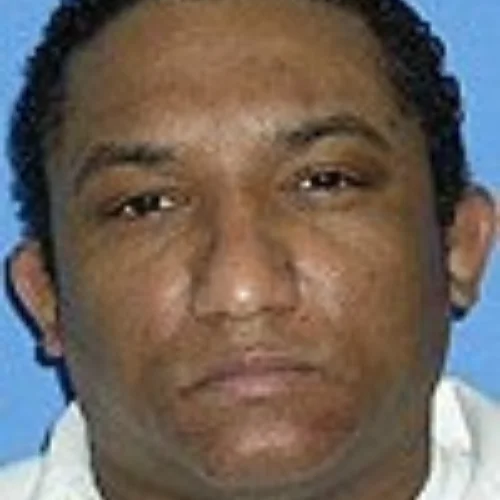
1964 - 2017
Summary
Name:
Joseph Roland LaveYears Active:
1992Birth:
October 17, 1964Status:
DeceasedClass:
MurdererVictims:
2Method:
Stabbing / Throat-slashingDeath:
May 17, 2017Nationality:
USA1964 - 2017
Summary: Murderer
Name:
Joseph Roland LaveStatus:
DeceasedVictims:
2Method:
Stabbing / Throat-slashingNationality:
USABirth:
October 17, 1964Death:
May 17, 2017Years Active:
1992Date Convicted:
May 29, 1994Joseph Roland Lave Jr. was born on October 17, 1964, to Joseph Roland Lave Sr. and Rosemary Fletcher Lave. His obituary states that he was the second child born to the family and that he was known by relatives as Roland Jr.
Lave grew up in Houston, Texas. According to his obituary, he attended St. Paul Lutheran School, Carnegie Elementary School, Sydney Lanier Junior High School, and Mirabeau B. Lamar Senior High School in the Houston Independent School District. The same source states that he was active in the Boy Scouts of America and became an Eagle Scout at age 14. Before his imprisonment, Lave was employed by United Parcel Service as a truck driver.
By November 1992, Lave was connected to James Langston and Timothy Bates. Langston worked at Herman’s Sporting Goods in Richardson, Texas, and had access to the store. The robbery later carried out by the group depended partly on Langston’s employee key, which allowed him to enter the store after it had closed. The crime would lead to the deaths of two young employees, the near-fatal attack of the store manager, and Lave’s capital murder conviction.
On the evening of November 25, 1992, the day before Thanksgiving, Joseph Roland Lave Jr., James Langston, and Timothy Bates went to a Herman’s Sporting Goods store in Richardson, Texas. The store had already closed for the day. Langston, who was an employee, used his key to enter through the front door. He and Lave went inside first, then opened a rear door so Bates could enter.
Inside the store were manager Angela King and two 18-year-old employees, Frederick Banzhaf and Justin Marquart. The robbers confronted King and forced her to open the store safe. Money was taken from the safe. The victims were restrained with duct tape, and the robbery quickly became a violent attack.
Banzhaf and Marquart were beaten and fatally cut with a knife. Angela King was also beaten and had her throat cut, but she survived. After regaining consciousness, she called 911 and identified James Langston as one of the attackers. Her identification gave police an immediate lead in the investigation.
Police soon went to Langston’s apartment complex. When Langston arrived in his truck, officers ordered him to stop. Instead, he drove toward police and struck one officer with the vehicle. Officers fired, and Langston was fatally wounded. After his death, police found a card inside Langston’s shoe with Timothy Bates’s name and phone number.
Police then arrested Bates. Bates identified Lave as the third robber. Investigators searched Lave’s apartment and vehicle and found merchandise connected to Herman’s Sporting Goods, along with other evidence. Lave surrendered to police two days later, according to the Fifth Circuit record. Other case summaries identify his surrender date as November 30, 1992, five days after the murders.
Lave was tried for the capital murder of Justin Marquart. During the trial, prosecutors used testimony from Sergeant Kevin Hughes, who had taken a statement from Bates. Hughes testified that Bates said he, Langston, and Lave met at the sporting goods store on the night of the crime. Bates said Langston gave Lave a gun before Langston and Lave went to the front of the store and entered. Bates waited at the back until the others allowed him inside.
According to Hughes’s testimony about Bates’s statement, Bates later saw Lave in a room with Langston while Langston was striking one of the victims with a hammer. Bates then went outside and waited near the back of the store. He said Lave and Langston later came out from the back carrying the knife and drove away with the money.
Lave did not testify at trial. The jury convicted him of the murder of Justin Marquart under Texas’s law of parties, which allows a person to be held criminally responsible for a murder committed during a joint criminal act. The jury sentenced him to death.
Lave appealed his conviction and sentence. The Texas Court of Criminal Appeals affirmed the conviction and death sentence. He later filed state and federal habeas petitions. In 2005, the Fifth Circuit reviewed several issues, including whether the use of Bates’s statement through Sergeant Hughes violated Lave’s confrontation rights after the Supreme Court’s Crawford decision. The court allowed limited review on that issue but ultimately did not overturn his conviction or death sentence.
In later proceedings, Lave continued to challenge the conviction and sentence. In 2008, the Texas Court of Criminal Appeals reviewed later habeas applications connected to the same Dallas County case number. His scheduled execution in September 2007 was stopped after Dallas County District Attorney Craig Watkins requested that the execution order be withdrawn. The reason was the discovery that information about a second polygraph test by a co-defendant had not been turned over to the defense.
The U.S. Supreme Court declined to review Lave’s case in February 2017, leaving the death sentence in place. However, Lave was not executed. He died of colon cancer on May 17, 2017, at age 52, while still on Texas death row.
Joseph Roland Lave’s case remains legally notable because he was sentenced to death under Texas’s law of parties for the murder of Justin Marquart, while also being connected to the robbery and double murder of both Justin Marquart and Frederick Banzhaf. For this profile, he is listed according to the legal outcome of the case: convicted murderer, sentenced to death, execution stayed, and deceased while still under a death sentence.
