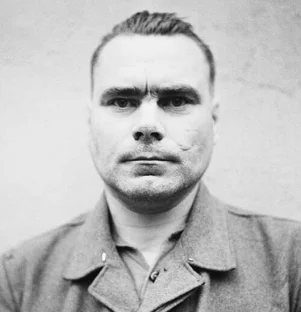
1906 - 1945
Summary
Name:
Josef KramerNickname:
The Beast of BelsenYears Active:
1941 - 1945Birth:
November 10, 1906Status:
ExecutedClass:
Mass MurdererVictims:
UnconfirmedMethod:
Several / Mass killingDeath:
December 13, 1945Nationality:
Germany1906 - 1945
Summary: Mass Murderer
Name:
Josef KramerNickname:
The Beast of BelsenStatus:
ExecutedVictims:
UnconfirmedMethod:
Several / Mass killingNationality:
GermanyBirth:
November 10, 1906Death:
December 13, 1945Years Active:
1941 - 1945Date Convicted:
November 17, 1945“I had no feelings in carrying out these things because I had received an order.”
— Josef Kramer
Josef Kramer was born on November 10, 1906, in Munich, Germany. He later joined the Nazi Party in 1931 and the SS in 1932. His SS career placed him inside the Nazi concentration-camp system, where he rose from guard and administrative roles to command positions.
In 1934, Kramer was assigned to Dachau concentration camp as a guard. He later served at Sachsenhausen and Mauthausen, gaining experience inside the SS camp system. By 1940, he was connected to Auschwitz through his work with Rudolf Höss, the Auschwitz commandant.
Kramer became commandant of Natzweiler-Struthof concentration camp in April 1941. This camp was located in occupied Alsace. During his time there, prisoners were subjected to forced labor, brutality, and medical or racial crimes connected to the wider Nazi system. Kramer’s later trial and reputation were mainly tied to Auschwitz-Birkenau and Bergen-Belsen, but his earlier command at Natzweiler was part of his rise within the SS camp structure.
In 1942, Kramer was promoted to SS-Hauptsturmführer. In May 1944, he was placed in charge of Auschwitz II-Birkenau, the section of Auschwitz where mass killings and selections took place. The uploaded source states that Kramer was connected to the gas chambers and was known for harsh conduct toward prisoners and subordinates.
In December 1944, Kramer was transferred to Bergen-Belsen and became its commandant. Bergen-Belsen did not operate as a gas-chamber extermination camp, but under Kramer’s command the camp became a place of mass death through starvation, disease, overcrowding, neglect, and collapse of basic administration. His conduct there led prisoners to call him “The Beast of Belsen.”
Josef Kramer’s crimes were committed through his senior role in the Nazi concentration-camp system. He was not a conventional single-event murderer. His crimes were tied to state-organized mass persecution, camp administration, selections, prisoner abuse, starvation, disease, and the killing systems used in Nazi camps.
At Auschwitz-Birkenau, Kramer held a command role during the period of mass deportations and killings. The supplied source states that he was placed in charge of the gas chambers at Auschwitz-Birkenau in May 1944 and remained connected to that work until his transfer to Bergen-Belsen later that year. It also describes his participation in gassing prisoners and his statement that he had no feelings because he was following orders.
Kramer was later transferred to Bergen-Belsen in December 1944. By early 1945, the camp population rose sharply as prisoners were evacuated from other camps. Conditions deteriorated severely. Food, sanitation, medical care, and basic order collapsed. Prisoners died in large numbers from starvation, typhus, exhaustion, and neglect. The uploaded source describes bodies lying throughout the camp and prisoners suffering from extreme emaciation and disease when British forces arrived.
British forces entered Bergen-Belsen on April 15, 1945. Kramer remained at the camp and was arrested the same day. The British found mass death, unburied bodies, and thousands of surviving prisoners in critical condition. The discovery of Bergen-Belsen became one of the strongest public images of Nazi camp crimes after liberation.
Kramer and other camp staff were tried by a British military court in the Belsen Trial, which began in September 1945 at Lüneburg. Forty-five people were tried, including SS staff, female guards, and prisoner functionaries. The Anne Frank House notes that the trial lasted about two months and involved charges connected to crimes against humanity, mistreatment of prisoners, and abuse inside the camp.
Kramer was charged for crimes connected to both Bergen-Belsen and Auschwitz-Birkenau. He was convicted and sentenced to death on November 17, 1945. On December 13, 1945, Josef Kramer was hanged at Hamelin Prison by British executioner Albert Pierrepoint.
