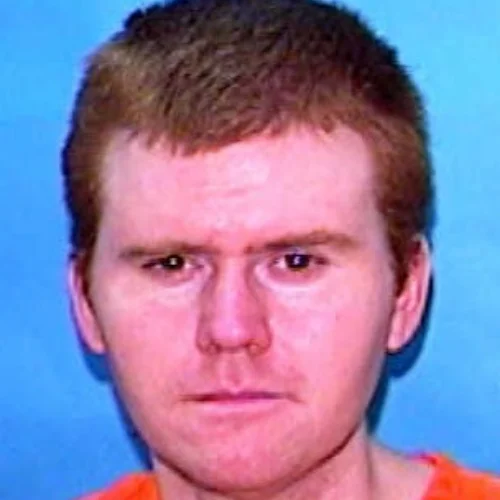
b: 1975
Summary
Name:
Jonathan Huey LawrenceYears Active:
1998Birth:
April 12, 1975Status:
Awaiting ExecutionClass:
MurdererVictims:
1Method:
ShootingNationality:
USAb: 1975
Summary: Murderer
Name:
Jonathan Huey LawrenceStatus:
Awaiting ExecutionVictims:
1Method:
ShootingNationality:
USABirth:
April 12, 1975Years Active:
1998Date Convicted:
March 24, 2000Jonathan Huey Lawrence was born on April 12, 1975. Before Jennifer Robinson’s murder, Lawrence already had a criminal record. Florida records show that he had a prior case for criminal mischief and property damage in Santa Rosa County. The offense date was May 18, 1993, and he was sentenced on November 2, 1993.
By 1998, Lawrence was associated with Jeremiah Martel Rodgers. Rodgers later became his co-defendant in Jennifer Robinson’s murder case. Both men were prosecuted separately, but both were connected to the same charges, including first-degree murder, conspiracy to commit murder, giving alcohol to a person under 21, and abuse of a human corpse.
Investigators later found written notes connected to the crime. According to court records, some of the notes described plans involving alcohol, sexual assault, weapons, and disposing of a body. These notes became important evidence because they supported the prosecution’s claim that the crime was planned.
Lawrence’s connection to Rodgers was also discussed during appeals. His defense argued that Rodgers had influence over him and that Lawrence acted under pressure. The courts considered this argument, but it did not overturn his death sentence. In 2003, the Florida Supreme Court upheld Lawrence’s original death sentence.
On May 7, 1998, Jonathan Huey Lawrence and Jeremiah Martel Rodgers were involved in the killing of 18-year-old Jennifer Robinson in Santa Rosa County, Florida. According to the Florida Supreme Court, Rodgers picked Robinson up from her mother’s home. Rodgers and Robinson then met Lawrence, and the three drove in Lawrence’s truck to a secluded wooded area.
While in the woods, the three drank alcoholic beverages. Court records state that Robinson had sex with Rodgers and then with Lawrence after drinking. The Florida Commission on Capital Cases record states that the alcohol had been provided by the two men.
At some point after that, Rodgers shot Robinson in the back of the head with Lawrence’s Lorcin .380 handgun. The Florida Supreme Court stated that the gunshot made Robinson instantly unconscious and that she died minutes later.
After Robinson was shot, Lawrence and Rodgers loaded her body into Lawrence’s truck and drove deeper into the woods. Once they stopped, Lawrence cut into Robinson’s leg and removed part of her calf muscle. Rodgers took Polaroid photographs of the body, including a photograph showing Lawrence’s hand holding Robinson’s foot. The two men then buried Robinson at the site.
Robinson’s disappearance was later traced to Lawrence and Rodgers. When Investigator Todd Hand questioned Lawrence, Lawrence denied knowing Robinson. He then gave permission for the investigator to search his trailer and truck. During that search, investigators found Polaroid photographs showing Robinson after death, written notes connected to the crime, a Lorcin .380 handgun, and other items linked to the murder.
The Florida Supreme Court also noted that investigators found a box for a Lorcin .380 handgun, empty Polaroid film packages, human tissue in Lawrence’s freezer, an ice chest, an empty plastic ice bag, disposable gloves, a scrapbook, and an anatomy book with markings on female anatomy pages and the calf section of a leg. These items were used as evidence in the case.
After the search, Lawrence was arrested. He confessed to his involvement and led investigators to Robinson’s body.
On June 4, 1998, Lawrence was indicted in Santa Rosa County. The charges included conspiracy to commit first-degree murder, giving alcoholic beverages to a person under 21, first-degree premeditated murder of Jennifer Robinson, abuse of a human corpse, and possession of a firearm by a convicted felon. The firearm count was later disposed of by nolle prosequi, meaning it was not pursued.
On March 24, 2000, Lawrence pleaded guilty to the main charges. These included principal to first-degree murder, conspiracy to commit first-degree murder, giving alcoholic beverages to a person under 21, and abuse of a dead human corpse.
On March 30, 2000, the jury recommended a death sentence by a vote of 11 to 1. On August 15, 2000, Lawrence was sentenced to death for the first-degree murder of Jennifer Robinson. He also received prison sentences for conspiracy, giving alcohol to a minor, and abuse of a human corpse.
Lawrence appealed his death sentence to the Florida Supreme Court. He raised several issues, including questions about competency, mental health evidence, the role of Rodgers, the cold, calculated, and premeditated aggravating factor, and whether the death sentence was proportionate. On March 20, 2003, the Florida Supreme Court affirmed his death sentence.
The case continued through postconviction appeals. In 2007, the Florida Supreme Court reviewed Lawrence’s motion to vacate his conviction and death sentence and also reviewed a petition for habeas corpus. The court denied relief.
Lawrence’s sentence later became affected by changes in Florida death penalty law involving non-unanimous jury recommendations. His original jury recommendation had been 11 to 1 in favor of death. Because of later Florida Supreme Court rulings on non-unanimous death recommendations, Lawrence received a new sentencing proceeding. In September 2018, a judge again upheld the death penalty.
In 2018, prosecutors also stated that Lawrence had written a letter to the judge in 2017 admitting responsibility and saying he wanted to die. The court still had to review the legal and mitigating factors before deciding whether the death penalty remained appropriate.
On October 29, 2020, the Florida Supreme Court affirmed Lawrence’s 2018 death sentence. That decision also became legally significant because the court ended its prior practice of independent comparative proportionality review in death penalty cases when no statute required it.
Lawrence then sought review in the U.S. Supreme Court. His petition was docketed on June 17, 2021. On October 4, 2021, the U.S. Supreme Court denied the petition.
