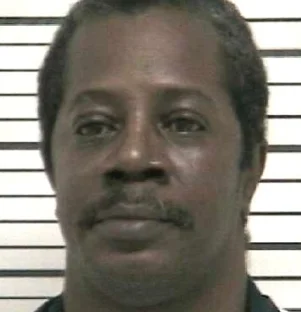
Summary
Name:
Johnny Lee GatesYears Active:
1976Status:
ReleasedClass:
MurdererVictims:
2Method:
ShootingNationality:
USASummary: Murderer
Name:
Johnny Lee GatesStatus:
ReleasedVictims:
2Method:
ShootingNationality:
USAYears Active:
1976"I've fought for 43 years for this day. I always had faith it would come, even when others weren't sure. I am an innocent man. I did not commit this crime. What happened to me is something that should never happen to any person. But I am not bitter. I thank God that I am here, and I am happy to be free."
— Johnny Lee Gates
Johnny Lee Gates was born in 1955. By 1976, he was on parole in Columbus, Georgia. Katharina Wright, 19, had recently moved to Columbus from Germany, where she had met and married her husband, a U.S. soldier stationed at Fort Benning; the couple had been in the United States for about a month and in their Columbus apartment for roughly ten days at the time of her murder.
On the morning of November 30, 1976, Wright's husband left for work at Fort Benning around 6 a.m. Shortly after noon, a man posing as a gas company employee knocked on the door of their apartment; Wright let him in, believing he had come in response to her request to have a gas heater repaired. Once inside, after being shown to the heater, the man walked to the bathroom where Wright was and told her he intended to rob her.
He then raped her and forced her at gunpoint to hand over cash hidden in the apartment. Before leaving, he took her back to the bedroom, gagged her, blindfolded her with her husband's neckties, and bound her hands behind her back with the belt from her bathrobe. He then shot her once in the right temple, killing her. A neighbor later reported seeing a man knock on his door around noon that day, claiming to be from the gas company.
According to the original case record, in the weeks between this murder and his eventual arrest, Gates was also connected to two armed robberies and a separate charge of voluntary manslaughter, reportedly tied to events around December 20, 1976; independent, detailed information about this second incident could not be confirmed for this profile.
Gates was arrested on January 31, 1977, on unrelated charges, and while in custody was questioned about the Wright murder. He confessed to the murder and armed robbery, though he claimed the sexual contact with Wright had been consensual. Investigators later found a fingerprint matching Gates on the gas heater in the apartment.
Gates, who is Black, was tried over three days in 1977 before an all-white jury in Columbus. He was convicted of rape, armed robbery, and murder, and the jury found three statutory aggravating circumstances, resulting in a death sentence for the murder and consecutive 20-year sentences for armed robbery and rape.
In 1992, Gates's case was returned to Muscogee County for a new sentencing proceeding specifically to address the question of intellectual disability. In 2003, his death sentence was vacated on this basis; a subsequent jury trial to formally determine his intellectual disability ended in a mistrial, after which prosecutors and Gates's defense agreed he would be resentenced to life without parole.
For years, Columbus prosecutors maintained that no physical evidence remained from the case. In 2015, interns with the Georgia Innocence Project reviewing the prosecution's files discovered a manila envelope containing the neckties and bathrobe belt used to bind Wright — evidence that, if the state's theory of a lone, bare-handed attacker were correct, should have carried the killer's DNA from skin cells.
Initial standard DNA testing by the Georgia Bureau of Investigation on these items was inconclusive. However, reanalysis using TrueAllele, an advanced computer-based method of interpreting complex DNA mixtures developed by the company Cybergenetics, determined that Gates's DNA profile was not present among the multiple contributors found on the tie and belt.
On January 10, 2019, Senior Muscogee County Superior Court Judge John Allen ruled this evidence was material and exculpatory, vacating Gates's conviction and ordering a new trial. The State appealed, but on March 13, 2020, the Georgia Supreme Court unanimously (9–0) affirmed Judge Allen's ruling, finding the DNA evidence "casts significant doubt on the state's theory that Gates was the perpetrator."
During the same appellate process, attorneys for Gates — from the Georgia Innocence Project and the Southern Center for Human Rights — uncovered handwritten prosecutor notes revealing that Columbus prosecutors had systematically excluded Black prospective jurors from at least seven capital cases in the 1970s, including Gates's trial. Jurors were marked "W" for white or "N"/"B" for Black on jury lists, and prosecutors' notes described Black prospective jurors in derogatory terms, including "slow," "old+ignorant," "cocky," "con artist," "hostile," and "fat." A Georgia Tech mathematics professor testified that the probability such a racially skewed outcome occurred by race-neutral chance was approximately 0.000000000000000000000000000004 percent.
Judge Allen's opinion excoriated the prosecutors for "undeniable... systematic race discrimination during jury selection," though he ultimately found this was not independently sufficient grounds for a new trial, since Gates's prior attorneys had not shown they lacked access to this evidence earlier — the new trial was granted specifically based on the DNA findings.
Rather than face a full retrial after more than four decades, Gates entered an Alford plea on May 15, 2020, to reduced charges of voluntary manslaughter and armed robbery — a plea in which a defendant maintains innocence while acknowledging that prosecutors have sufficient evidence to likely secure a conviction.
Presiding Judge Bobby Peters initially hesitated to accept the arrangement, expressing discomfort with someone pleading guilty while continuing to assert innocence, but ultimately approved it. Gates was sentenced to 20 years on each count, credited with the 43 years he had already served, and released the same day from the Muscogee County Jail, at age 63. He had spent approximately 26 of those 43 years on death row before his 2003 resentencing to life.
