b: 1963
Summary
Name:
Johnny HoskinsNickname:
Jamil AlleYears Active:
1992Birth:
October 31, 1963Status:
ImprisonedClass:
MurdererVictims:
1Method:
StrangulationNationality:
USAb: 1963
Summary: Murderer
Name:
Johnny HoskinsNickname:
Jamil AlleStatus:
ImprisonedVictims:
1Method:
StrangulationNationality:
USABirth:
October 31, 1963Years Active:
1992Date Convicted:
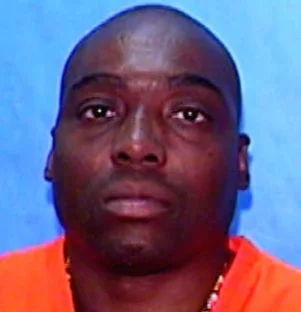
March 21, 1994Johnny Hoskins, who also used the alias "Jamil Alle," was born on October 31, 1963. Court-ordered psychological evaluations conducted during his later legal proceedings found he had an IQ estimated around 71, along with brain abnormalities later identified through neurological imaging; a Brevard County School Board employee separately testified that he had been identified as learning disabled but not intellectually disabled as a child. At the time of the murder, he lived in Brevard County, Florida, as a neighbor of the victim, Dorothy Berger.
On the evening of October 17, 1992, Dorothy Berger was last known to be alive at about 6:30 p.m. The next day, October 18, police went to her home after neighbors found the door open and noticed that she was missing. Inside the home, investigators found signs that something had happened in the bedroom. There was blood on the bed, a bent pair of eyeglasses, a green towel, items out of place, and a shoe impression in dust on the floor. Berger’s car was also missing, and there were no signs of forced entry.
Hoskins lived next door to Berger. A witness later reported seeing him on the evening of October 17 driving a car similar to Berger’s. At about 5:00 a.m. on October 18, Hoskins arrived at his parents’ home in Georgia in the same car. After arriving, he borrowed a shovel, left for about 20 minutes, and then returned. On October 19, he was stopped in Georgia for a traffic violation, and police later determined that the car he was driving belonged to Dorothy Berger.
Police found blood and vegetation inside the trunk of Berger’s car. Hoskins’s father later led investigators to an area near his home where the same type of vegetation grew. Berger’s body was found buried in a grave. Her hands were tied behind her back, and her mouth was gagged.
The medical examination showed that Berger had been raped, beaten, and strangled. She had numerous injuries, including several blows to the head, one of which likely caused unconsciousness. The Florida Supreme Court stated that the strangulation occurred after the sexual battery and beating. DNA testing showed that semen found on Berger and on her bedsheet could have come from Hoskins.
Hoskins was indicted on November 10, 1992, on charges of robbery without a firearm, first-degree murder, sexual battery with a deadly weapon or force, burglary, and kidnapping. On March 21, 1994, a jury found him guilty on all counts.
On November 4, 1994, the jury unanimously recommended death, and Hoskins was sentenced to death for first-degree murder. He also received life sentences for burglary, sexual battery, and kidnapping, and a 15-year sentence for robbery.
The Florida Supreme Court reviewed the case in 1997. The court affirmed Hoskins’s convictions and all sentences except the death sentence. It remanded the case so a PET scan could be conducted after a defense mental-health expert said neurological testing could help develop mitigation evidence.
After further proceedings, the Florida Supreme Court vacated the death sentence in 1999 and ordered a new penalty phase. At the later penalty proceeding, the jury recommended death by an 11–1 vote. The jury found aggravating factors including that the murder occurred during robbery, sexual battery, or kidnapping; that it was committed to avoid arrest; and that it was especially heinous, atrocious, or cruel.
The trial court again imposed a death sentence, and the Florida Supreme Court affirmed that sentence on April 19, 2007. The court also noted mitigation evidence, including low IQ, low mental functioning, brain abnormalities, an abusive and impoverished background, and good jail conduct, but found that the aggravating circumstances outweighed the mitigation.
In 2011, Hoskins appealed the denial of post-conviction relief. He argued that his penalty-phase lawyers were ineffective for failing to develop additional evidence about intermittent explosive disorder, for not using a mitigation specialist, and for not presenting drug-abuse evidence. The Florida Supreme Court rejected those claims and affirmed the denial of relief.
After Florida’s death-penalty law changed following Hurst v. Florida, Hoskins later received another penalty-phase opportunity. A 2025 death-penalty tracking report states that on July 17, 2025, Hoskins entered a plea agreement with the State, accepted life imprisonment without parole, and the State agreed to drop the death penalty. The report states that the court entered a new judgment and sentence the same day.
As of the official FDLE registry image dated January 13, 2026, Johnny Hoskins remained listed under confinement with Florida Department of Corrections number 962032.
