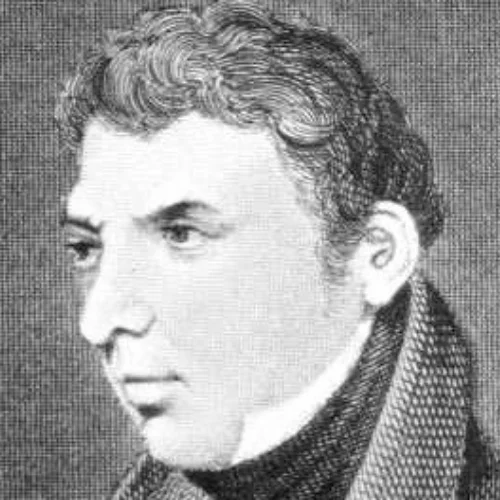
1794 - 1824
Summary
Name:
John ThurtellNickname:
Jack ThurtellYears Active:
1823Birth:
December 21, 1794Status:
ExecutedClass:
MurdererVictims:
1Method:
Shooting / Throat cuttingDeath:
January 09, 1824Nationality:
United Kingdom1794 - 1824
Summary: Murderer
Name:
John ThurtellNickname:
Jack ThurtellStatus:
ExecutedVictims:
1Method:
Shooting / Throat cuttingNationality:
United KingdomBirth:
December 21, 1794Death:
January 09, 1824Years Active:
1823John Thurtell was born on December 21, 1794, in England. He was the second surviving son of Thomas Thurtell, who was the Mayor of Norwich, and his wife, Susanna Browne. Growing up in a prominent family, John had a relatively wealthy upbringing. His father was well-respected in the community, which gave John a certain level of status.
At the age of 15, on May 8, 1809, John Thurtell joined the Royal Marines. He was assigned to Company 99 and later transferred to HMS Adamant. This flagship was based at Chatham. John served for a while, but in July 1810, he was discharged due to some undetermined misconduct. He continued his military career on other ships but did not see much action.
After leaving the military, John entered the business world. In 1815, after the end of the Napoleonic Wars, his father helped him start a partnership with John Giddings to manufacture bombazine, a type of fabric. During this time, John developed an interest in gambling and the boxing world. He often associated with well-known figures in these areas.
By 1821, John's business faced difficulties. He traveled to London to collect debts but claimed that he had been robbed. His creditors did not believe him, and his business partnership went bankrupt. Shortly after, his brother also faced bankruptcy.
John and his brother moved to London, where John began to engage in various schemes to make money. He leased a tavern and was involved in gambling houses. However, his life began to spiral into crime. He started to engage in fraudulent activities to support himself.
John Thurtell murdered William Weare on October 23, 1823. Thurtell believed that Weare had cheated him out of a large sum of money during a card game. He invited Weare to spend a weekend gambling at a cottage in Radlett, Hertfordshire. The murder occurred on their way to the cottage.
As they neared the cottage, Thurtell confronted Weare outside an inn. He drew a pistol and fired at Weare, but the bullet missed. Thurtell then attacked Weare with a penknife, cutting his throat. After that, he used the pistol's muzzle to hit Weare in the head, causing severe injury.
Thurtell received help from two friends, William Probert and Joseph Hunt, to dispose of Weare's body. Initially, they hid the body in a pond behind Probert's cottage. Later, they moved it to another pond in Elstree to avoid detection.
The murder weapons, a knife and a pistol, were found nearby. A laborer discovered them and reported it to the authorities, which led to an investigation. Probert and Hunt eventually turned against Thurtell to save themselves. They provided evidence against him, leading to his arrest.
Thurtell was charged with murder. During the trial, the evidence against him seemed overwhelming, and public interest in the case was high. Thurtell attempted to shift blame onto Probert but was found guilty. He was sentenced to death.
Thurtell was executed by hanging on January 9, 1824. His body was sent for dissection as part of his punishment. Hunt received a lesser punishment of transportation to Australia due to his cooperation with the authorities. Probert, who had testified against Thurtell, escaped prosecution for the murder but later faced legal troubles of his own.
