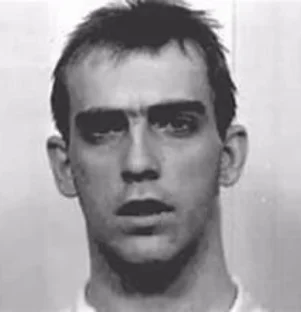
d: 1987
Summary
Name:
Jimmy GlassYears Active:
1982Status:
ExecutedClass:
MurdererVictims:
2Method:
ShootingDeath:
June 12, 1987Nationality:
USAd: 1987
Summary: Murderer
Name:
Jimmy GlassStatus:
ExecutedVictims:
2Method:
ShootingNationality:
USADeath:
June 12, 1987Years Active:
1982Date Convicted:
April 8, 1983“Yeah, I think I’d rather be fishing.”
— Jimmy Glass
Jimmy L. Glass was born around 1962. The Louisiana Supreme Court described him as the oldest of four children. His father reportedly struggled with alcoholism and epilepsy and did not consistently support the family. Glass left high school approximately two weeks before completing the twelfth grade. He was failing at least one course required for graduation. He reported using alcohol and marijuana from the age of 13 and acknowledged experimenting with other drugs, including heroin. His employment history was unstable, and he told investigators that he supported himself through theft and fraudulent activity.
As a juvenile, Glass was arrested for arson and burglary and remained on probation until he turned 18. His adult record included theft, criminal damage to property, marijuana possession, and armed robbery. In January 1982, he received a ten-year sentence without parole for robbing a convenience store while armed with a knife.
Glass enlisted in the United States Navy in 1981 but deserted during the same year. At the time of the murders, he remained classified as a Navy fugitive. He was also divorced and had a young daughter whom he was not financially supporting.
On December 24, 1982, Jimmy L. Glass and fellow inmate Jimmy Wingo escaped from the Webster Parish Jail in Minden, Louisiana. The two men travelled to the home of Newton and Erlene Brown in Dixie Inn, where they waited for the couple to return before breaking into the house. After entering the bedroom, they bound and gagged the Browns and searched the residence for money, firearms, clothing, and other valuables.
Glass later admitted that he shot both victims in the head with a .38-caliber handgun. He claimed that Wingo had threatened him with a shotgun and forced him to carry out the killings, but the jury rejected this account. The two men fled in the Browns’ vehicle, which was later abandoned after becoming disabled in floodwater. Wingo was arrested in Texas on January 5, 1983, and Glass was captured in San Diego, California, the following day.
Glass was charged with two counts of first-degree murder. His trial was moved to Lafayette Parish because of extensive local publicity. On April 8, 1983, a jury convicted him of both murders, and he was formally sentenced to death on April 29. The Louisiana Supreme Court upheld the convictions and sentence in 1984.
Glass later challenged execution by electrocution, arguing that it violated the constitutional ban on cruel and unusual punishment. The U.S. Supreme Court declined to hear the case in 1985, although Justices William Brennan and Thurgood Marshall dissented. Glass continued filing state and federal appeals, but his final requests for relief were denied.
He was executed in Louisiana’s electric chair shortly after midnight on June 12, 1987, at the Louisiana State Penitentiary in Angola. He was pronounced dead at 12:14 a.m. When asked for a final statement, Glass replied, “Yeah, I think I’d rather be fishing.” His accomplice, Jimmy Wingo, was executed four days later for his role in the murders.
