1960 - 1999
Summary
Name:
Jess James GilliesYears Active:
1981Birth:
October 18, 1960Status:
ExecutedClass:
MurdererVictims:
1Method:
Blunt force traumaDeath:
January 13, 1999Nationality:
USA1960 - 1999
Summary: Murderer
Name:
Jess James GilliesStatus:
ExecutedVictims:
1Method:
Blunt force traumaNationality:
USABirth:
October 18, 1960Death:
January 13, 1999Years Active:
1981Date Convicted:
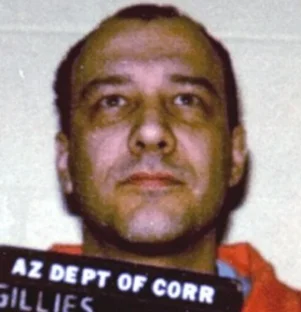
August 28, 1981Jess James Gillies was born on October 18, 1960. At the time of Suzanne Rossetti’s murder, he was 20 years old and lived and worked at Weldon’s Riding Stables in Phoenix with Michael Logan. A later sentencing proceeding established that Gillies had previously been convicted of theft, a class-six felony, but the accessible court opinions provide few details about that earlier crime.
Gillies’s statements to several friends became a major part of the prosecution’s evidence. Investigators also recovered Rossetti’s belongings and credit cards from him after his arrest. No reliable public source reviewed for this profile documents a diagnosed mental illness, intellectual disability or other verified condition that would explain his actions.
On the night of January 28, 1981, Suzanne Rossetti asked Gillies and Michael Logan for help after locking herself out of her car at a Phoenix convenience store. After they opened the vehicle, she bought them beer and offered them a ride to the riding stable where they worked. During the journey, one of the men grabbed her, and both men sexually assaulted her. They later took her to Papago Park and her apartment, where additional assaults occurred and property was stolen.
Gillies and Logan eventually drove Rossetti to Fish Creek Hill in the Superstition Mountains and pushed her approximately 40 feet down a rocky slope. She remained alive and begged them to leave her in peace because she believed she was already dying. Instead, the men followed her down the hillside and struck her repeatedly in the head with rocks until she lost consciousness. They then covered her with heavy rocks and drove back to Phoenix in her car. Medical evidence indicated that she may have remained alive for another 10 to 15 minutes.
During the following days, Gillies and Logan used Rossetti’s bank card at automated teller machines 28 times. Thirteen attempts failed because the account had a daily withdrawal limit. Gillies also discussed the crime with friends, and those statements helped investigators identify him. He was arrested on February 3, 1981, with several of Rossetti’s possessions, including her credit cards.
Logan entered a plea agreement, helped investigators find Rossetti’s body and received life imprisonment without eligibility for parole for 25 years. Gillies proceeded to trial and was convicted on August 28, 1981, of first-degree murder, kidnapping, sexual assault, aggravated robbery and first-degree computer fraud. He received consecutive prison sentences for the noncapital offenses and was sentenced to death for the murder.
In March 1983, the Arizona Supreme Court affirmed Gillies’s convictions but ruled that the sentencing court had improperly considered a prior conviction and had incorrectly found three aggravating circumstances. The court removed the findings involving a previous violent conviction, pecuniary gain and commission of the offense while in custody. It left intact the finding that Rossetti’s murder was especially heinous, cruel or depraved and ordered a new sentencing proceeding.
Gillies was sentenced to death again after the new hearing. On October 30, 1984, the Arizona Supreme Court affirmed the revised death sentence and the consecutive sentences for kidnapping, sexual assault, aggravated robbery and computer fraud.
After further unsuccessful legal challenges, Gillies was executed by lethal injection at the Arizona State Prison in Florence on January 13, 1999. He was 38 and made no final statement. His execution was Arizona’s 13th after the state resumed executions in 1992 and the 506th execution in the United States after the modern death-penalty era began in 1976.
