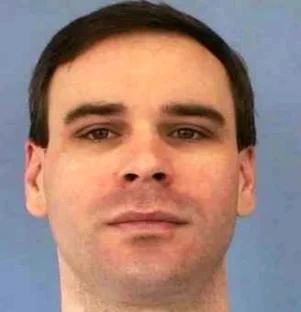
b: 1978
Summary
Name:
Jeffrey Keith HavardYears Active:
2002Birth:
November 11, 1978Status:
ImprisonedClass:
MurdererVictims:
1Method:
Fatal head injury / Alleged shakingNationality:
USAb: 1978
Summary: Murderer
Name:
Jeffrey Keith HavardStatus:
ImprisonedVictims:
1Method:
Fatal head injury / Alleged shakingNationality:
USABirth:
November 11, 1978Years Active:
2002Date Convicted:
December 19, 2002Jeffrey Keith Havard was born on November 11, 1978, in the United States. Havard’s family members later described him as having been raised partly by his mother and partly by his grandparents. His mother, Cheryl Harrell, testified during the penalty phase of his trial. She told the jury that Havard was born outside marriage, that he did not meet his biological father until he was older, and that his biological father was not a steady part of his life.
Court records also describe Havard as having spent time living with his grandparents. His grandmother, Ruby Havard, testified that he lived with them during part of his adolescence. Other post-conviction filings discussed his attendance in the Youth Challenge Program at Camp Shelby, where supporters said he earned a GED and adapted well to the structured environment.
Before the crime, Havard lived in Adams County, Mississippi. He was in a relationship with Rebecca Britt, the mother of six-month-old Chloe Britt. Rebecca and Chloe had moved into Havard’s trailer, which was located on property owned by his grandfather. Havard was not Chloe’s biological father.
The relationship between Havard and Rebecca Britt had lasted only a few months before the child’s death. Court records state that Rebecca later testified that, before the night Chloe died, Havard had not usually bathed the child or changed her diaper. Later post-conviction filings disputed parts of this description and pointed to Rebecca’s earlier police statement, in which she reportedly said Havard helped feed and change Chloe and appeared to care for her.
Havard had no publicly confirmed prior homicide history before Chloe Britt’s death. His known criminal profile centers on the events of February 21, 2002, the resulting capital murder conviction, and the long appeal history that followed.
On February 21, 2002, Jeffrey Keith Havard was living in Adams County, Mississippi, with his girlfriend, Rebecca Britt, and her six-month-old daughter, Chloe Britt. That evening, around 8:00 p.m., Havard gave Rebecca money and asked her to go to the grocery store to buy supper.
When Rebecca returned home, Chloe had been bathed and appeared to be asleep. Havard told Rebecca that he had bathed the baby and put her to bed. He had also removed sheets from the bed and said he was washing them. Rebecca checked on Chloe, and the child appeared to be fine at that time.
Havard then asked Rebecca to leave again to rent movies from a video store. When Rebecca came back, Havard was in the bathroom with the door shut. Rebecca checked on Chloe and discovered that the baby was blue and was no longer breathing. Rebecca attempted CPR, and she and Havard took Chloe to Natchez Community Hospital, where Rebecca’s mother worked.
Chloe Britt was pronounced dead at the hospital later that night. Medical staff observed injuries that raised suspicion of sexual abuse, and law enforcement was contacted. A pathologist later testified that Chloe had injuries consistent with penetration of the rectum with an object, abrasions and bruises inside her mouth, and internal bleeding inside the skull that was described as consistent with shaken baby syndrome.
Two days after Chloe’s death, Havard gave a videotaped statement. He denied sexually assaulting Chloe. He said he had accidentally dropped her against the commode after giving her a bath, shook her in panic, rubbed her with lavender lotion, and put her to bed. He maintained that the death was not intentional.
Investigators and prosecutors rejected the accidental-death explanation. Havard was charged with capital murder, with sexual battery as the underlying felony. Under Mississippi law, the sexual battery allegation made the murder charge eligible for the death penalty.
At trial, the State relied heavily on medical testimony. Dr. Steven Hayne, the pathologist who performed the autopsy, testified that Chloe’s death was a homicide and that her injuries were consistent with shaken baby syndrome and sexual abuse. Hospital personnel also testified about injuries they observed when Chloe arrived at the emergency room.
The defense challenged the sexual battery allegation and argued that the evidence did not prove the underlying felony required for capital murder. DNA testing from a sexual assault kit did not find Havard’s DNA in Chloe’s rectum or vagina. However, the State argued that sexual battery under Mississippi law could involve penetration by an object and did not require the presence of semen or Havard’s DNA.
A jury found Jeffrey Keith Havard guilty of capital murder. The same jury found that he should receive the death penalty, and the Adams County Circuit Court sentenced him to death on December 19, 2002.
Havard appealed. In 2006, the Mississippi Supreme Court affirmed his conviction and death sentence. The court summarized the evidence presented at trial and rejected the claims raised on direct appeal.
The case continued through post-conviction litigation. Havard’s lawyers later challenged the forensic evidence used at trial, especially the shaken baby syndrome testimony and the sexual battery findings. They also questioned the testimony of Dr. Steven Hayne, whose forensic work in Mississippi had become controversial in other cases. Several forensic experts later disputed parts of the original medical testimony, including the certainty of the sexual abuse finding and the shaken baby diagnosis.
In 2015, the Mississippi Supreme Court allowed Havard to proceed with an evidentiary hearing based on claims involving new medical evidence related to shaken baby syndrome. After that hearing, the trial judge denied Havard’s request for a new trial, meaning the conviction remained in place. However, the judge vacated the death sentence and resentenced Havard to life imprisonment without parole.
On December 17, 2020, the Mississippi Supreme Court affirmed the trial court’s decision denying Havard a new trial. The court recognized that the death sentence had been vacated but left the capital murder conviction standing.
