b: 1962
Summary
Name:
James S. GenrichNickname:
MadBomberYears Active:
1991Birth:
October 22, 1962Status:
ImprisonedClass:
MurdererVictims:
2Method:
Pipe bombs / Explosive devicesNationality:
USAb: 1962
Summary: Murderer
Name:
James S. GenrichNickname:
MadBomberStatus:
ImprisonedVictims:
2Method:
Pipe bombs / Explosive devicesNationality:
USABirth:
October 22, 1962Years Active:
1991“I’m not a bomber.”
— James S. Genrich
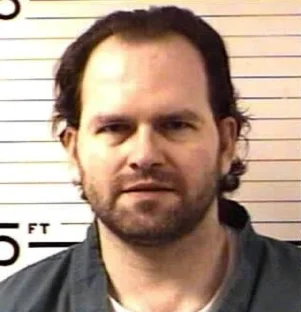
James "Jimmy" Genrich was born on October 22, 1962. At the time of his arrest, he had no prior criminal record, no known connection to either victim, and no clear established motive — factors his later legal team would point to as inconsistent with guilt.
Between 1989 and 1991, a series of pipe bombings struck the Grand Junction, Colorado area, an event that shook the local community. One bomb, planted in 1989, failed to detonate. In 1991, a bomb killed Henry Ruble, and a separate bomb, planted in the wheel of her family's van, killed 12-year-old Maria Dolores Gonzales. Investigators, working a high-profile investigation led by the Grand Junction Police Department, ultimately focused on Genrich as their central suspect.
The central piece of evidence tying Genrich to the bombings was expert testimony from a forensic toolmark examiner, Agent John O'Neil, who testified that a microscopic mark — roughly 1/100th of an inch long — found on a two-millimeter piece of wire recovered from one of the bombs could be matched specifically to a pair of generic, mass-produced wire cutters owned by Genrich, to the exclusion of every other such tool in existence. The same expert also matched one of Genrich's tools to the earlier, non-detonated 1989 bomb — despite Genrich having documented employment records placing him in Arizona, working at a bookstore, at the time that device was planted. Genrich was arraigned in February 1992 on charges including three counts of first-degree murder. He was convicted at a 1993 trial held in Weld County (following a change of venue) and was sentenced to life in prison without the possibility of parole on May 12, 1993.
Beginning around 2022, the Innocence Project and the Korey Wise Innocence Project at the University of Colorado Boulder took up Genrich's case as part of a broader effort scrutinizing convictions based on forensic toolmark "matching" testimony — a method the wider forensic science community has since concluded lacks a valid scientific basis for the kind of individualized, one-tool-to-the-exclusion-of-all-others claims made at Genrich's trial. In January 2022, his legal team presented four days of expert testimony demonstrating that this type of toolmark opinion evidence is now considered scientifically unsound and would not be admissible in a modern courtroom. On July 10, 2023, the Mesa County District Court agreed, vacating Genrich's conviction and ordering a new trial; the Colorado Court of Appeals unanimously affirmed this decision in 2025, and the Colorado Supreme Court subsequently declined to hear the state's further appeal.
During the state's own reinvestigation of the case in preparation for a possible retrial, additional evidence favorable to Genrich emerged: a previously undiscovered fingerprint recovered from one of the bombs did not match him; two independent toolmark experts examined the original crime scene evidence and found no connection between Genrich's tools and the bombs, describing the toolmarks as showing "largely dissimilar" microscopic characteristics; and an extensive search for jailhouse informants among Genrich's past and present cellmates turned up no one willing to support the original prosecution's theory. Investigators had also, both at the original trial and again during the reinvestigation, unsuccessfully attempted to get members of Genrich's own family — including his brother and mother — to record incriminating statements from him; in one documented instance, law enforcement persuaded Genrich's parents to secretly wear a recording device and falsely told them Genrich could only avoid a death sentence by confessing. Genrich maintained his innocence throughout.
On April 13, 2026, the 21st Judicial District Attorney's Office formally moved to dismiss all murder charges against Genrich, and Judge Brian Flynn granted the dismissal following a hearing. Prosecutors, led by District Attorney Dan Rubinstein, stated that a retrial was "no longer legally or practically viable," noting that 28 witnesses from the original 1993 trial had since died and that the state's own original toolmark expert, now 84, suffered from cognitive impairment that left him unable to testify.
Despite the dismissal of the murder charges, Genrich remains in custody at the Arkansas Valley Correctional Facility in Crowley County, Colorado, serving a 72-year sentence on separate, related convictions — including illegal use of an explosive device and assault — stemming from the same bombings and based on the same discredited toolmark evidence used to convict him of murder. Earlier in 2026, the Mesa County trial court ruled that Genrich could not challenge these remaining convictions because his prior legal counsel had missed an applicable filing deadline; that ruling is being appealed to the Colorado Court of Appeals. His legal team, which includes attorneys from the Innocence Project, the Korey Wise Innocence Project, and the law firm Weil Gotshal & Manges, has called his continued incarceration "purely the result of a procedural technicality, not the merits of the case," and has urged Colorado to dismiss the remaining charges as well.
The families of both victims have stated publicly that they do not view the dismissal of the murder charges as evidence of Genrich's innocence. Maria Gonzales's twin sister, Lupe Gonzales, traveled more than fifteen hours to attend the April 2026 hearing, describing the experience as deeply painful; another family member told Genrich directly in court that dropping the charges did not "erase the truth." Prosecutors have stated that no alternative suspect has ever been identified in the case.
