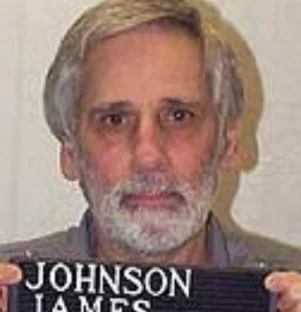
1949 - 2002
Summary
Name:
James Rodney JohnsonYears Active:
1991Birth:
April 18, 1949Status:
ExecutedClass:
Mass MurdererVictims:
4Method:
ShootingDeath:
January 09, 2002Nationality:
USA1949 - 2002
Summary: Mass Murderer
Name:
James Rodney JohnsonStatus:
ExecutedVictims:
4Method:
ShootingNationality:
USABirth:
April 18, 1949Death:
January 09, 2002Years Active:
1991"I know that I caused irreparable damage to each surviving family member. I earnestly pray for your forgiveness."
— James Rodney Johnson
James Rodney Johnson was born on April 18, 1949, in the United States. Johnson served in the United States military during the Vietnam War and worked as a helicopter pilot. His military service later became a central issue during his criminal proceedings. Defense attorneys argued that his experiences during the war left him suffering from Post-Traumatic Stress Disorder (PTSD), a condition they claimed affected his mental state during the murders. Mental health experts testified during the trial regarding his psychological condition, but the jury ultimately rejected the insanity defense.
Following his military service, Johnson returned to civilian life in Missouri. Available court records and case summaries indicate that he lived in Cooper County and was married with children. In the years before the murders, Johnson appeared to live an otherwise ordinary life. No significant criminal history was documented before the events of December 1991.
Despite the absence of a criminal record, tensions reportedly developed within Johnson's family. By late 1991, domestic problems had escalated. These issues would eventually culminate in one of the most notorious law enforcement-related killing sprees in Missouri history.
The events began on December 8, 1991, during a heated domestic dispute at Johnson's residence in Cooper County, Missouri. During the argument, Johnson confronted his wife and adult daughter. At gunpoint, he forced his daughter to leave the home. Although he initially departed, he returned shortly afterward.
Authorities were notified of the disturbance, and Cooper County Deputy Sheriff Leslie Roark responded to investigate. After speaking with those involved, Deputy Roark began walking back toward his patrol vehicle. As the deputy was leaving the scene, Johnson emerged from the house armed with a firearm and shot him twice.
Roark fell wounded but remained alive. Hearing the deputy moan in pain, Johnson returned and fired another shot into Roark's forehead. The deputy died from his injuries. The killing marked the beginning of a violent rampage that would span two counties and leave multiple victims dead.
After murdering Deputy Roark, Johnson loaded weapons and ammunition into his vehicle and drove away. His next destination was the home of Moniteau County Sheriff Kenny Jones. The sheriff's family was hosting a Christmas gathering when Johnson arrived outside the residence armed with a .22-caliber rifle.
Looking through a window, Johnson opened fire on the people gathered inside. Several shots struck Pam Jones, the sheriff's wife. She was hit multiple times, suffering wounds to her shoulder, face, neck, and the back of her head. Despite the presence of family members and emergency efforts, Pam Jones died at the scene. Her death occurred in front of relatives attending the holiday celebration.
Johnson then left and drove to the residence of Deputy Sheriff Russell Borts. Borts was on the telephone when Johnson arrived. Without warning, Johnson opened fire and shot him multiple times, striking his face, hand, and chest. Although seriously wounded, Borts survived the attack.
The violence continued when Johnson traveled to the Moniteau County Sheriff's Office. Armed with multiple firearms, he entered the area and began shooting. Cooper County Sheriff Charles Smith was struck four times by gunfire and died from his wounds.
A short time later, Deputy Sheriff Sandra Miller, identified in some reports as Sandra Wilson, arrived at the scene. Johnson fired an 8-millimeter bolt-action Mauser rifle and struck her in the chest. She died from the gunshot wound.
By this point, four people had been killed, Deputy Leslie Roark, Pam Jones, Sheriff Charles Smith, and Deputy Sandra Miller/Wilson. Another law enforcement officer, Deputy Russell Borts, survived despite serious injuries.
Following the shootings, Johnson fled and avoided immediate capture. Law enforcement agencies from multiple jurisdictions launched a massive manhunt. Officers searched throughout the area while residents were warned to remain alert.
Johnson eventually hid on the back porch of a local resident's home. During the standoff, he held the homeowner hostage for much of the day. Negotiators worked to establish communication and persuade him to surrender peacefully.
After hours of negotiations, authorities successfully convinced Johnson to give himself up. He was taken into custody on December 10, 1991, bringing the deadly rampage to an end.
At trial, Johnson's defense centered on claims that he suffered from Post-Traumatic Stress Disorder stemming from his military service in Vietnam. Defense attorneys argued that the condition affected his judgment and mental state during the shootings. Prosecutors countered that Johnson understood his actions and deliberately targeted law enforcement officers and others connected to them.
The jury rejected the insanity defense and found Johnson criminally responsible for the murders. He was convicted and sentenced to death.
Johnson spent approximately a decade on Missouri's death row while pursuing appeals. His case eventually reached the Missouri Supreme Court, which upheld his convictions and death sentence in State of Missouri v. James Johnson, 968 S.W.2d 123 (Mo. 1998). Subsequent appeals were unsuccessful.
As his execution date approached, Johnson expressed remorse for the suffering caused by his actions. His final meal consisted of steak, french fries, and a salad.
On January 9, 2002, James Rodney Johnson was executed by lethal injection at the age of 52. Before his execution, he issued a final statement directed toward the victims' families:
"I know that I caused irreparable damage to each surviving family member. I earnestly pray for your forgiveness."
His execution brought legal proceedings to a close more than ten years after the shootings that claimed four lives and deeply affected law enforcement agencies and communities across Cooper and Moniteau Counties, Missouri.
