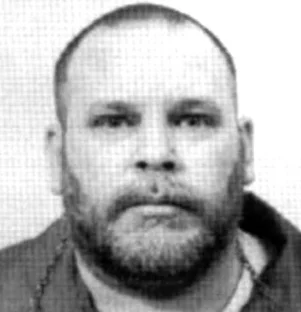
b: 1949
Summary
Name:
James P. HarrisonYears Active:
1973 - 1989Birth:
November 09, 1949Status:
ImprisonedClass:
MurdererVictims:
3Method:
Stabbing / ArsonNationality:
USAb: 1949
Summary: Murderer
Name:
James P. HarrisonStatus:
ImprisonedVictims:
3Method:
Stabbing / ArsonNationality:
USABirth:
November 09, 1949Years Active:
1973 - 1989James P. Harrison was born on November 9, 1949. His early life was heavily defined by severe childhood domestic turmoil, during which he suffered documented instances of emotional, physical, and sexual abuse. As a young adult, Harrison served in the United States military and was deployed to the Vietnam War, where he sustained physical wounds and trauma.
Following his military service, Harrison entered the criminal justice system. In 1973, he was arrested, prosecuted, and convicted of murder in an unrelated case. After serving his designated period of incarceration, Harrison was released back into the community.
By the late 1980s, he resided in Posey County, Indiana, and regularly attended a local church. It was through this congregation that Harrison became acquainted with 20-year-old Stacy Forsee. During this time, Harrison frequently carried a specialized hunting knife, a detail that later became a critical piece of evidence for law enforcement.
On January 17, 1989, an intense arson fire completely consumed the Posey County residential home of Stacy Forsee. Responding emergency crews recovered the bodies of Forsee and her two young children: 3½-year-old Tia Forsee and 21-month-old Jordan Hanmore, from the charred ruins. Forensic autopsies revealed that Stacy Forsee had been brutally stabbed to death prior to the fire, and medical analysis discovered semen in her mouth, indicating an act of sexual violence.
Additional pathological findings established that Tia Forsee died from severe fire burns, while infant Jordan Hanmore succumbed to smoke inhalation.The initial investigation stalled for over two years. During this period, investigators established that a flammable accelerant was used to ignite the home, and records showed Harrison had purchased kerosene just days prior to the tragedy. Eye-witness accounts also placed Harrison near the residence watching the blaze before the arrival of fire trucks.
Harrison subsequently left the state, relocating to Maryland. While the investigation continued, it was revealed through separate police depositions that Forsee had previously contacted the Indiana State Police expressing fear for her life, alleging her ex-boyfriend and local drug traffickers were targeting her.Charges were officially filed against Harrison in 1991, resulting in his subsequent arrest in Maryland and extradition back to Indiana.
While held in jail, Harrison confessed his involvement in the crimes to a fellow inmate. His capital trial took place in late 1991 in the Posey County Circuit Court under Judge James M. Redwine. The defense sought a change of judge, arguing that the victim's prior police statements regarding local drug trafficking inadvertently mentioned Judge Redwine’s name, creating a conflict of interest. Judge Redwine denied the motion, directly questioning state police detectives from the bench to clear his name.In November 1991, the jury returned a split verdict: Harrison was found not guilty of the direct murder of Stacy Forsee, but was convicted of the knowing murder of Tia Forsee, the felony-murder of Jordan Hanmore, and arson.
On December 14, 1991, Judge Redwine sentenced Harrison to the death penalty, citing statutory aggravating factors, including the victims' young ages and Harrison’s prior 1973 murder conviction.Harrison spent over a decade on Indiana's death row. On January 22, 2004, following extensive state appeals, his death sentences were vacated, and he was resentenced to life imprisonment based on heavy mitigating evidence, including his Vietnam War injuries, severe childhood abuse, and the non-overwhelming nature of the purely circumstantial trial evidence.
Later that year, the U.S. District Court granted a federal writ of habeas corpus due to judicial bias stemming from Judge Redwine's behavior during the 1991 pretrial hearings. On October 27, 2005, the United States Court of Appeals for the Seventh Circuit affirmed the lower court's decision, ruling that the judge's personal interrogation of witnesses violated Harrison's constitutional right to a fair trial before an impartial judge. The state subsequently corrected the procedural violations, and Harrison was permanently remanded to the Indiana Department of Corrections to serve out his life sentences without the possibility of parole.
