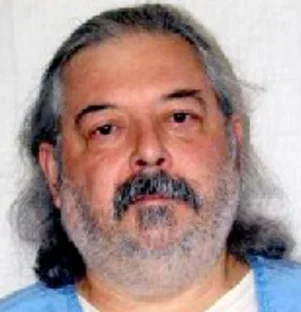
d: 2013
Summary
Name:
James Leslie Karis Jr.Years Active:
1981Status:
DeceasedClass:
MurdererVictims:
1Method:
ShootingDeath:
January 31, 2013Nationality:
USAd: 2013
Summary: Murderer
Name:
James Leslie Karis Jr.Status:
DeceasedVictims:
1Method:
ShootingNationality:
USADeath:
January 31, 2013Years Active:
1981“I can’t live it again.”
— James Leslie Karis Jr.
James Leslie Karis Jr. was born in 1951 in the United States. Karis grew up in a family marked by violence, alcoholism, sexual abuse, and mental illness. Later federal court proceedings found that his original trial lawyers failed to fully investigate and present evidence of his childhood, including claims that he had witnessed violence against his mother, had been beaten by his father and stepfather, and had been sexually abused by his father.
As a teenager and young adult, Karis struggled with drugs, alcohol, and instability. He joined the Army but was discharged after problems with drug use and behavior. After returning to civilian life, he became involved in violent sexual crimes.
Before the 1981 murder, Karis already had serious prior convictions. He had been imprisoned for a rape in Orange County in the early 1970s and later returned to prison for the rape of a 17-year-old high school student in Santa Clara County. At the time of the murder of Peggy Pennington, he had been out on parole for only about six months.
On the morning of July 8, 1981, James Leslie Karis Jr. was in Placerville, California. Peggy Pennington, 34, and Patty Vander Dussen, 27, were employees of the El Dorado County Welfare Department and were taking their regular morning walk around the block during a break from work.
Karis confronted the two women at gunpoint and forced them into his vehicle. He drove them to a remote area near Placerville, close to Rock Creek Road. There, he forced both women to remove their clothing. He tied Pennington’s hands with pantyhose and raped Vander Dussen.
After the assault, Karis allowed the women to get dressed, then marched them to another location nearby. He ordered them into a shallow depression or hole and shot both women in the back of the head. He covered them with rocks and left them for dead.
Peggy Pennington died from her gunshot wound. Patty Vander Dussen survived by pretending to be dead. After Karis left, she managed to crawl out and make her way to help. Her survival became crucial to the prosecution because she later testified at Karis’s trial.
Police searched for Karis after the attack. His parole officer helped identify him as a suspect, and he was arrested about a week later in Sonoma County. Because of heavy publicity in El Dorado County, the case was transferred to Sacramento County for trial.
In 1982, Karis was convicted of first-degree murder, attempted murder, kidnapping, and rape. On September 17, 1982, he was sentenced to death. The California Supreme Court upheld the conviction and sentence in 1988.
Years later, a federal judge overturned the death sentence in 1998, finding that the penalty phase had been constitutionally flawed because the defense had failed to present strong mitigating evidence about Karis’s abusive childhood. In 2002, the Ninth Circuit agreed that his death sentence should be reconsidered, while leaving the murder conviction intact.
Karis received a new penalty-phase trial in 2007. His lawyers prepared to present evidence about his childhood abuse and family history, but Karis refused to allow them to use that evidence. He chose to represent himself rather than relive that history in court. He was again sentenced to death on April 25, 2007.
On January 31, 2013, Karis was found unresponsive in his single cell at San Quentin State Prison and was pronounced dead at 6:40 a.m.
