b: 1948
Summary
Name:
James HuntYears Active:
2004Birth:
October 16, 1948Status:
Awaiting ExecutionClass:
MurdererVictims:
1Method:
ShootingNationality:
USAb: 1948
Summary: Murderer
Name:
James HuntStatus:
Awaiting ExecutionVictims:
1Method:
ShootingNationality:
USABirth:
October 16, 1948Years Active:
2004Date Convicted:
June 1, 2006“Maybe if I shoot you—”
— James Hunt
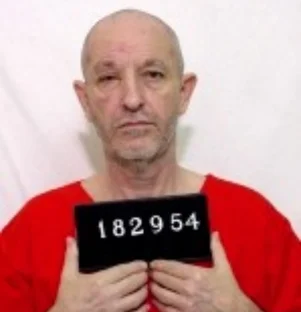
James Hunt, born October 16, 1948, married Bettina Hunt in 1991. Their marriage was marked by recurring, documented problems; Bettina obtained domestic violence protective orders against him in both 1998 and 2002, and filed for divorce in 2002 and again in July 2004, four months before her death. By November 2004, the couple was separated, and Bettina was living with her granddaughter, Katrina, at a residence on Buck Branch Road in Floyd County, Kentucky, owned by her mother. Bettina's former sister-in-law, Lula Dillon, came by five to six days a week to help care for Katrina, who had been born prematurely and had special needs.
On November 30, 2004, Bettina Hunt was at her residence on Buck Branch Road in Floyd County, Kentucky. Her infant granddaughter, Katrina, was also inside the home. Earlier that evening, Bettina’s former sister-in-law, Lula Dillon, had been helping her care for the baby. Lula testified that Hunt called several times that day, including one call around 6:20 to 6:25 p.m. During that call, Bettina and Hunt argued, and Bettina said she wanted to go through with the divorce.
After Lula left, Bettina called her brother’s home and spoke with her sister-in-law, Karen Chaffins. They discussed several issues involving Hunt. A little after 7:00 p.m., Bettina told Karen that Hunt was at the door. Bettina said she would send him away and call back. Phone records showed that the call ended at 7:05 p.m.
At 7:08 p.m., Bettina called 911. The call connected, but she did not appear to realize that the dispatcher had answered. On the recording, a threatening male voice and a panicked female voice could be heard. The woman begged the man to stop. A gunshot was then heard, followed by Bettina crying and screaming. A second shot was heard moments later, followed by silence.
A short time after the shooting, Hunt crashed his vehicle off a bridge only a few hundred feet from the murder scene. The car landed upside down and became partly submerged in a creek. People passing by stopped to help him. One witness, Judy Flannery, saw Hunt holding something in his left hand. She later saw him walk behind a tree and return with empty hands.
The next day, Judy Flannery’s husband searched near the tree and found a silver Smith & Wesson .357 revolver in the creek. Ballistics testing later showed that the revolver was the murder weapon. Shell casings from the murder scene and a casing found on Hunt’s vehicle were matched to the same weapon.
Police arrested Hunt soon after the crash. He was visibly intoxicated and denied knowing anything about the shooting. Investigators later found several unspent rounds of unusual .38 caliber ammunition in his jacket pocket. Forensic testing also linked him to the crime scene. Bettina’s blood was found on his jacket, and Hunt’s blood was found on a juice bottle, a piece of T-shirt, and a bandage inside Bettina’s home.
Hunt was originally indicted for murder and first-degree burglary. A superseding indictment later added first-degree wanton endangerment because Bettina’s infant granddaughter was inside the home during the shooting. His jury trial began on May 15, 2006, and ended on June 1, 2006. Hunt’s defense was that someone else had committed the crimes. The jury rejected that defense and found him guilty of murder, first-degree burglary, and first-degree wanton endangerment.
The jury sentenced Hunt to death for the murder of Bettina Hunt. He also received 20 years for first-degree burglary and 5 years for first-degree wanton endangerment. The Kentucky Department of Corrections lists the death-sentence date as July 31, 2006.
Hunt appealed to the Kentucky Supreme Court and raised 24 issues, including challenges to the evidence, jury instructions, penalty-phase procedures, and the use of burglary as an aggravating circumstance. On November 25, 2009, the Kentucky Supreme Court affirmed his convictions and death sentence.
The court also upheld the use of first-degree burglary as the aggravating circumstance that made Hunt eligible for the death penalty. It rejected his argument that the sentence was arbitrary or disproportionate, noting the evidence and the legal standards used in Kentucky capital cases.
